Melody goes diplomatic: How a ₹1 toffee became India’s biggest PR moment
Guest Column: Ganapathy Viswanathan, Independent Communication Consultant & Author, on how the Melody episode shows that in 2026, the most powerful PR is often accidental
 by
by
Published: May 21, 2026 8:00 AM | 5 min read
 Follow Us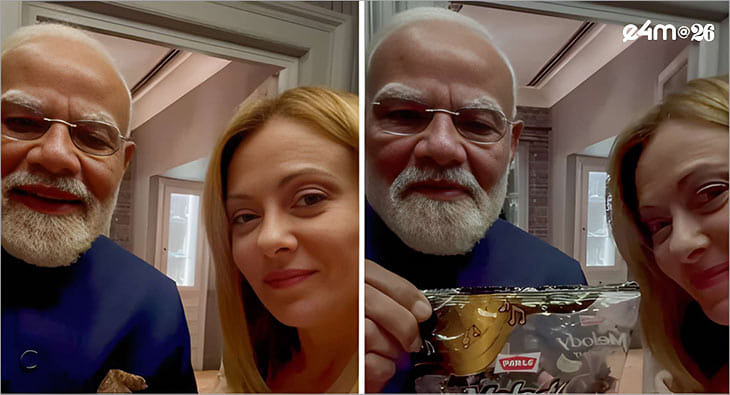

- Prime Minister Narendra Modi's gift of Melody toffees to Italian Prime Minister Giorgia Meloni sparked widespread discussion on social media, turning the ₹1 candy into a cultural symbol rather than just a product.
- The incident highlighted the evolving nature of communication, where authenticity and spontaneity resonate more with audiences than scripted messaging or polished advertising.
- The moment exemplified the power of meme culture in mainstream communication, as users quickly created content that amplified the gesture and engaged millions, showcasing the intersection of politics, branding, and pop culture.
- For brands, the Melody episode serves as a lesson in the importance of cultural relevance and authenticity, demonstrating that impactful visibility can arise from genuine moments rather than planned campaigns.
A Small Gesture That Became a National Conversation
In the world of modern communication, brands spend crores trying to create recall, relevance, and emotional connection. Yet sometimes, all it takes is a small unscripted moment to achieve what massive campaigns cannot. That is exactly what happened when Prime Minister Narendra Modi gifted Melody toffees from Parle Products to Italian Prime Minister Giorgia Meloni during a diplomatic interaction that instantly captured the imagination of social media users.
Within hours, the internet had transformed a familiar ₹1 candy into a national talking point. Memes exploded, reels multiplied, commentators reacted, and millions of Indians suddenly found themselves discussing Melody again — not as a product, but as a cultural symbol.
What made the moment powerful was its simplicity. There was no polished advertising film, no celebrity endorsement, and no elaborate launch strategy. In fact, the authenticity of the gesture became the story itself. In an age where audiences can immediately detect manufactured virality, this interaction felt genuine, spontaneous, and relatable.
When Authenticity Becomes the Best PR Strategy
The Melody episode reflects how dramatically communication has evolved in the digital era. Politics, branding, and pop culture are no longer operating in separate spaces. They overlap constantly on social media, where attention spans are short and cultural moments move at lightning speed.
A 12-second clip today can generate more engagement than a lengthy speech or carefully managed press conference. People no longer consume communication only through information; they consume it through symbolism, humour, nostalgia, and shareability.
That is why the Melody moment resonated so strongly. For millions of Indians, Melody is not merely a candy. It is a memory. It represents school days, pocket money, neighbourhood stores, and childhood nostalgia. When such a deeply familiar product suddenly appears in an international diplomatic setting, the contrast becomes instantly compelling.
Social media thrives on such contrasts — the ordinary entering extraordinary spaces.
The Rise of Meme Culture in Mainstream Communication
The already popular “Melodi” wordplay associated with Modi and Meloni added another layer of virality. What had begun as meme culture suddenly found a physical symbol in the form of the Melody toffee. The internet quickly connected the dots, and the moment became larger than the gesture itself.
Within hours:
- users created reels,
- meme pages amplified the visuals,
- political commentators reacted,
- and nostalgia-driven posts flooded timelines.
The result was not just visibility for Melody, but cultural participation at scale.
Political Analyst, Author and Commentator Anand Ranganathan observed, that younger audiences no longer consume politics through long lectures or ideological messaging alone. They engage with moments — visuals, humour, symbolism, and relatability. Meme culture is no longer outside mainstream communication. It has become mainstream communication itself.
A Masterclass in Earned Media
For marketing professionals, this incident is a textbook example of earned media. Parle did not pay for this visibility, yet the brand received nationwide attention, emotional engagement, and renewed relevance across generations.
That is the dream outcome for any legacy brand.
In branding terms, Melody achieved something extremely valuable: top-of-mind recall. In a crowded media environment where consumers are bombarded with content every second, remaining culturally relevant matters more than simply remaining visible.
What makes this remarkable is that the public itself carried the campaign forward. Every meme, repost, reaction, and conversation strengthened the brand’s presence organically. Culture effectively became the media engine.
Few planned campaigns can replicate that level of authenticity.
The New Rules of Political and Brand Communication
The Melody moment also reveals a deeper shift in communication strategy. The old model relied heavily on control — scripted messaging, carefully staged optics, and predictable media cycles.
The new model rewards spontaneity.
Today, brands and political figures gain traction when they create moments people emotionally connect with. Audiences respond less to perfection and more to relatability. They want communication that feels human, unscripted, and culturally aware.
This is precisely why the Melody gesture worked. Instead of presenting something luxurious or ceremonial, the interaction celebrated an everyday Indian product recognized across households and generations.
That simplicity became its strength.
In many ways, it also functioned as a subtle form of soft power. A humble Indian candy entered an international diplomatic exchange and instantly became part of global internet culture. Without intending to, Melody became a symbol of everyday Indian identity.
What Brands Can Learn From the Melody Moment
For brands, the lesson is clear: relevance today cannot always be manufactured. Sometimes the most powerful visibility comes from participating — intentionally or unintentionally — in culture itself.
The challenge is no longer just about creating advertisements. It is about staying culturally available when the right moment arrives.
For Parle Products, the opportunity now lies in how intelligently the brand extends this momentum. The internet rewards authenticity but quickly rejects over-commercialization. Sometimes restraint creates greater long-term value than aggressively capitalizing on virality.
Still, the achievement is undeniable. A ₹1 candy crossed borders, entered political symbolism, fueled meme culture, and dominated social conversation overnight.
Few advertising campaigns can claim that kind of emotional impact.
Final Thought: Culture Created the Campaign
The Melody episode proves that in 2026, the most effective PR is often accidental. It emerges not from boardrooms alone, but from moments people instinctively connect with and choose to share.
Melody did not launch a campaign.
Culture launched one for it.
Read more news about Marketing News, Advertising News, PR and Corporate Communication News, Digital News, People Movement News
For more updates, be socially connected with us onInstagram, LinkedIn, Twitter, Facebook, YouTube & Google News
