What a kimono at Wimbledon signals for Naomi Osaka’s brand
Guest Column: Dr. Sandeep Goyal deep dives into what Brand Osaka is telling the world
 by
by
Published: Jul 6, 2026 8:17 AM | 6 min read
 Follow Us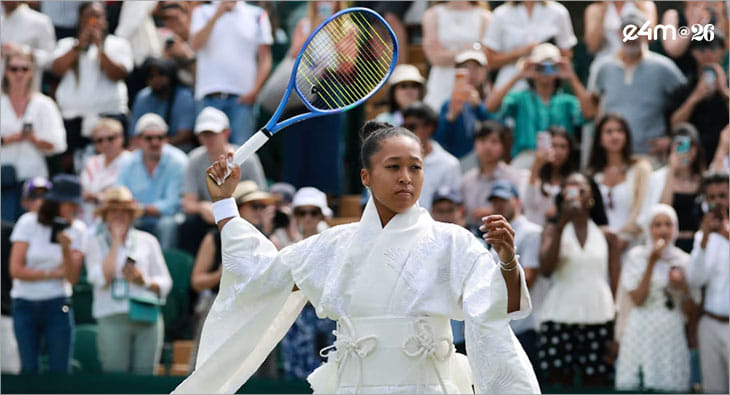

- Naomi Osaka has utilized her appearances at major tennis tournaments to express her cultural identity, wearing a kimono-inspired outfit at Wimbledon, designed by Hana Yagi, which reflects her Japanese heritage.
- Her fashion choices at each Grand Slam event highlight her transition from athlete to cultural icon, emphasizing her brand message of being "more than tennis" and showcasing her entrepreneurial ventures.
- Osaka's focus on mental health and personal boundaries has shaped her brand, allowing her to present a gentler, artistic image off the court while maintaining a powerful presence in her sport.
- By collaborating with designers and embracing her cultural roots, Osaka aims to build a lasting legacy that extends beyond her athletic career, positioning herself as a significant cultural figure.
Naomi Osaka is rocking The All England Club, London. The 4-time Grand Slammer Osaka has used the walk-on at this year’s three majors to showcase the form of self-expression that she treasures most alongside her tennis. At Wimbledon, she has worn a white ensemble inspired by Japanese ceremonial dress, including a kimono-style dress embroidered with cherry blossoms and cranes, produced in concert with designer Hana Yagi.
At the Australian Open, she opted for a floaty, flowy jellyfish-inspired ensemble designed by couturier Robert Wun; at the French Open, her array of cascading skirts and golden sparkling dress were inspired by the silhouette of the Eiffel Tower. Osaka has a creative team and works with the designers herself; Nike produces the on-court dresses. No wonder Naomi Osaka has become the topic of conversation around the world of sport and in Osaka’s news conferences fashion dominates tennis.
What is Brand Osaka telling the world?
- “I’m More Than Tennis”
Osaka has been building a personal brand outside of Grand Slams since 2020. Play Academia, KINLÒ skincare, Hana Kuma studio, her media company, and more.
A kimono at Wimbledon is her saying: I show up as myself, not just as a player in Nike whites. It moves her from “athlete” to “cultural icon.” That’s where the long-term money is: endorsements, equity, media.
- Reclaiming Her Japanese Heritage on Her Terms
Osaka is Haitian-Japanese, raised in the US, plays for Japan. She’s talked openly about the pressure of representing Japan while not “feeling Japanese enough.”
Wearing a kimono at Wimbledon — the most traditionally British event in sport — is a quiet act of ownership. It’s not cosplay. It’s: more like saying “This is part of me, and I’ll wear it in your house too.” That authenticity is core to her brand equity with Gen Z.
- Soft Power > Aggression
On court: power, speed, no-nonsense. Off court: she’s curated a gentler, artistic, introspective image.
A kimono equals craft, fabric, restraint and posture. It’s the opposite of “loud athlete fashion.” It tells brands like Louis Vuitton, Tag Heuer, and now Nike Off-Court that she can do quiet luxury, not just streetwear collabs.
- Mental Health + Boundaries = Brand Pillars
Osaka made headlines for withdrawing from Rolland Garos 2021 to protect her mental health. Her brand since has been about agency, self-care, and choosing how/where she shows up.
A kimono isn’t performance wear. You can’t serve in it. So her wearing it at Wimbledon signals: I’m here on my terms. I can honor the event without conforming 100%. That plays directly to her audience who value boundaries.
- Visual Virality = Brand Fuel
Wimbledon’s dress code is white. Everyone blends in. A kimono breaks the frame. 1 photo is more than thousands of headlines, editorials, TikToks. For Osaka, who’s been injured/out of the spotlight at times, it’s a high-impact, low-risk way to stay culturally relevant between tournaments.
What’s the nuance / risk you may ask? Because the kimono is a deeply symbolic Japanese garment, she’d need to get it right. If it’s by a Japanese designer, made traditionally, and credited — it reads as appreciation + representation. If not, it risks backlash. Her team is usually careful about that. Japanese designer Hana Yagi provides the necessary stamp of lineage and authenticity.
Brand Osaka is telling the world: I’m an athlete, yes. But I’m also Japanese, Haitian, American, an entrepreneur, an artist. And I don’t have to choose just one lane.
Osaka has done this in past years too.
In 2019-2021 her Nike x Jacquemus conveyed “Athlete Goes Fashion”. The look, neon pleated tennis dress, oversized collar, sculptural silhouettes was very very Jacquemus. It signalled “I’m a player, but I’m also a muse.” She was one of the first athletes to get a co-design collab with a luxury house while still active. As a brand move it took her from “sponsor billboard” to “creative partner.” Nike gave her control. That set her apart from other tennis stars.
In 2021: Louis Vuitton came into the picture with “High Fashion, Off Court”. The look was a custom LV polka-dot dress + monogram mask for press, then full LV tailored sets in the players’ box. Designed with Nicolas Ghesquière. What it signalled? “I belong in the front row, not just the baseline.” She became LV’s face in 2021, making her the first tennis player + Black woman to lead a campaign. It gave her brand luxury credibility. It positioned her as a global style icon, not just a sports star. That opened doors for her to beauty, skincare and media.
2024-2026 has witnessed the switch to the Kimono – “Cultural Identity, On My Terms”. Traditional/modern kimono in the stands, Royal Box, or practice week. Structured, crafted, unmistakably Japanese. And the signal: “I’m not performing for tennis. I’m showing up as Naomi.” It’s the least ‘athletic’ look she’s done at Wimbledon. But it has moved her personal brand from fashion icon to cultural authority. Jacquemus/LV were about brand partnerships. The kimono is about personal narrative: Japanese heritage + autonomy + quiet power.
Why This Matters for Brand Naomi Osaka?
- Play Academia + Hana Kuma: Her media + storytelling companies need her to be seen as a curator, not just a face. The kimono gives editors a reason to write about “culture” not “tennis.”
- KINLÒ Skincare: Her brand is about melanin-rich skin + sun protection. A kimono reads “care, ritual, heritage” — perfect tonal fit vs a neon tennis dress.
- Post-Tennis Brand: Athletes fade when they retire. Cultural figures don’t. By anchoring to identity + heritage, she’s building a brand that outlasts her serve.
Bottom line: Jacquemus said “Naomi can do fashion.” LV said “Fashion wants Naomi.” The kimono says “Naomi defines her own culture.” That’s the last step from athlete to icon to institution.
Dr. Sandeep Goyal is a doctorate in celebrities as human brands.
Disclaimer: The views expressed here are solely those of the author and do not in any way represent the views of exchange4media.com.
Read more news about Marketing News, Advertising News, PR and Corporate Communication News, Digital News, People Movement News
For more updates, be socially connected with us onInstagram, LinkedIn, Twitter, Facebook, YouTube & Google News
