Promotion or creating a cultural moment? What Indian brands can learn from ‘Marty Supreme’
The campaign for the Timothée Chalamet-starrer was not built around a single hero asset but as a layered ecosystem with video, audio, outdoor, events, and social discovery being equal partners
 by
by
Published: Jan 3, 2026 9:16 AM | 4 min read
 Follow Us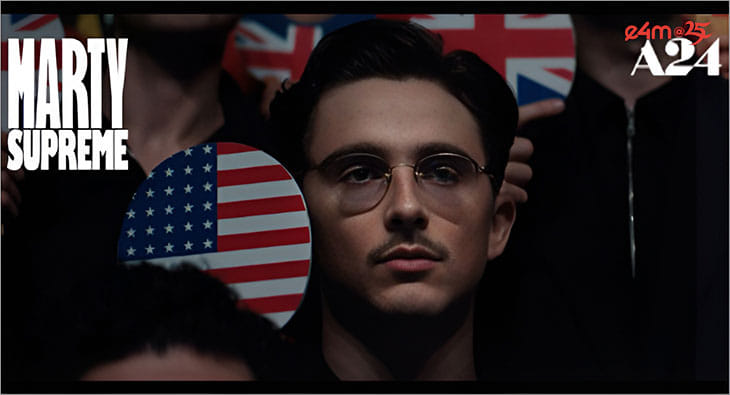

Marty Supreme, the latest Timothée Chalamet-starrer feature film from A24, has rewritten the grammar of film promotion by advertising without limits. While Chalamet’s appearances on late-night talk shows and YouTube interviews were expected, it was the sheer ambition of the surrounding activations that transformed the film’s release into a global cultural moment.
A24, the American independent studio behind the film, has built a reputation for prioritising auteur-led storytelling, stunning cinematography, and carefully curated cultural relevance. Over the years, the studio’s name alone has become a signal of credibility for film enthusiasts, many of whom often begin discussing its projects months before release. With Marty Supreme, the studio built an ecosystem around it.
The first signal arrived in October, when Chalamet shared a cryptic video showing himself wearing a giant ping-pong ball on his head, escaping from a glass enclosure, and walking towards a film set as a camera followed him, with a massive Marty Supreme poster looming in the background. The visual language was surreal. More importantly, it revealed almost nothing about the film’s plot.
Over the following weeks, the campaign expanded in unexpected directions. Chalamet was spotted collaborating with comedian Druski in unscripted social moments, lighting up the Las Vegas Sphere with film imagery, attending Tyler, The Creator’s Camp Flog Gnaw Carnival with an orange blimp airship, and appearing in a music video with underground rapper EsDeeKid (a project that initially sparked speculation that Chalamet was secretly performing under a masked alter ego). Each moment operated independently, yet together they formed a recognisable narrative thread.
What distinguished Marty Supreme was not only scale but structure. Every piece of content, whether digital, live, or experiential, added another clue. Promotion did not feel transactional. It felt investigative. Audiences were not being sold a ticket; they were being invited to uncover a story.
This approach reflects a broader global shift in how entertainment properties, consumer brands, and cultural platforms are beginning to think about advertising. The campaign was not built around a single hero asset. It functioned as a layered ecosystem in which video, audio, outdoor, events, and social discovery were all equal partners.
In India, this way of working is no longer entirely foreign. Spotify’s annual Wrapped campaign has evolved from a data-driven marketing exercise into a nationwide ritual. For several weeks each year, timelines across platforms are dominated by users sharing personalised listening journeys, playlists, and listening personalities. Blinkit and Zomato’s playful outdoor banter has repeatedly transformed static hoardings into social conversation pieces, proving that even traditional OOH can behave like dynamic content when treated creatively.
Airbnb’s global experiences, from museum sleepovers to heritage stays, further demonstrate how brands can extend beyond communication into participation. Even legacy properties such as the Amul Girl show that continuity, context, and wit can build long-term cultural memory without relying on heavy media budgets.
Yet, the question raised by Marty Supreme goes deeper. What if Indian brands stopped thinking of campaigns as timelines and instead began designing worlds?
For Indian advertisers, adopting such an approach does not require Hollywood production values. It requires a conceptual reframe: from media-first to experience-first thinking. Instead of starting with a TVC, a brand could begin by building a narrative universe and then allowing each medium to unlock a different layer of that story.
A product launch need not start with a press conference. It could begin with a cryptic audio drop on streaming platforms, followed by unexplained installations in college campuses, metro stations, or flea markets, culminating in a reveal only once curiosity has peaked. The Indian cultural calendar (filled with festivals, concerts, sporting events, college fests, and community gatherings) offers ready-made stages for narrative expansion.
A fashion label could transform university campuses into living lookbooks through pop-up dressing rooms that preview collections without any branding. A beverage brand could convert music gigs into evolving story chapters rather than sponsorship slots. A fintech platform could let users unlock new features through real-world scavenger hunts instead of app notifications.
The lesson from Marty Supreme is not about extravagance but sequencing. Each activation was timed, layered, and placed contextually so that audiences continued to encounter new fragments across different spaces. Every encounter added meaning to the last.
If Indian brands begin approaching campaigns as unfolding experiences rather than linear media plans, advertising will no longer be something people watch. It will become something they step into.
Read more news about Internet Advertising India, Marketing News, PR and Corporate Communication News, Digital Media News, Television Media News
For more updates, be socially connected with us onInstagram, LinkedIn, Twitter, Facebook YouTube & Google News
