MIB landing page proposal: New viewership metrics calculation easier said than done?
While the ministry’s draft amendment seeks to curb paid visibility and restore fairness in ratings, stakeholders warn that the lack of real-time detection makes full enforcement nearly impossible
 by
by
Published: Nov 7, 2025 8:57 AM | 5 min read
 Follow Us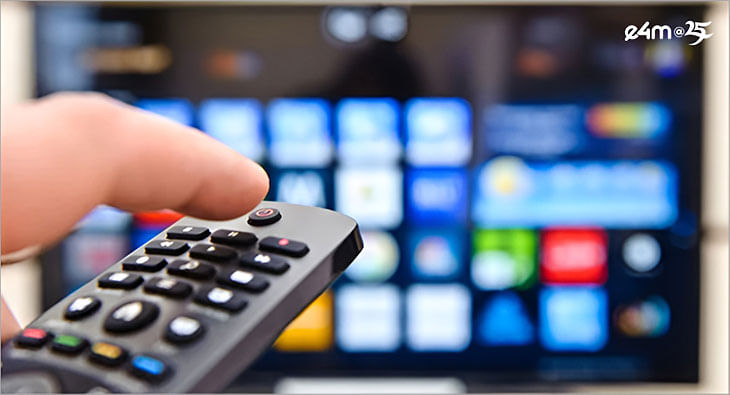

The Ministry of Information & Broadcasting (MIB)’s latest draft amendment to the policy guidelines for television rating agencies in India, issued yesterday (November 6), has reopened the long-running debate over landing pages — the auto-play slots that have quietly shaped television viewership and advertising economics for years.
The new draft explicitly bars audience-measurement agencies from including such exposures in their ratings through an addition made after Clause 5.5.1, which originally stated that all weighting or data-adjustment procedures used by a rating agency in converting basic raw measurement data into rating reports must be systematic, logical, and applied consistently.
The new addition reads: “Provided that any viewership arising out of Landing Page shall not be counted in the viewership measurement. Landing Page can be used only as a marketing tool.”
In essence, if a channel starts playing automatically when a viewer turns on a set-top box, that exposure can no longer be counted as viewership. The government wants ratings to reflect intentional audience choice, not paid placement.
Read e4m report on NBF hails directive
The intent: Curb inflated viewership
The ministry’s move is aimed at stopping broadcasters from using landing-page buys often sold by distributors or DTH platforms to artificially inflate TRPs. By defining the landing page purely as a “marketing tool”, the amendment attempts to clean up audience-measurement data and restore advertiser trust in the TRP system.
But translating this rule into practice could be far more complex than the one-line clause suggests, some industry observers believe.
The challenge: Technology and transparency gaps
For years, the television ecosystem has struggled to distinguish between voluntary viewership and forced exposure.
Landing-page deals, meanwhile, are negotiated privately between broadcasters and distribution networks.
“Without real-time data integration between MSOs, DTH operators, and BARC, separating a landing-page auto-play from an actual tune-in remains a technical blind spot. With the rise of connected TVs and hybrid devices, the problem gets even messier. OTT-enabled boxes and smart-TV interfaces don’t follow uniform channel numbering, making it harder to flag what counts as a landing,” said a stakeholder on conditions of anonymity.
A stakeholder familiar with how BARC’s systems function went further, saying the real gap lies in local cable operations.
“The ministry should have banned landing pages altogether. They haven’t and that’s the core problem. BARC doesn’t actively catch landing pages; their system works on deductive logic, not direct detection. How do you track what a local operator in a place like Asansol is doing? There’s no consistent monitoring mechanism. BARC can detect some patterns, but it will never be 100 per cent accurate. So, while the intent is good, the enforcement will remain partial at best,” they said.
Some stakeholders shared mixed reactions about the directive on landing pages.
"While using landing pages is technically correct in principle, it’s like taking a steroid - offering a quick, forced boost rather than a smart, sustainable solution,” noting that marketing should rely on creativity and strategic thinking. Though landing pages were once used intelligently and effectively, their overuse has now diminished their impact and uniqueness," a leading broadcaster said on the condition of anonymity.
However, the decision has also brought a sense of relief to some industry executives, who say it will finally ensure that channels can’t claim to be “number one” simply based on how deep their pockets are.
“This is a good and much-needed decision. If the government has decided that landing-page viewership cannot be a function of money, it reinforces a simple principle: audience attention should be earned through good content, not bought through placement. A channel should reach the consumer because of its merit, not because it’s force-fed for ten seconds the moment the TV is switched on,” they said.
Some broadcasters, however, saw the rule as oversimplifying a complex reality. A senior executive told exchange4media on condition of anonymity, “Landing pages are part of legitimate marketing and distribution strategy just like front-page ads in print or splash takeovers in digital. Not every landing placement is manipulative. For new channels or special events, that 10-second exposure helps sampling. The problem is when regulators paint all of it with the same brush.”
The executive added that the ecosystem still lacks a reliable mechanism to detect such feeds in real time. “You can’t enforce what you can’t measure,” the person said. “Until there’s seamless data sharing between distributors and BARC, this will remain a statement of intent rather than an operational reality.”
The bigger picture
The landing-page rule is part of the government’s broader effort to restore credibility in India’s television-rating system after years of manipulation allegations.
Alongside other proposals such as a larger household panel and technology-neutral measurement, it signals a renewed focus on transparency.
Still, industry veterans caution that good regulation is only as effective as the systems backing it.
For now, the government’s message is clear that landing-page views are not audience views. Whether technology and industry coordination can make that distinction in real time remains to be seen.
Read more news about Television Media, Digital Media, Advertising India, Marketing News, PR and Corporate Communication News
For more updates, be socially connected with us onInstagram, LinkedIn, Twitter, Facebook YouTube & Google News
