As India's digital day gets longer, brands eye the 10 pm-2 am consumer
Consumers are researching, comparing and making purchase decisions for categories like consumer electronics, beauty, gaming, fintech & personal care late at night, say marketers
 by
by
Published: Jul 9, 2026 8:42 AM | 7 min read
 Follow Us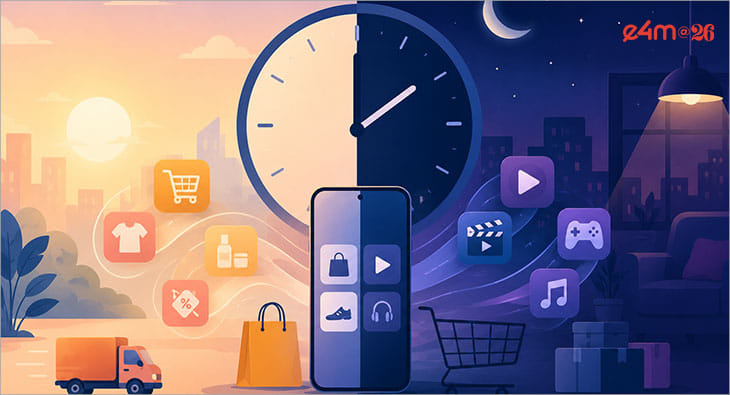

- Marketers are shifting their focus to the late-night hours of 10 PM to 2 AM, as urban Indians increasingly engage in online activities such as shopping, gaming, and social media during this time.
- Brands like Hisense and BenQ are adapting their media planning to target this window, recognizing it as a valuable period for consumer engagement, especially during events like the FIFA World Cup and premium OTT releases.
- Late-night consumer behavior is influencing various sectors, including electronics, beauty, and quick commerce, prompting brands to align their marketing strategies and promotional offers with this peak engagement period.
- Digital platforms and ad-tech companies report higher conversion rates and engagement during late-night hours, leading brands to refine their campaign strategies and channel investments to capitalize on this evolving consumer behavior.
For decades, marketers planned campaigns around traditional prime-time television, when families gathered in front of the screen after dinner. But as consumer behaviour shifts deeper into the night, brands are beginning to rethink what prime time really means.
From ordering groceries and binge-watching shows to playing games, browsing social media and making impulse purchases, urban Indians are increasingly active online well past 10 pm. The behavioural shift is prompting marketers to examine whether the 10 pm to 2 am window deserves dedicated budgets, tailored creatives and sharper audience targeting rather than being treated as an extension of the day.
While the trend first became visible across quick commerce, food delivery and OTT platforms, marketers say late-night digital activity is now expanding into categories such as consumer electronics, beauty, gaming, fintech and personal care, creating new opportunities to reach consumers when distractions are fewer and buying intent is higher.
Saket Choudhary, National Marketing Manager, Hisense India, said, "Consumer behaviour has evolved significantly, with late-night hours becoming a highly engaged window for OTT viewing, gaming, social media and e-commerce browsing. At Hisense, we've adapted our media planning to align with changing consumption patterns rather than relying solely on traditional prime-time viewing."
Choudhary said the 10 pm to 2 am window is especially valuable during marquee sporting events and premium OTT releases, when consumers are most engaged. As an Official Partner of the FIFA World Cup 2026, Hisense tapped this behaviour through its "3 AM Club" campaign on Meta, inviting late-night football fans to win exclusive FIFA merchandise while building an engaged brand community.
Hisense isn't alone in seeing late-night behaviour reshape media planning.
Rajeev Singh, Managing Director, BenQ India and South Asia, said longer commutes and increased screen time have made late-night browsing a natural extension of the purchase journey, with consumers often moving from casual research in the evening to targeted ads and buying decisions by the early hours.
"Add to that how the e-commerce calendar works today. The sharpest discounts are deliberately timed to open around midnight, so consumers have effectively learnt that this is when the real value shows up. Put these together and you get a consumer who is more alert and more ready to act between 10 PM and 2 AM than at almost any other point in the day," Singh said.
Singh said the shift has fundamentally changed BenQ's media planning, with the brand now intentionally targeting the 10 pm to 2 am window as consumers increasingly research, compare and make purchase decisions late at night.
The trend isn't limited to electronics brands. Beauty companies are seeing similar shifts in shopping behaviour.
Abhishek Chakraborty, Head of Brand, Digital and PR Communications at Oriflame India, said shopping is no longer limited to traditional business hours, with consumers increasingly using late evenings to browse, compare products and make purchase decisions at their convenience.
He said, "At Oriflame, most of our promotional offers go live at 10:00 AM and typically conclude at 11:59 PM on the final day, irrespective of the campaign duration. While consumers have the entire day to shop, we've observed that a significant share of browsing and purchase activity takes place during the evening hours, particularly as customers return to these offers before they close."
He added that Oriflame schedules a significant share of its social media content after 6 pm to align with peak consumer engagement. Rather than treating 10 pm to 2 am as a standalone window, the brand views it as part of a broader shift towards flexible, consumer-led shopping behaviour.
Similar trends are emerging across e-commerce and gifting.
Avi Kumar, Chief Marketing Officer, FNP, added, "Late-night has become an increasingly important window for us, driven by the growing need for instant, occasion-led gifting. Today, our media planning, customer engagement and fulfilment capabilities are aligned to ensure we're present when purchase intent is at its highest."
Media and ad-tech companies tracking consumer behaviour are observing the same pattern across digital platforms.
Kunal Kothari, Founder, Chairman and COO of Mobavenue AI Tech Limited, said late-night hours are becoming an increasingly important part of the digital consumption cycle, with consumers using this time to unwind, play games and engage with content at their own pace.
"In our experience, late-night audiences in gaming are often highly engaged. Casual and hyper-casual games see strong activity during this period, which translates into better installs and conversion rates. This is a reminder that consumer behaviour does not always follow traditional definitions of prime time," he said, adding that brands that understand these evolving habits and plan around them are likely to build stronger and more meaningful engagement.
Marketing channels
Beyond changing consumer behaviour, brands are also rethinking where they invest during late-night hours.
BenQ's Singh said late-night social media browsing increasingly translates into e-commerce conversions, while quick commerce is reshaping consumer expectations around instant fulfilment across categories. Hisense said CTV, social media and performance-led digital campaigns deliver the strongest returns during late-night hours, particularly around live sports and premium entertainment content. FNP, meanwhile, has seen performance marketing and quick commerce emerge as key drivers of late-night conversions, as consumers increasingly expect gifts, flowers and cakes to be delivered within minutes.
While larger brands are refining channel strategies, digital-first D2C companies are treating the late-night window as a dedicated performance marketing opportunity.
Rajat Jadhav, Co-founder and CEO of Bold Care, said the brand increasingly views the 10 pm to 2 am window as one driven by buying intent rather than just traffic. For categories such as sexual wellness, it has accordingly increased performance marketing and quick commerce investments during this period.
"Quick commerce is delivering some of the strongest returns for us during the late-night window, which is why we have significantly increased our spends in this channel. Alongside quick commerce, social media and performance marketing helps in driving discovery and consideration during these hours," he said, adding that Bold Care views content and quick commerce as a connected ecosystem, where content drives demand and quick commerce enables near-instant conversions.
Quick commerce has emerged as one of the biggest beneficiaries of this shift.
Karan Arora, AVP - Quick Commerce Lead at Pee Safe, said the 10 pm to 2 am slot has become increasingly important as many purchases are driven by immediate needs, such as running out of hygiene essentials or requiring urgent products. While the brand does not treat late night as a separate strategy, it has become a key optimisation window for aligning visibility, inventory and platform activations to capture high-intent demand.
He said, "Quick commerce continues to be our strongest channel during late-night hours because it aligns directly with the consumer's intent to solve an immediate need. We've worked closely with our quick commerce partners to improve discoverability through in-app visibility, sponsored placements and relevant category merchandising during these peak demand periods."
He added that Pee Safe's investments are guided by consumer intent rather than the clock, with a growing focus on channels where convenience and instant fulfilment drive late-night purchases.
Beauty brands are witnessing similar late-night behaviour, although their strategies remain focused on research-led rather than impulse purchases.
"Digital-first channels continue to deliver the strongest engagement during the 10 PM to 2 AM window, particularly platforms where consumers naturally spend their leisure time. We see this as an opportunity to connect with audiences through relevant, engaging content rather than simply increasing investments across every platform," said Mihir Jain, Director, Insight Cosmetics.
Jain said the 10 pm to 2 am window has become increasingly relevant as consumers spend this time researching products, reading reviews and comparing options before making informed purchase decisions. The trend has reinforced the importance of being present during these high-intent moments through meaningful digital experiences that drive engagement and conversions.
Recode Studios is seeing a similar trend.
Dheeraj Bansal, Managing Director of Recode Studios, said the 10 pm to 2 am window delivers the strongest ROI on social media, with Meta campaigns during these hours driving higher engagement, click-through rates and conversions by targeting consumers when they are most active.
Bansal said, "Along with Meta Ads, we have also been successful in converting midnight browsers into buyers with the help of influencer content and performance marketing. Although there are many emerging digital platforms like quick commerce, at present, our key area of focus is to enhance our social media presence, where beauty consumers seek purchase recommendations."
Taken together, the responses suggest the 10 pm to 2 am window is evolving from an overlooked extension of the day into a distinct marketing opportunity. While not every brand is increasing overall spends specifically for late-night audiences, many are refining campaign timing, channel mix and creatives to reach consumers when research, discovery and purchase decisions increasingly converge.
Read more news about Marketing News, Advertising News, PR and Corporate Communication News, Digital News, People Movement News
For more updates, be socially connected with us onInstagram, LinkedIn, Twitter, Facebook, YouTube & Google News
