e4m - Hybrid Roundtable: Industry leaders decode how smart brands are winning attention
The discussion explored how predictive intelligence, dynamic creative, contextual relevance and performance optimisation are reshaping marketing strategies across sectors
 by
by
Published: Feb 17, 2026 5:45 PM | 5 min read
 Follow Us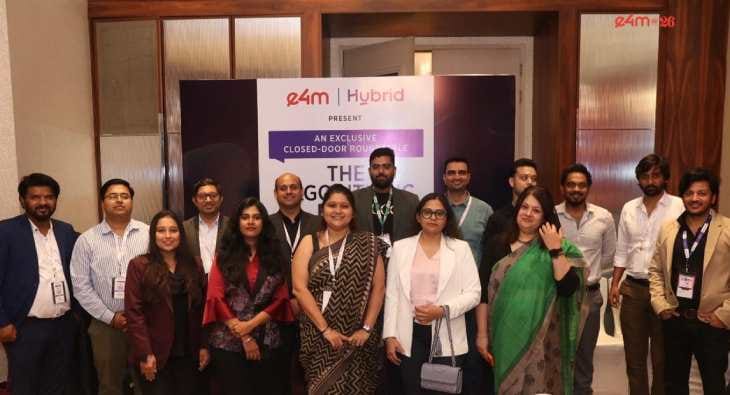

In a media landscape shaped by algorithms, fragmented attention spans and evolving consumer journeys, brands are being forced to rethink how they show up and how they convert attention into action. At a closed-door roundtable hosted by exchange4media and Hybrid on February 11, some of the country’s leading marketers came together to unpack what it truly takes to win in an ecosystem driven by data, artificial intelligence and real-time signals.
Centred on the theme The Algorithmic Edge How Smart Brands are Winning Attention and Action, the discussion explored how predictive intelligence, dynamic creative, contextual relevance and performance optimisation are reshaping marketing strategies across sectors.
Hybrid, a global ad tech company helping brands run digital ads easily from one single system using AI that makes advertising more efficient and results driven, set the context for the evening. After a brief opening by Shreyas Sathe, CEO and Co Founder, Hybrid INSEA, the conversation was steered by Gandharv Sachdeva, Country Head, Hybrid India, who also chaired the session.
Sachdeva began by inviting the panel to articulate their core problem statements and the challenges where Hybrid could add value. The responses reflected a shared tension across industries. From identifying the right platforms and reaching the right audiences to navigating the complexities of reputation management and the influencer ecosystem, marketers acknowledged that cutting through clutter today requires sharper precision and stronger accountability.
The panel featured Arpan Gupta, Lead Marketing and D2C, Atomberg; Harsh Raj Singh, AVP and Head Growth Marketing, Cityflo; Janki Parikh, General Manager - Streax, Hygienic Research Institute (HRIPL); Prashant Malkani, Director and Head of Client Marketing, VISA; Priyam Kanchwala, Sr Manager Integrated Media, Colgate Palmolive India Limited; Pushan Merchant, Associate Director Media, Kinnect; Ravi Srivastava, Category Head, Hershey India; Shilpi Dubey Pathak, GM Brand and Head Digital Marketing, Mahindra Group; and Vinay Dholakia, Digital and Media Head, Tata Motors.
A significant portion of the conversation centred on connected television and its role as a smarter, more decision led extension of traditional TV.
Pushan Merchant, Associate Director Media, Kinnect, observed, “CTV homes have been increasing and brands want to take tv plus digital and want to know how much incremental reach they are getting. The attention is the highest on CTV so brands are going after that. If they have the budget, they want CTV.”
Ravi Srivastava, Category Head, Hershey India, offered a measured counterpoint. “CTV is not killing or replacing TV but fixing the gap on TV. You can pause on CTV which you cannot on linear TV. The cost is still very high on CTV. The cost of the audience you get on CTV is much higher than linear TV. It is about ROI at the end of the day.”
For Janki Parikh, General Manager - Streax, Hygienic Research Institute (HRIPL), the case for CTV was unequivocal. “I endorse CTV. In places like Delhi, 90% of audiences are on CTV. It gives me a lot many options in terms of innovations, specific COHORT targeting. I have an audience which is involved, not switching over from one channel or OTT platform to another. People spend at least 30 to 45 minutes on one platform at a given time. The ads with QR code help a lot in our business. It is evolving and strengthening the TV industry.”
Building on this, Gandharv Sachdeva pointed to nuances that are often overlooked in planning conversations. “Today CTV is in high demand. It is divided into two streams main channels and FAST channels. In our planning we forget about FAST channels. Tier 2 and 3 cities are also there. Most of the audience is there on FAST channels too. We see a lot of Indian audience growing on FAST channels and we should think of that too. Also, QR code thing is working very well. The kind of technology we have, we can map how many users went with the QR code and spent some time.”
The discussion then moved to hyperlocal targeting and how it has evolved from simply identifying where users are to understanding why they are there. Vinay Dholakia, Digital and Media Head, Tata Motors, illustrated how granular data can sharpen relevance.
“We look at congregation areas, lets say a Mandi, or a transport Naaka, where I can look at a location specific dataset and I show a relevant ad to them. At times we have also used hyperlocal to identify a commercial vehicle user by the amount of toll he pays. We use that data about the vehicle to the extent where we can put an additional layer of communication around,” he said.
Harsh Raj Singh, AVP and Head Growth Marketing, Cityflo, and Shilpi Dubey Pathak, GM Brand and Head Digital Marketing, Mahindra Group, also shared their experiences of leveraging hyperlocal intelligence to drive sharper targeting and contextual messaging, underlining how data driven creativity is enabling brands to be present at moments of highest intent.
Across the nearly two-hour exchange, panelists reflected on how brands are becoming more proactive in anticipating high impact moments and defining what meaningful contextual relevance truly means, especially for trigger-based categories. Rich media formats emerged as another area of focus, with conversations around how immersive experiences are enhancing recall and deepening engagement.
The group also explored Hybrid’s non programmatic solution ‘In Image’ and debated how in image exploration influences recall, consideration and confidence in decision making. Its AI powered personalised ad format VOX sparked particular interest, with marketers discussing how conversational formats can add greater value than static ads by making interactions more intuitive and action oriented.
As the evening drew to a close, one thread stood out clearly. Whether through CTV, hyperlocal targeting, predictive insights or conversational formats, the brands that are winning today are those that treat data not as a backend function but as a creative catalyst.
Read more news about Marketing News, Advertising News, PR and Corporate Communication News, Digital News, People Movement News
For more updates, be socially connected with us onInstagram, LinkedIn, Twitter, Facebook, YouTube & Google News