The trip begins on the feed, not the search bar: Pallavi Saxena, Cleartrip CMRO
Cleartrip CMRO Pallavi Saxena highlights the growing role of social media in travel discovery, arguing that Indian travel marketing is yet to fully tap its biggest opportunity
 by
by
Published: Jun 25, 2026 9:20 AM | 10 min read
 Follow Us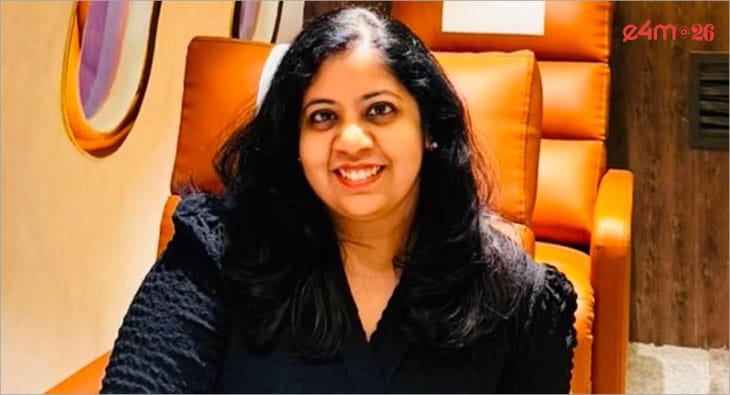

- The Indian travel industry is lagging in leveraging social media and the creator economy for marketing, despite a global trend where 75% of users start their travel searches on social platforms.
- Cleartrip's CMRO, Pallavi Saxena, highlights a shift in consumer behavior towards experiential travel and event-led trips, particularly among Gen Z and travelers from Tier 2 and Tier 3 cities.
- Cleartrip is experimenting with a commission-based creator economy model, onboarding content creators to generate relatable travel content, which has shown promising engagement metrics.
- Saxena emphasizes the need for the travel industry to innovate its marketing strategies, moving beyond traditional channels to build trust and relevance with consumers through authentic creator partnerships.
There is a peculiar irony at the heart of Indian travel marketing today. Travel is among the most consumed categories of content on social media globally. People watch trip videos obsessively, save destination reels endlessly, and share itinerary threads with the enthusiasm of seasoned travel agents. And yet, the travel industry in India has been almost entirely absent from the creator economy that has quietly revolutionised how consumers discover, desire and decide.
While e-commerce giants have built entire affiliate and influencer ecosystems over the past decade, travel brands have largely stuck to the familiar trinity of Google, Meta and television. That gap, enormous in its commercial potential, is one that Pallavi Saxena, Chief Marketing and Revenue Officer (CMRO) at Cleartrip, believes the industry can no longer afford to ignore.
Saxena, who oversees both marketing and revenue at the Flipkart-backed travel platform, has spent a significant part of the last year thinking about a single data point that she believes reframes the entire conversation around travel marketing in India. Globally, 75% of users now begin their travel search on social media rather than on search engines or dedicated travel platforms, instead starting from social feeds. In India, that behaviour is catching up fast, and what concerns her is not the statistic itself but the industry's collective non-response to it.
"Globally 75% of the users are actually now beginning their search from social media, in terms of where they want to travel and where they want to go," she says. "In India this model is not really explored or tracked. So it becomes very important to move in here." The opportunity, in her reading, is real, the window to be a first mover is narrowing, and the Indian travel industry, by and large, is still looking the other way.
Read On: Performance over presence: Travel brands rethink media strategy for peak season
The Funnel Has Changed, But Not Entirely
The travel consumer journey in India today looks markedly different from what it did even five years ago. Post-pandemic, the shift from structured, itinerary-led holidays to experiential travel has been significant. Event-led travel, booking trips around concerts, festivals and live performances, has emerged as a distinct and growing category. "Concert travels suddenly have become a big thing," Saxena observes. "People want to travel where there is a band happening. Earlier probably it was more like a planned holiday where there is a set of itineraries, place, etc. Now it becomes more about what do I want to do there, what do I want to live, interact with, meeting new people, living different sorts of experiences."
The data behind this shift points to where the growth is actually coming from. Gen Z on the Cleartrip platform is currently growing 10 to 15 per cent faster than the broader user base. Tier 2 and Tier 3 cities are registering higher growth rates than metros in terms of travel demand. Travellers from smaller cities are increasingly planning international vacations, not just domestic trips. And critically, the engagement and conversion rates from Tier 2 creator content are keeping pace with metro content.
"The influencer phenomenon or social media phenomenon is not restricted to metro or Tier 1 cities right now," Saxena says. "Even the younger generation of Tier 2 and beyond is also looking at their set of idols in social media and planning travel. The engagements are healthy across the board."
But even as behaviour evolves, some fundamentals remain stubbornly intact. Indian consumers are still price-conscious when it comes to travel, and that is unlikely to change in a hurry. A flight or hotel booking runs into thousands of rupees, making it a categorically different purchase decision from a five-hundred-rupee item on an e-commerce platform. "It's not really a small value purchase," Saxena notes. "It runs into thousands which is not a small amount for Indians." What has shifted, however, is the sophistication with which younger consumers navigate that price sensitivity. "I would not say they are budget but they are smart," she says of Gen Z travellers. "They know how to extract the best value and still live very, very nicely and travel nicely."
Read On: Gen Z fuels surge in spiritual travel, brands allocate up to 30% of budgets
The travel journey now moves through two distinct digital stages. Social media handles inspiration and discovery, planting the seed of a destination in a traveller's mind. AI-powered tools like ChatGPT then handle the planning mechanics, the day-by-day itinerary, the cost calculations, the shortlisting of stays. The two channels serve different cognitive needs at different points in the journey and are not, in Saxena's view, in competition with each other. "Inspiration and discovery I believe is still a little more content-led," she says. "What are people doing, where are they going? You hear five things from there and then you put it into ChatGPT — how do I manage that. Both these channels become extremely important, just probably in different stages of the travel journey."
Cleartrip is building for both ends of this journey. On its own platform, it has introduced smart filters powered by AI, allowing users to find the earliest and cheapest flight without manually navigating multiple options. It is simultaneously working on integrating with external AI platforms so its inventory surfaces when travellers search outside the app. The logic is simple. If consumers are moving across multiple platforms at multiple stages of their travel journey, a brand present at only one stage is leaving significant ground uncovered.
The Creator Bet
The dominant model in Indian travel marketing today treats content creators largely as one-time vendors. A brand pays a creator to produce a piece of content, the content goes live, and the relationship ends there. There is no ongoing commission, no affiliate structure, no mechanism by which a creator earns each time their content drives a booking. In e-commerce, that model has existed for years and has become a primary marketing channel for platforms like Flipkart and Meesho. In travel, it is almost entirely absent. "In travel, nobody is really doing it," she says plainly. "It is on us to actually start incubating the industry."
Cleartrip spent the last two months running a pilot, onboarding approximately 150 creators across Instagram and YouTube in a structured programme designed to test whether a commission-led creator economy could work in travel. The early results showed strong traction in views and reach. But what stood out was not just the volume of content generated. It was the texture of it.
"It was very holistic," Saxena says. "50% of content is vernacular, that is, not only the typical English, glam content, but very relatable, for instance, people travelling to Tirupati and all kinds of content was coming along. So it was very, very relatable." Half the creators in the programme were also from Tier 2 cities, and they outperformed their metro counterparts on engagement metrics, a finding that has direct implications for how travel brands should be thinking about their creator investments.
The platform has deliberately chosen not to dictate what its creators produce. The editorial freedom is by design. "We don't really want to guide him or her in terms of what you want to say," Saxena explains. "A person can be travelling to Tirupati or a UK trip or Thailand trip, whatever is relatable to that person and its set of followers, that is where we would let the content be and run. For a parent, it can be a summer break destination. For a new couple, it can be a romantic getaway. For a student, it can be a travel destination." The result is content that feels lived-in rather than commissioned, and that distinction, she argues, is precisely what makes it convert.
Read On: Not just one-off deals. Are brands now betting on creators for the long run?
There is also something structurally different about travel content that makes this bet more defensible than it might first appear. Unlike fashion or food, where content can become irrelevant within weeks, a travel video has a shelf life measured in months and sometimes years. "A six-month-old piece of content on YouTube is also very relevant," Saxena points out. "If you are searching for a Manali trip itinerary, a six-month-old or one-year-old video will still serve you well regarding how to travel, where to stay, and options for budget or premium accommodations." This longevity gives travel creators fundamentally different economics from creators in other verticals, and it is the kind of durable value the industry has so far failed to build a monetisation model around.
Rethinking the Travel Marketing Playbook
Perhaps the most pointed observation Saxena makes is about what the Indian travel marketing industry is collectively missing. Everyone, she notes, is running the same playbook. "Everybody is doing the traditional marketing, everybody is spending on Meta, Google, Ads and all," she says. "But I think this is one part, if cracked well, can add a lot of value to our life as well as the consumer's life who is actually watching them and makes things more accessible for the users as well."
The creator economy in travel is not just an untapped marketing channel. It is also, she argues, a trust-building mechanism at a time when trust is the scarcest currency in the category. "I can do fancy marketing but if the user does not trust my platform I think it is a problem," she says. "Pricing and trust are two strong pillars for the consumer to come back to you again and again." A creator who has genuinely travelled somewhere, planned a trip through a platform, and shared that experience with their audience is doing something no performance campaign can replicate. They are lending their personal trust to the brand.
On the question of traditional marketing, Saxena is measured rather than dismissive. High-impact activations still have a role, particularly when they are anchored in genuine relevance rather than manufactured occasions. She cites a long weekend calendar activation done through cinema earlier this year as an example of exactly the kind of timely, low-production intervention that stays in the consumer's memory. "It was a very small, a very relevant thing that we activated," she says. "So how do you find those points of relevance for you and the user and do something around it that becomes memorable and I think that should be the thing which marketers should do."
The broader advice she offers to the marketing community is as much about restraint as it is about investment. Personalisation, she argues, does not mean bombardment. "Be relevant to the user at all point in time," she says. "Understanding what they want at that time and reach out in a way that they find it very, very connecting. Don't overdo it, don't irritate the user and build your trust with him or her that when they come to you they should be assured that yeah, we are taking care of." It is a deceptively simple formulation, but in a category where retargeting has become a blunt instrument and consumer attention is the scarcest resource of all, it may also be the most important one.
The deeper question her thinking raises is one that every travel brand in India will eventually have to answer. In a category where consumers are already spending enormous amounts of time watching travel content, how long can the industry afford to treat social media as a secondary channel and content creators as a line item rather than a structural lever? The creator monetisation model that transformed e-commerce did not appear overnight. It was built deliberately, over years, by platforms willing to invest ahead of the curve.
In Indian travel, that build has not yet begun in any meaningful way. "This is completely non-existent right now in Indian markets," Saxena says. "It's on us to build it or not build it." That is less a statement of confidence and more a recognition of where the industry actually stands. The infrastructure does not exist. Someone has to build it first.
Read more news about Marketing News, Advertising News, PR and Corporate Communication News, Digital News, People Movement News
For more updates, be socially connected with us onInstagram, LinkedIn, Twitter, Facebook, YouTube & Google News