Not just one-off deals. Are brands now betting on creators for the long run?
Creators are becoming recurring faces, storytelling partners, cultural ambassadors, and trusted voices who help brands build consistency, credibility, and relevance over time
 by
by
Published: Jun 19, 2026 8:54 AM | 7 min read
 Follow Us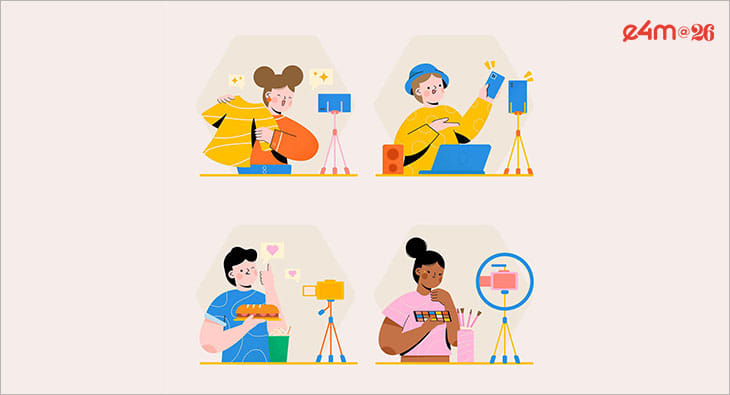

- The creator economy is shifting from short-term collaborations to long-term partnerships, with brands increasingly viewing creators as ongoing storytelling partners and cultural ambassadors rather than just temporary marketing tools.
- This transformation is driven by changing consumer preferences for authenticity, leading brands to invest in sustained creator relationships that enhance credibility and deliver stronger business outcomes.
- Marketers are now focusing on performance metrics beyond reach, emphasizing transparency and content ownership in influencer collaborations, with some brands securing usage rights for creator content to maintain aesthetic consistency.
- Industry experts highlight that successful creator-brand partnerships are built on trust and shared values, moving away from transactional models to strategic collaborations that foster deeper audience engagement and cultural relevance.
The creator economy is undergoing a significant transformation. What began as a channel for sponsored posts and campaign-based collaborations is increasingly evolving into long-term strategic partnerships between brands and creators.
Brands are no longer looking at creators merely as temporary marketing amplifiers hired for a product launch or festive campaign. Instead, they are becoming recurring faces, storytelling partners, cultural ambassadors, and trusted voices who help brands build consistency, credibility, and relevance over time.
This shift is being driven by changing consumer behaviour. Audiences today are far more aware of promotional content and increasingly value authenticity over advertising. As a result, brands are discovering that continuity often delivers stronger outcomes than one-off visibility spikes. This growing preference for authenticity is prompting brands to invest in creator relationships that extend beyond individual campaigns.
Says Huzefa Chhitalwala, Marketing Communication Manager at IKEA India, long-term creator relationships are central to the company's influencer strategy.
"For us, influencer collaboration is a key part of our strategy, but we have a very clear understanding that we don't want to use influencers for purely promotional content. We have traditional ads for that. Instead, our strategy relies on continuity and an organic fit; we repeatedly work with the same creators, like Sakshi Sindwani, because we prioritize influencers who are genuine users and consumers of the IKEA brand, or who are naturally into furniture. We look for that authentic alignment, and many times, we are pleasantly surprised to find they are already using IKEA products in their daily lives. It makes the content feel as natural as two friends just chatting about the brand."
The growing focus on long-term creator relationships is also changing how marketers evaluate performance. Rather than prioritising reach alone, brands are increasingly measuring direct business outcomes. For brands operating in trust-driven categories, long-term creator partnerships are also helping strengthen credibility.
Gaurav Nijhawan, Head of Marketing at MMTC-PAMP, says transparency and content ownership have become increasingly important.
"Whenever we partner with an influencer, we ensure it is set up as a collaborative paid ad. Asking creators to co-author the post not only provides absolute transparency to the consumer that it is a paid partnership, but it also amplifies our reach by ensuring the content reflects directly on our own brand page."
Beyond campaign visibility, MMTC-PAMP also invests in usage rights that allow creator content to deliver value beyond a single post.
"While the standard industry practice is often a one-off post without acquiring content rights, we have found significant value in buying usage rights for a duration of 45 days to three months. Often, an influencer might post about your brand and then feature a completely different brand a week later, which dilutes credibility. Securing these rights allows us to maintain aesthetic consistency on our feed and run targeted performance ads using those authentic creative assets, which works exceptionally well."
For premium and luxury categories, creators are increasingly playing a role in shaping consumer belief rather than simply driving awareness.
Milind Shah, Head of MG Select at JSW MG Motor India, says influencer marketing occupies a distinct position within the company's broader content strategy.
"Content plays a massive role in our overarching marketing strategy. Within content, you have owned advertising, but there is a separate, critical bucket focused on building genuine consumer belief in your product and brand, and that is where influencer marketing sits."
The company works across multiple creator segments depending on business objectives.
"We invest across multiple creator categories, including lifestyle, luxury, finance, and travel. Lifestyle is actually our top bucket because we are positioning a luxury brand. While audiences consume travel content contextually or for aspiration every few months, lifestyle content is something they engage with every single day, driving immediate desire and execution."
Chirag Jagwani, Chief Marketing Officer at Fixderma, says performance and accountability remain critical before increasing influencer investments.
"Right now, we allocate a very lean portion of our digital spend to influencer marketing, barely 2%, though I would love to scale that up to 10% today. I believe we are approaching it the right way, but scaling to 10% is a challenge because I refuse to increase spend without guaranteeing performance; driving a good, measurable impact is what matters most."
Jagwani says technology is making creator partnerships far more measurable than before.
"For instance, we utilize a comment-to-link auto-responder tool via Whistling. The influencer doesn't even need to hold up the product. They simply tell the audience, 'If you want this product, comment below and I'll send you the link,' and the system automatically handles the delivery. This allows us to track metrics instantly, and we see an immediate surge in sales the day a campaign goes live or a video performs well."
He also notes that the creator marketing ecosystem is maturing rapidly.
"When we look at other brands spending up to 60% of their digital budgets in this space without hitting their targets, it's not that they are doing things wrong. They simply haven't realized that better, more economical alternatives exist. In fact, if you looked at Fixderma eight or nine months ago, our own approach to influencers wasn't entirely correct, and other players were executing it better. The landscape is constantly evolving, so we must keep our eyes and ears open for more cost-effective ways to generate attention, web sessions, and conversions."
Talking about regulations for the sector, Chitalwala argues that disclosure requirements have made influencer marketing more credible and consumer-friendly.
"When it comes to ASCI guidelines, we absolutely ensure that necessary disclaimers are mentioned whenever we run promotional content for specific collection launches or major annual events like 'Iconic'. However, we don't view these guidelines as a deterrent. In fact, they are highly beneficial because consumers are inundated with content and can easily get confused about what is authentic and what is fake. Those clear call-outs are important. Fortunately for us, because the creators we partner with are genuine long-term consumers of the brand, the content flows organically, and that honesty resonates deeply with the audience."
As creator relationships deepen, industry experts believe the role of creators is expanding far beyond campaign participation.
Siddharth Singhal, Head of Creator Talent at Creators@Collective, says brands increasingly want creators to become long-term cultural partners.
"Brands are increasingly looking to build deeper and more meaningful relationships with creators. As creators become influential voices within culture, their role is expanding beyond campaign participation to helping brands shape conversations, drive relevance, and build sustained audience engagement over time."
According to Singhal, successful partnerships are built on trust, identity, and authenticity.
"What makes these partnerships successful is a creator's authenticity, distinct identity, and the trust they have earned with their communities. The strongest creator-brand relationships create value for both sides, allowing brands to stay culturally connected while giving creators the opportunity to tell richer, more impactful stories."
Anish Mehta, Founder of Animeta Brandstar, believes the industry is clearly moving away from transactional influencer marketing models.
"We're seeing a clear shift from transactional influencer marketing to long-term creator partnerships that are built around shared values and sustained storytelling. Brands today want creators who can become an extension of their identity and participate in shaping culture over time, rather than simply delivering campaign impressions."
Drawing from campaigns executed for brands including Amazon Fashion, Starbucks, Warner Music, Uber, GCPL and Jyothy Labs, Mehta says continuity consistently delivers stronger business outcomes.
"Across our work with brands such as Amazon Fashion, Starbucks, Warner Music, Uber, GCPL and Jyothy Labs, we've seen that continuity with the right creators drives stronger recall, trust and business outcomes. Whether it's reimagining legacy brands like Cinthol, Maxo, Margo, Exo and Pril for new-age consumers or building awareness for emerging brands like Shotgun, Ninja and Reposenergy, creators with a distinct voice and deeply engaged communities consistently outperform those who only bring scale. The future belongs to partnerships where creators are strategic collaborators and long-term brand custodians."
The shift from one-off influencer campaigns to sustained creator partnerships reflects a broader evolution in digital marketing. As audiences continue to prioritise authenticity, consistency, and trust, brands are increasingly viewing creators not as temporary media channels but as long-term partners capable of shaping culture, driving relevance, and building enduring consumer relationships.
Read more news about Marketing News, Advertising News, PR and Corporate Communication News, Digital News, People Movement News
For more updates, be socially connected with us onInstagram, LinkedIn, Twitter, Facebook, YouTube & Google News