Welspun-Wimbledon association: How a manufacturing story became a PR success
Ganapathy Viswanathan, Communication Consultant & Author, writes that Welspun's Wimbledon partnership is a masterclass in authentic PR, and that every company has a story waiting to be told
 by
by
Published: Aug 3, 2026 6:30 PM | 5 min read
 Follow Us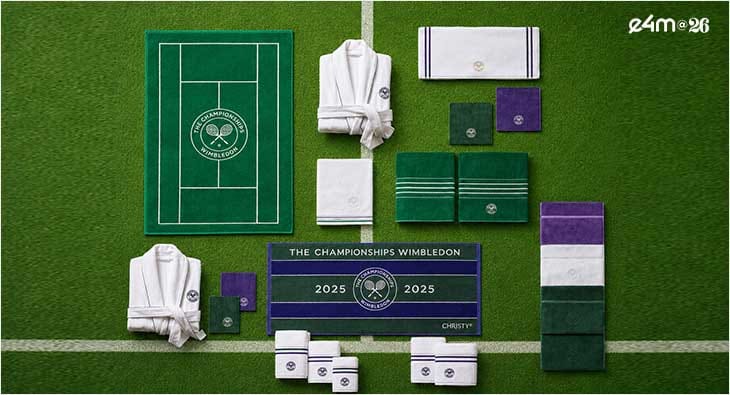

- Public relations is often misunderstood as solely about creating news; effective PR involves discovering and shaping existing stories within organizations to build compelling narratives.
- Welspun India's partnership with Wimbledon exemplifies this approach, transforming a manufacturing contract into a significant corporate storytelling opportunity that highlights the company's trustworthiness and quality.
- The timing of PR campaigns is crucial; aligning communications with high-profile events like Wimbledon allows for increased media interest and engagement without overt promotion.
- Key lessons for PR professionals include identifying hidden stories, leveraging timely events, focusing on human interest, maintaining consistency in messaging, and prioritizing long-term reputation over immediate sales.
One of the biggest misconceptions about public relations is that it is all about creating news. In reality, some of the best PR campaigns are built not by creating stories but by discovering them. Hidden within every organisation are stories that demonstrate innovation, quality, trust and excellence. The role of a PR professional is to recognise these opportunities, shape them into compelling narratives and present them at the right moment.
Welspun India's association with Wimbledon is one such example.
Every July, as Wimbledon captures the attention of millions across the world, the spotlight naturally falls on the players, the matches, the traditions and the unmistakable green-and-purple towels seen on Centre Court. Over the years, another story has quietly become part of the tournament's coverage—that these iconic towels are manufactured in Gujarat by Welspun India.
What began as a manufacturing relationship has evolved into one of India's finest examples of sustained corporate storytelling.
A Manufacturing Contract Became a Communication Opportunity
Thousands of Indian companies manufacture products for some of the world's biggest brands. They produce everything from automobile components and pharmaceuticals to textiles and electronics. Yet very few people outside the industry know about these achievements because they are often viewed purely as business relationships.
Welspun saw something more.
Its association with Wimbledon was not just a manufacturing contract. It was proof that an Indian company had earned the trust of one of the world's most prestigious sporting institutions. That was a story worth telling.
Over the years, the company has consistently ensured that this connection finds its way into media conversations every Wimbledon season. Instead of remaining a little-known supplier, Welspun has become synonymous with one of the tournament's most recognisable symbols.
That is where effective PR begins not just by inventing a narrative but by identifying one that already exists.
The Timing Is the Strategy
Every successful PR campaign needs a news peg.
Welspun did not have to create one.
Wimbledon itself provides the perfect opportunity every year. As journalists, broadcasters and digital platforms focus on the tournament, stories around its traditions, fashion, food and accessories naturally emerge. The towels have become an integral part of that conversation.
By aligning its communication with an event that already commands worldwide attention, Welspun benefits from enormous media interest without appearing promotional.
This is one of the oldest and most effective principles of public relations: join a conversation that people are already interested in instead of trying to create one from scratch.
People Make the Story Memorable
Interestingly, the media coverage is rarely about textile manufacturing.
Instead, it is about people.
Every season brings stories of players carrying the towels around the court, fans wanting to own them and amusing anecdotes about players taking them home as keepsakes. Iga Swiatek once joked that her family and friends expected her to return from Grand Slams with towels, while Novak Djokovic has made similar light-hearted comments over the years.
These stories make readers smile.
At the same time, they subtly reinforce one important fact that the towels being talked about around the world are made in India by Welspun.
Without overt promotion, the company becomes part of a global conversation.
Reputation Is the Real Objective
What makes this campaign particularly effective is that it is not designed to sell towels.
Its objective is much bigger.
Every article, television feature or social media conversation reinforces the perception that Welspun is a manufacturer trusted by one of the world's most respected sporting events. That sends a powerful message to customers, investors, global partners and employees.
Corporate reputation is built not by repeatedly saying you are the best, but by demonstrating that world-class institutions trust your capabilities.
Welspun has allowed Wimbledon to become that endorsement.
Consistency Creates Recall
Many organisations receive media coverage once and move on.
Welspun has demonstrated the value of consistency.
Every Wimbledon season presents another opportunity to revisit the story from a fresh perspective. One year, the attention may be on the towel's colours and design. Another year, it may focus on the manufacturing process or on players who have made the towels famous by taking them home as souvenirs.
The angles change.
The core message remains the same.
Over time, this consistency has transformed a simple manufacturing fact into a widely recognised corporate story.
Five Lessons for PR Professionals
The Welspun story offers valuable lessons for communication professionals.
First, every organisation has stories hidden within its business. The challenge is identifying them.
Second, timing matters. Connecting a story to an event that already attracts global attention significantly increases its news value.
Third, people are always more interesting than products. Human anecdotes make corporate stories relatable and memorable.
Fourth, consistency builds reputation. One story may create awareness, but repeated storytelling creates recall.
Finally, the best PR campaigns are not about immediate sales. They are about strengthening trust, credibility and corporate reputation over time.
The Bigger Takeaway
In an era when organisations are constantly searching for the next big campaign, Welspun reminds us that some of the most powerful communication opportunities already exist within the business. They simply require someone with the insight to recognise their value.
The Wimbledon towel story is not remarkable because the towels are made in India.
It is remarkable because a routine manufacturing relationship was transformed into a long-term communication platform that returns to the headlines every year.
That is the real achievement.
For PR professionals, the lesson is both simple and profound. Great campaigns do not always begin in a creative brainstorming session. Sometimes they begin on the factory floor, hidden inside the everyday work of an organisation. The role of public relations is to uncover those stories, tell them with authenticity and ensure they continue to build reputation long after the first headline has faded.
Read more news about PR and Corporate Communication News, Internet Advertising, Marketing News, Digital Media News, People Movement News
For more updates, be socially connected with us onInstagram, LinkedIn, Twitter, Facebook YouTube & Google News