How ‘Dhurandhar’s’ FA9LA moment shows the rise of content seeding in Indian cinema
According to industry estimates, content seeding and meme amplification now consume 10-15% of film marketing budgets, up from under 5% pre-2020
 by
by
Published: Dec 23, 2025 8:33 AM | 5 min read
 Follow Us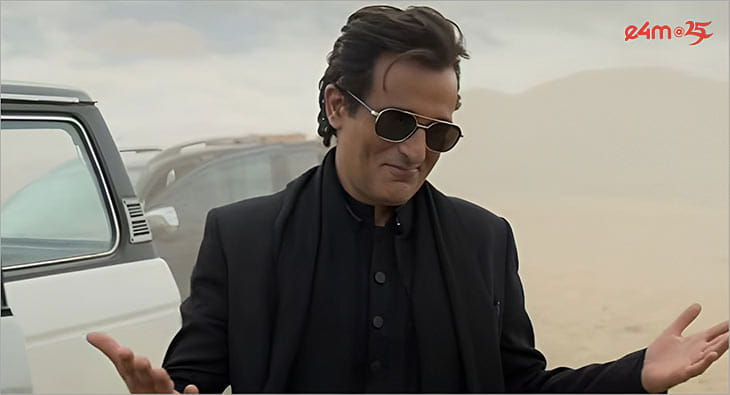

It wasn’t a trailer drop or a marketing beat; it was a five-second dance move. Akshaye Khanna’s entry to FA9LA in Dhurandhar became one of December’s most remixed film moments, flooding meme pages, Bollywood edits and fan reels, all without a formal digital push.
The episode highlights a growing truth in Indian entertainment marketing: content seeding, rather than paid amplification alone, is increasingly determining what sticks, spreads and remains relevant.
What Is Content Seeding?
Content seeding is no longer a niche digital tactic; it has quietly become a core distribution layer for films in India. At its simplest, it involves placing culturally potent content into high-engagement digital environments, meme pages, edit communities and fandom clusters, where audiences amplify it organically. Unlike influencer marketing, content seeding often avoids overt branding, relying instead on repeatable hooks: a sound, a gesture, a line of dialogue, or a moment that travels well across formats.
In India, where over 500 million users consume short-form video daily, content seeding has evolved into a low-cost, high-impact extension of film marketing, often outperforming paid trailers and celebrity interviews in both recall and engagement.
Read On: The ‘Dhurandhar’ Effect: ‘Day 1 as a Spy in Pakistan’ trend takes over social media
The Dhurandhar Moment That Seeded Itself
In Dhurandhar, directed by Aditya Dhar and released on 5 December, Akshaye Khanna’s character, Rehman Dakait, makes his entry to the Arabic hip-hop track FA9LA by Bahraini rapper Flipperachi. What stood out was not scale or spectacle, but a spontaneous, unscripted dance move, a brief hook step that felt celebratory, unpolished and human.
That moment had three traits critical to seed-worthy content:
- it required no narrative context
- it worked as a 5-7 second loop, and
- it was easy to imitate
Within days of the film’s release, theatre-shot clips, slowed-down edits and cropped reaction videos began circulating across Instagram Reels and YouTube Shorts, well before official marketing teams leaned in.
Why FA9LA Worked as a Viral Audio
Music-led virality has become a dominant driver of film discovery. According to Meta India data, Reels using trending audio see up to 35–40 per cent higher completion rates than dialogue-led clips. FA9LA fit this pattern perfectly: a high BPM, non-lyrical hooks and cultural neutrality, making it adaptable across regions — and even across borders.
By mid-December, the FA9LA audio had been used across:
- Bollywood edit pages
- Celebrity fan accounts
- Sports personalities recreating the step
- Parody and spoof content
Crucially, none of this initially required official licensing pushes; the audience did the work.
View this post on Instagram
Meme Pages As Informal Distributors
Large Indian meme pages today function less like parody accounts and more like alternative media channels. Industry estimates suggest India has over 50,000 monetised meme pages, with the top 1 per cent delivering reach comparable to mid-tier digital publishers.
These pages played a central role in FA9LA’s spread by:
- Recontextualising the dance using older Akshaye Khanna dialogues
- Stitching it with scenes from other films
- Inserting it into everyday humour — office jokes, wedding reels and birthday celebrations
This aligns with a broader trend: meme-led amplification now accounts for nearly 20–25 per cent of earned reach for entertainment launches, according to multiple agency estimates from 2024–25.
Read On: How Aditya Raj Kaul brought real-world intelligence depth to Aditya Dhar’s 'Dhurandhar'
Bollywood Edits: Fandom As Fuel
Beyond memes, Bollywood edit culture, once a niche fandom activity, has become a serious engagement engine. Edit accounts, often run by semi-professional creators, optimise content for rhythm, emotion and repeat viewing. FA9LA’s beat structure made it ideal for:
- Beat drops
- Slow-motion transitions
- Hero-entry montages
These edits extended the shelf life of the moment far beyond opening weekend, keeping Dhurandhar in circulation even as newer releases entered theatres.
From Paid Promotion to Cultural Participation
What makes Dhurandhar instructive is not that it went viral, but how little it relied on formal seeding initially. Unlike choreographed dance challenges or influencer briefs, FA9LA’s spread followed a newer playbook: allow one moment to breathe, let creators interpret it, and only then amplify.
This reflects a shift in Indian film marketing:
- Studios are moving away from heavy influencer spends
- Toward UGC-first discovery loops
- Where authenticity outperforms polish
According to industry estimates, content seeding and meme amplification now consume 10-15 per cent of film marketing budgets, up from under 5 per cent pre-2020.
Why Cinema Needs Content Seeding Now?
India’s theatrical footfalls are no longer driven by stars alone. Discovery increasingly happens on phones before it happens at the box office. With Gen Z audiences citing social media as their primary source of movie discovery, films that generate participatory moments gain a measurable advantage.
In that context, FA9LA wasn’t just a viral dance, it was a distribution asset.
Dhurandhar’s FA9LA moment underlines a clear reality: in 2025, cinema marketing in India doesn’t end at the trailer launch; it begins the moment a scene becomes remixable.
Content seeding, powered by meme pages, edit communities and everyday users, is no longer optional. It is fast becoming the invisible backbone of film buzz, shaping what audiences notice, share and ultimately show up for.
Read more news about Digital Media, Television Media, Out of Home Advertising, Print Media, Latest Advertising India
For more updates, be socially connected with us onInstagram, LinkedIn, Twitter, Facebook, YouTube & Google News