How FIFA’s branding rules created an unexpected marketing moment
At the 2026 World Cup, FIFA's clean stadium policy erased billions in naming rights overnight. What happened next was a masterclass in brand behaviour
 by
by
Published: Jun 26, 2026 9:14 AM | 7 min read
 Follow Us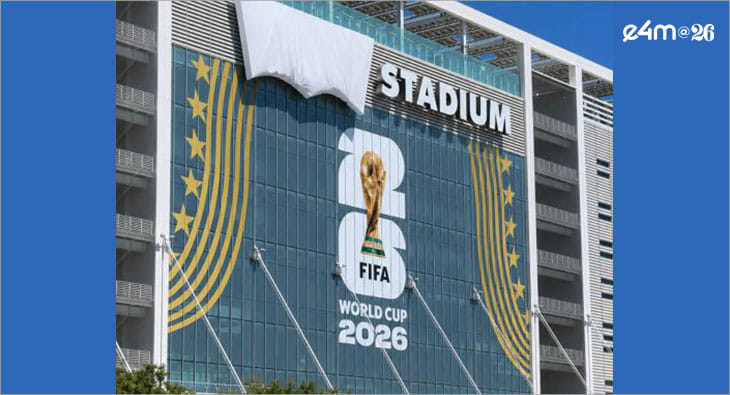

- FIFA's longstanding clean stadium policy mandates that all non-official sponsor branding be removed from World Cup venues, impacting the commercial identities of stadiums hosting the tournament.
- For the 2026 World Cup in the U.S., Canada, and Mexico, all 16 host stadiums were temporarily renamed, leading to extensive branding cover-ups, including the use of tape and tarps to obscure logos.
- Levi's Stadium, under a naming rights deal with Levi's, became a focal point as the brand creatively embraced the cover-up, generating significant social media engagement and visibility without official sponsorship.
- Other brands, including Gillette and Heinz, also turned the restrictions into marketing opportunities, demonstrating that strong brand identities can thrive even when visibility is limited, ultimately challenging FIFA's intent to protect sponsor exclusivity.
There is a rule that has governed every FIFA World Cup for decades, and it is perhaps the most quietly powerful piece of commercial regulation in global sport. Every host venue must be scrubbed clean of any branding that does not belong to an official FIFA sponsor. No stadium names, no seat logos, no condiment bottles, no shoes. FIFA calls it Brand Protection. The advertising industry has its own, sharper term for it: clean stadium policy.
The principle is straightforward. You pay to be an official FIFA partner, you get exclusivity. You do not pay, you disappear. FIFA's commercial engine generates roughly $2.8 billion in sponsorship revenue from a single World Cup cycle. That kind of money demands protection, and FIFA enforces it with surgical precision.
The policy is nothing new. At the 2006 World Cup in Germany, the Allianz Arena was referred to simply as ‘FIFA World Cup Stadium, Munich’ because Allianz was not a FIFA partner, with every Allianz logo inside and outside the stadium covered for the duration of the tournament. The same logic played out in South Africa in 2010, in Brazil in 2014, in Russia in 2018, and in Qatar in 2022. Stadiums lost their commercial identities for a few weeks, local sponsors quietly accepted it, and the world moved on without much fuss. Nobody really noticed. That changed in 2026.
Read On: When logos disappeared, creativity took centre stage at FIFA World Cup
The American problem
The United States runs on naming rights. Corporate branding is not incidental to American sports infrastructure; it is structurally embedded in it. Stadiums are not just named after companies; they are built into long-term commercial partnerships that shape how venues are funded, operated, and perceived. When FIFA brought its clean stadium policy to America, it collided head-on with a culture where every surface has a sponsor.
All 16 stadiums hosting the World Cup across the United States, Mexico, and Canada were required to debrand ahead of the tournament, with venues assigned temporary city-based names: Gillette Stadium became Boston Stadium, AT&T Stadium became Dallas Stadium, and so on across every host city. Levi's Stadium in Santa Clara became the San Francisco Bay Area Stadium, SoFi Stadium became Los Angeles Stadium, and MetLife Stadium was renamed the New York New Jersey Stadium, with every corporate identity temporarily erased for the tournament.
The scale of what followed was, in some cases, genuinely absurd. At Gillette Stadium in Foxborough, home of the New England Patriots, workers attached strips of tape to every single stadium seat to cover small Gillette logos, a task that required nearly 65,000 individual strips. In Seattle, Lumen Field became Seattle Stadium, with Lumen Technologies branding removed from virtually every surface, including the roof, screens, internal signage, seats, and even trash bins. Ryan Asdourian, Lumen's Chief Strategy and Marketing Officer, took it in good humour, filming a video that documented the entire removal process and posting it publicly. Compliance, served with a side of content.
The cover-up that uncovered everything
Then came Levi's, and what might be the most unexpected brand story of the 2026 tournament.
Levi's holds a 10-year, $170 million naming rights deal with Levi's Stadium in Santa Clara, renewed as recently as 2024. FIFA voided the stadium name and the logo for the entirety of the World Cup. In response, workers covered the giant Levi's signage at the venue with white tarps. Here is the thing, though: the stadium placed a white tarp across its Levi's-branded marquee, which concealed the brand's name while leaving the batwing-shaped logo outline perfectly visible.
Fans immediately clocked it. The batwing, one of the most recognizable shapes in fashion and retail, was impossible to miss even under a sheet. Rather than treating the situation as an inconvenience, Levi's embraced it publicly, changing its Instagram profile picture to feature the covered logo and publishing a playful video referencing the viral "Nobody's Gonna Know" trend, with the accompanying caption reading: "Welcoming the world to the beautiful [redacted] stadium!"
View this post on Instagram
Read On: FIFA World Cup 2026: What's drawing Indian brands beyond the pitch?
The post garnered 2.4 million likes, 354,000 shares, 39,000 reposts and 26,000 comments. On TikTok, the campaign generated over 9 million views with a humorous video built around the popular sarcastic audio "No one will know." Levi's extended the bit globally, placing white sheets on storefronts in Paris, London, Brazil, Mexico, Hong Kong, and more. Amy Leverton, founder of Denim Dudes, said the brand "definitely won the world cup of marketing moments," noting that the stunt amplified Levi's anti-establishment roots.
The irony is rich. FIFA spent significant effort and resources ensuring Levi's would not be visible. Instead, Levi's became one of the most talked-about brands of the tournament's opening weeks, and it did not spend a single dollar on official FIFA sponsorship rights to achieve it.
When a tarp becomes a brief
Levi's was not alone in turning restriction into response.
Gillette covered its logos with white sheets but caught the attention of millions online with a simple edit of the photo to make the sheets appear to be shaving cream. Gillette posted the cover-up to its Instagram followers with the caption "@Levi's, they got us too," amassing 34,000 likes, 11,000 shares, 560 reposts and 387 comments. The shaving cream visual was a one-liner executed at stadium scale. Perfect brand voice, near-zero production cost.
View this post on Instagram
Heinz Ketchup, which does not own naming rights to any World Cup venue but had its in-stadium bottles covered with black tape, launched a limited-edition bottle featuring a blacked-out label and promoted it as the "Unofficial Stadium Ketchup." Heinz Canada turned a piece of tape into a product concept, a press release, and a social moment, all from a restriction it had no power to resist.
View this post on Instagram
Even at the athlete level, Jamal Musiala, the German player partnered with Beats by Dre, was required to tape over his personal headsets because of FIFA's branding rules, and Beats responded by covering its own Instagram profile picture, turning the restriction into yet another piece of social content.
View this post on Instagram
What advertising should take from this
The Indian advertising industry talks constantly about earned media, cultural relevance, and the diminishing returns of paid visibility in a crowded attention economy. The 2026 World Cup has produced a genuinely instructive case study in all three, and it came not from a brand that spent its way into the conversation but from brands that were forcibly removed from it.
The covered logo created a level of engagement that a standard stadium sign rarely generates. Had the logo remained untouched, most World Cup viewers would have treated it as background scenery. Once it was covered, fans began sharing photos, discussing the rule itself, and amplifying Levi's response. The restriction created curiosity, and curiosity drove attention. The lesson for creative directors is not that brands should seek restrictions, but that strong brand assets (the kind of visual identity so deeply embedded that even a tarpaulin cannot hide it) are the best possible insurance against becoming invisible.
FIFA's clean stadium policy was designed to protect the exclusivity of its paying sponsors. In 2026, it accidentally handed the brands it was trying to erase one of the richest creative briefs of the year. And unlike a conventional pitch, this one came with a guaranteed audience of billions.
Read more news about Marketing News, Advertising News, PR and Corporate Communication News, Digital News, People Movement News
For more updates, be socially connected with us onInstagram, LinkedIn, Twitter, Facebook, YouTube & Google News