The future is instant: Why quick commerce is transforming India’s retail landscape
Guest Column: Ganapathy Viswanathan, Independent Communication Consultant & Author, says the rise of Q-commerce shows how modern consumers value time, with essentials arriving in minutes
 by
by
Published: Mar 13, 2026 8:04 AM | 5 min read
 Follow Us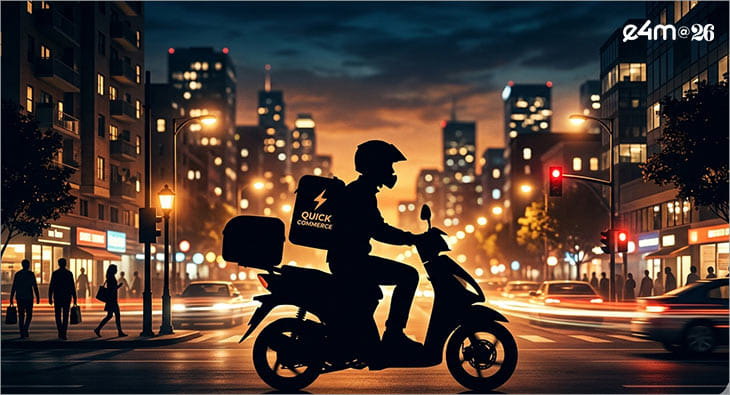

Quick commerce in India really started gaining attention during the COVID-19 lockdowns. At that time, going out to buy groceries wasn’t always easy. Many people preferred staying indoors, and delivery apps suddenly became the safest and most convenient option for getting daily essentials.
What’s interesting is that people didn’t stop using these services once things returned to normal. The habit stayed. Once someone experiences getting milk, bread, or vegetables delivered within minutes, it’s hard to go back to planning grocery trips days in advance.
For many urban households today, quick commerce apps feel almost like a nearby store that just happens to be accessed through a phone.
Convenience Matters More Than Discounts
In the early days, most platforms relied heavily on offers and discounts to attract customers. That helped people try the service. But over time, convenience has become the bigger reason people continue using quick commerce.
Life in large cities is busy. Between work, commuting, and other responsibilities, people often don’t want to spend extra time on small errands. If something runs out at home, it’s much easier to place a quick order than to step out and buy it.
Quick commerce also helps in those small everyday moments—like when you’re cooking and realise you’re missing an ingredient, or when guests drop by unexpectedly. These situations are exactly where instant delivery becomes useful.
Why Younger Consumers Are Comfortable With It
India’s large young population has also helped quick commerce grow quickly. Many younger consumers are already used to doing everyday things through their phones—booking rides, ordering food, or paying bills.
So ordering groceries through an app feels quite normal. Digital payments have also made the process simple and fast. Instead of carrying cash or waiting in a queue at a store, people can complete a purchase in seconds.
This generation usually values speed and simplicity. If a service saves time and effort, they are likely to adopt it quickly.
How the 10–Minute Delivery Model Works
The speed of quick commerce deliveries is possible because of a logistics setup built around small warehouses known as dark stores. These are not traditional retail outlets where customers walk in. They exist only to process online orders.
Most dark stores are located inside residential neighbourhoods so deliveries can happen quickly. Items are arranged in a way that makes picking fast and efficient. Once an order is packed, a delivery partner covers a short distance to reach the customer.
When enough people in a neighbourhood start using the service, the system becomes even more efficient. Delivery partners can handle several orders in a short time, which helps reduce delivery costs.
Not Just Groceries Anymore
Quick commerce initially focused on groceries and daily essentials. But the range of products available on these platforms has grown quite a bit.
Today, customers can also order things like personal care products, phone chargers, baby supplies, pet food, and ready-to-eat snacks. Some platforms even offer small electronics or pharmacy items.
Because of this wider selection, many people now open these apps for several small purchases throughout the week rather than only for groceries.
Competition Is Rising
The quick commerce space in India has become very competitive. Several companies offer similar delivery times and product ranges. For customers, the difference between platforms is sometimes small.
Over time, companies will probably need to stand out through better service and reliability rather than just speed. Managing inventory well, delivering orders consistently, and building strong customer trust could become more important.
Some platforms are also experimenting with their own private label products to improve margins and strengthen brand identity.
What the Next Few Years Might Look Like
A Few Strong Players May Dominate
Running a quick commerce business requires significant logistics investment and high order volumes. Because of this, the market may gradually narrow down to a few strong players that manage to build large networks and efficient operations.
Smaller or weaker platforms may struggle to sustain the model.
Orders Could Become Larger
Many quick commerce orders today are small—sometimes just two or three items. Over time, companies will likely encourage customers to add more products to each order. This helps improve profitability.
We may see more bundles, loyalty programs, or subscription-style benefits designed to increase order sizes.
Private Label Products May Grow
To improve margins, companies may increasingly introduce products under their own brand names. These private label items could include groceries, snacks, or household essentials.
If done well, these products can also help platforms build stronger customer loyalty.
Gradual Expansion Beyond Metro Cities
Currently, quick commerce works best in densely populated cities where many customers live close to each other. This makes fast deliveries possible.
In the coming years, companies will probably expand cautiously into Tier-2 cities as digital adoption continues to grow. However, the expansion will likely be selective, focusing on places where demand is strong enough to support the model.
A New Shopping Behaviour Is Taking Shape
Quick commerce is unlikely to replace traditional retail completely. Supermarkets and neighbourhood stores will still remain important, especially for planned or bulk purchases.
But quick commerce serves a different purpose. It helps with immediate, everyday needs that come up unexpectedly.
As cities continue to grow and digital services become more common, this type of instant retail may become a regular part of urban life. What started during the pandemic has slowly evolved into a new way of shopping for many people.
Read more news about Marketing News, Advertising News, PR and Corporate Communication News, Digital News, People Movement News
For more updates, be socially connected with us onInstagram, LinkedIn, Twitter, Facebook, YouTube & Google News