India’s live events market becoming new brand playground: BookMyShow-EY-Parthenon report
The report, titled ‘Beyond Attention. Into Immersion’, explores how experiential marketing is moving from the margins of marketing plans to the centre of brand strategy
 by
by
Published: Mar 12, 2026 6:03 PM | 6 min read
 Follow Us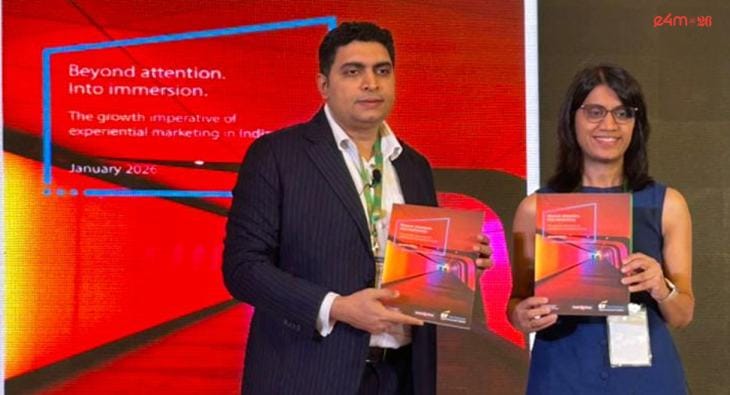

Marketing has largely been a battle for attention. Brands compete for impressions — on television screens, billboards, social media feeds and search results — hoping that a momentary glance might translate into recall or purchase.
But the rules of engagement are changing.
Today’s consumers are not just audiences; they are participants. They want to experience brands, not simply see them from afar. In India, this shift is beginning to reshape how marketers think about engagement, investment and long-term brand building.
.jpeg)
A new report by India’s leading entertainment destination, BookMyShow and strategy consulting firm, EY-Parthenon, titled ‘Beyond Attention. Into Immersion’, explores how experiential marketing is moving from the margins of marketing plans to the centre of brand strategy.
Speaking on the report, Raghav Anand, Partner and Leader - Digital, Media and Convergence, EY-Parthenon, said, “Experiential media already accounts for roughly 23% of India’s media and entertainment revenues - a clear signal that as consumers seek deeper emotional connection and cultural relevance, immersive formats are moving from the periphery to the centre of modern brand-building. The opportunity for brands today lies not just in participation, but in consistency, design discipline and robust measurement frameworks that move beyond impressions to capture memory, advocacy and long-term impact.”
“Experiential marketing in India has moved well beyond being a tactical add-on. What we are seeing today is brands investing with far greater intent - looking to build memory, meaning and measurable business outcomes through experiences. Live entertainment offers a uniquely powerful canvas for this, where emotion, attention and participation converge at scale. This report is our attempt to put structure and data behind what the industry is already witnessing on the ground,” said Samradha Tibrewala, Head - Partnerships and Revenue, BookMyShow.
.jpg)
The rise of the experience economy
India’s consumers are increasingly prioritising experiences from concerts, festivals, exhibitions, comedy tours and cultural events as a way to connect, express themselves and build a like-minded community.
According to the study, 78% of Indian consumers say they would rather spend on experiences than on products, making what was once considered an occasional indulgence now a key part of lifestyle and identity.
This shift is creating a rapidly expanding opportunity for brands. India’s live events market alone reached an estimated ₹13,000 crore in 2025, transforming concerts, festivals and cultural showcases into high-intent environments where brands can engage consumers more meaningfully.
When brands become part of the moment
Live events have emerged as one of the most powerful spaces for participatory engagement.
Unlike traditional advertising, where consumers encounter brand messages passively, experiential environments invite them to interact, explore and co-create moments. The result is not just attention, but memory.
Post-event surveys conducted among 7,450 live event attendees illustrate this impact. The data shows that 59% of attendees recall brands they interacted with at an event, while 81% felt a strong fit between the brand and the experience.
More importantly, 63% said the brand enhanced their overall event experience, translating into a 55% uplift in purchase intent and a 29% improvement in brand perception.
For brands, these outcomes signal something deeper: experiential engagement has the ability to influence not only recall, but also affinity and loyalty.
From tactical activation to strategic investment
The report suggests that experiential marketing is undergoing a structural shift in India. What was once seen as a tactical activation like a booth or a banner at a concert or a one-off sponsorship is now becoming a deliberate strategic investment.
Insights from the CMO survey show that more than half of brands executed experiential activations in the past year, and 88% of those that invested plan to continue doing so in a more structured way.
Over the past three years, 44% of brands that increased experiential spending reported growth of up to 30%, indicating that the approach is delivering tangible business results.
Brands are increasingly using experiences to achieve multiple objectives simultaneously — from building awareness and enabling product trials to driving sales and telling richer brand stories.
The brands shaping India’s experiential playbook
Across sectors, early movers are already experimenting with how to embed themselves meaningfully into cultural moments.
BFSI brands such as RuPay and Kotak Mahindra Bank have focused on improving access and convenience within high-demand entertainment environments.
Consumer brands like H&M, Budweiser 0.0 Non-Alcoholic Beer and Nivea have leaned into festival ecosystems, creating spaces where audiences can explore products while expressing identity and community.
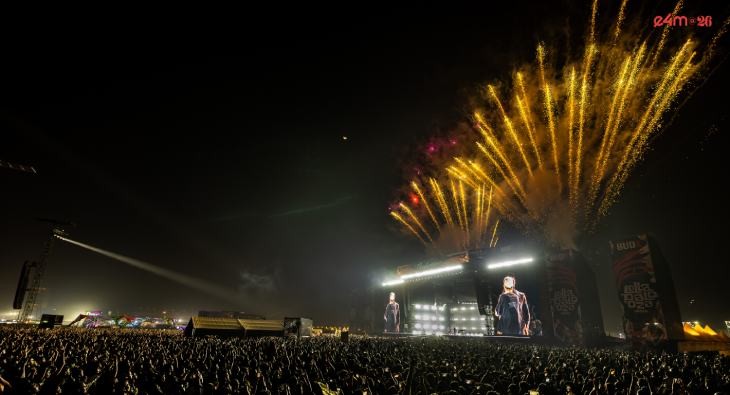
Amit Kothari, Head of Marketing, H&M India, shared, “Fashion and music have always shared a deep cultural synergy, and Lollapalooza offered the perfect stage to bring that relationship to life. At H&M, we believe in liberating fashion for many, and live festivals allow people to express who they are with confidence and joy. Our presence at Lollapalooza was designed to celebrate that spirit — blending style, creativity and community. The response reaffirmed that when fashion becomes part of a cultural moment, the connection with consumers becomes far more meaningful, memorable and emotionally rich.”
Meanwhile, retail and beauty platform Nykaa has turned experiential engagement into a destination through Nykaaland, a curated IP co-produced with BookMyShow Live, built around beauty discovery and culture.
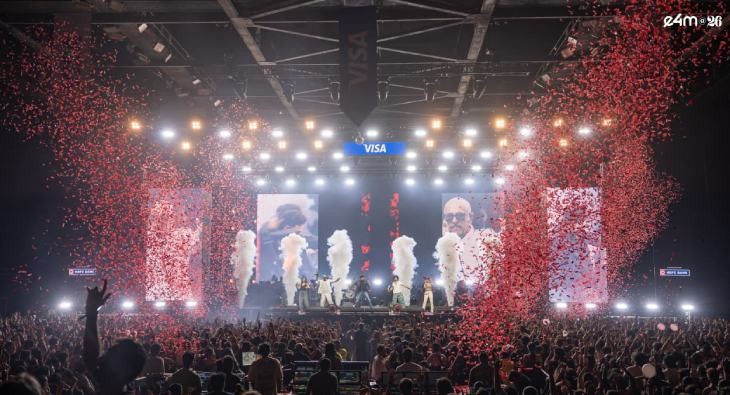
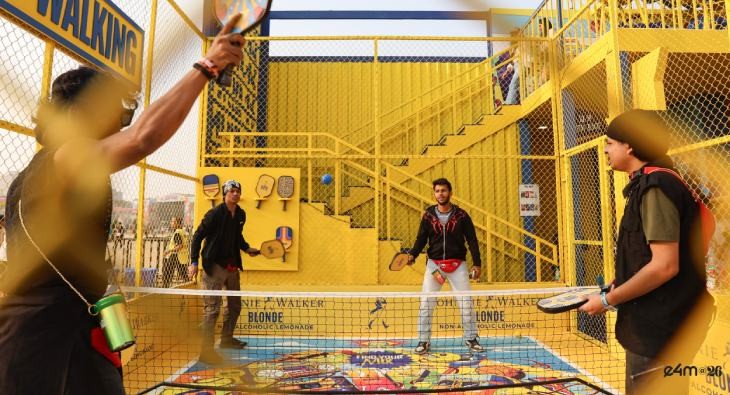
Other brands including Visa, Diageo (Johnnie Walker Refreshing Mixer Non-Alcoholic) and Hyundai are using experiential platforms to reinforce premium and youth-forward positioning.
“Music has always been a natural extension of our brands’ cultural strategy. Each of our labels shows up where its consumers already find meaning; whether that is social connection, global music fandom or elevated, luxury-led experiences. From McDowell’s Soda’s Yaari Jam, which celebrates the spirit of friendship, to Johnnie Walker Luxe Blended Water’s presence across large-scale tours like the Post Malone India concert, our associations reflect clear audience affinity. These partnerships allow our brands to participate authentically in the moments that shape contemporary Indian culture.” said Ruchira Jaitly, Chief Marketing Officer, Diageo.
Gaurav Ramdev, Head of Marketing, Visa, India and South Asia added, “Music has a rare ability to unite India. Live concerts amplify that energy — they are culturally rich, high-emotion moments where people want to feel, not just watch. At Visa, we believe in creating experiences that matter and resonate with the cultural zeitgeist. That is why experiential music marketing for us is about showing up with intent — delivering seamless, personal, and genuinely memorable moments for fans. Guided by our consumer-first approach, we strive to be wherever our customers are, enabling access to experiences they value most. In doing so, we strengthen trust, relevance and long-term preference, in a way only purposeful experiences can.”
India, powered by a vibrant entertainment ecosystem and digitally savvy audiences, is poised to become one of the fastest-growing markets in this space. For marketers, the message is becoming increasingly clear: attention can be bought, but immersion must be earned.
Read more news about Marketing News, Advertising News, PR and Corporate Communication News, Digital News, People Movement News
For more updates, be socially connected with us onInstagram, LinkedIn, Twitter, Facebook, YouTube & Google News