The grey area nobody wants to talk about
Guest Column: Kumar Suryavanshii, a Creative & Strategic Leader, explores on ageism in Indian advertising — an industry's uncomfortable truth
 by
by
Published: Jul 16, 2026 8:22 AM | 13 min read
 Follow Us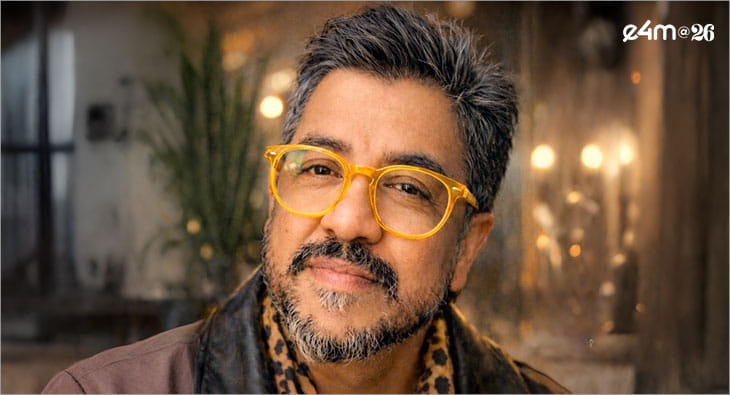

- A significant trend of ageism is emerging in the Indian advertising industry, where experienced professionals aged 45-50 are being sidelined in favor of younger talent, despite their extensive knowledge and contributions.
- Agencies are increasingly promoting younger individuals to senior roles without the requisite experience or compensation, leading to high turnover rates and a loss of institutional knowledge.
- The article emphasizes the importance of combining youthful energy with the wisdom of seasoned professionals to create impactful advertising, arguing that both elements are crucial for success in the industry.
- A call to action is made for industry bodies to establish mentorship programs and address age-related biases, advocating for a more inclusive approach that values contributions from all age groups.
"Anubhav woh school hai jahan pehle imtihaan hota hai, phir padhaya jaata hai." (Experience is the school where the exam comes first, then the lesson.)
There is a quiet exodus happening in Indian advertising. It doesn't make headlines. Nobody tweets about it. No industry body has issued a statement. But if you've been in this business long enough…and many of us have…you can feel it. Slowly, steadily, a generation of India's most battle-tested creative minds is being shown the door. Not because they stopped being good. But because they stopped being young.
We call it many things. "Culture fit." "Fresh energy." "Future-ready thinking." But let's call it what it actually is: ageism. And it is costing this industry far more than it thinks it's saving.
The Invisible Expiry Date
Somewhere between the ages of 45 and 50, a curious thing happens to advertising professionals in India. The phone calls thin out. The headhunter emails stop. The LinkedIn "Open to Work" banner…once a formality…becomes a quiet cry into the void.
This isn't anecdotal. Walk into any major agency's creative floor today and count the grey heads. Then count them again five years ago. The contrast is startling.
The industry has collectively decided…without saying so…that creativity has a shelf life. That the person who spent 25 years understanding the Indian consumer, building campaigns that moved markets and won metals also, is somehow less relevant than someone who has been in the business for four years but knows their way around a trending audio.
"Umar sirf unhe taqleef deti hai jo sirf umar ko maante hain." (Age only bothers those who think age is all that matters.)
The irony? The very campaigns this industry celebrates as timeless…the work that still gives us goosebumps…were almost always made by people with decades of sweat behind them. Piyush Pandey wasn't 20 when he changed Indian advertising forever. Neither was Balki. Neither was Prasoon Joshi.
The Designation Circus
Here is where it gets uncomfortable…and where I'd like the industry to sit with some honest discomfort.
In recent years, a peculiar trend has emerged. Agencies, under pressure to appear modern and attract young talent, have begun handing out senior designations…ECD, Creative Head, even CCO…to professionals who are talented, yes, but are frankly two or three career cycles away from the weight those titles traditionally carry.
And here's the part nobody says out loud: they're not being paid what those designations command.
Let's be honest about the numbers. An ECD or Creative Head in India, commensurate with the experience and accountability the role demands, commands between Rs. 42–60 lakhs per annum…sometimes more, depending on credentials and the scale of the mandate. A CCO? The range climbs significantly higher. These aren't arbitrary figures. They reflect the genuine market value of someone who has sat across from a CEO and defended a brand strategy, who has rebuilt a team from scratch, who has lost a pitch and learned more from that loss than from ten wins.
But the young CCO being given the badge today? Often earning a fraction of that range. And happy with it…for now. Because the title feels like arrival.
The agency thinks it's being clever. It's saving the salary gap between what a seasoned professional would cost and what an ambitious youngster will accept. And for a season, it works. The young talent is energised, motivated, proud.
Then reality arrives. They look around. They compare. They get a call from a recruiter. And they leave….faster than any senior professional ever would have…because they have nothing anchoring them. No equity. No institutional loyalty built over years. No golden handcuff even.
And the agency? Back to square one. Except now they've also lost 18 months of institutional knowledge the young talent was still building.
The circus has failed. Again.
New Energy Is Not The Enemy. Mistaking It For Wisdom Is.
Let me be absolutely clear about something: young creative talent in India today is extraordinary. Their instinct for culture, their native fluency with platforms, their speed, their visual language…these are not things to be dismissed or patronised. They are genuine superpowers.
The problem is not new energy. The problem is what happens when new energy enters a room with no wisdom to guide it.
Think of it this way. A Formula 1 car is breathtaking…raw speed, precision engineering, built to go faster than anything you've seen. But without an experienced pit crew, without a strategist reading the race, without someone who has seen this exact corner in this exact weather at this exact moment…that car spins out.
"Tez daudna aur sahi disha mein daudna…dono alag cheezein hain." (Running fast and running in the right direction… these are two different things.)
The industry desperately needs both. And right now, it is structurally discouraging one half of that equation.
The AI Question — Wisdom Is The Prompt
Let's talk about the other elephant in the room: Artificial Intelligence.
AI is not the enemy either. It is, genuinely, one of the most powerful creative tools this industry has ever seen. The speed of execution, the scale of personalisation, the ability to explore 40 creative directions in the time it used to take to sketch three…these are real advantages and they are here to stay.
But here is what nobody is saying loudly enough: AI is only as good as what you ask it.
"Give me an idea for a Friendship Day campaign" will get you something. But "Give me an idea rooted in the guilt of the unmade call, for an audience of 28–40-year-old working professionals in Tier-1 and Tier-2 India whose college friendships are being slowly swallowed by the pace of life"…that prompt comes from someone who has spent years understanding how real people feel, not from someone who has spent years understanding how to use a tool.
The wisdom to prompt is not in the AI. It is in the human holding the keyboard. And that human…that battle-scarred, insight-rich, emotionally intelligent creative professional…is exactly who the industry is currently trying to phase out in favour of someone younger who uses AI like a bible, asking it to replace thinking rather than accelerate it.
"Hathiyaar kitna bhi kaam ka ho, usey chalane wale ka dimag zyada kaam ka hota hai." (No matter how powerful the weapon, the mind that wields it matters more.)
The Trophy Nobody Saw
Here's a thought experiment. Take your agency's most celebrated award-winning campaign from last year. Now ask yourself honestly: how many real Indians saw it? Not the jury. Not your LinkedIn feed. Real people…in Kanpur, Coimbatore, Kohima.
If the answer makes you uncomfortable, you're not alone.
Indian advertising has developed a quietly damaging habit: building work for the shelf rather than for the street. A hyperlocal activation. A case study dressed in dramatic music. A limited-edition product that sold 200 units but won a Lion. Consumer kahin tha hi nahin…sirf camera tha.
"Case study itni badi, consumer itna chota." (The case study was enormous. The consumer was nowhere to be seen.)
And here's the unintended casualty: young talent. When the work that wins awards is work the janta never encountered, we accidentally teach an entire generation that obscure equals intelligent, that inaccessible equals artistic. That "pati gali mein kaam karna"…the odd, the niche, the jury-engineered…is what creative excellence looks like.
It isn't. We are commercial artists. Our canvas is the marketplace.
The real brief has always been this: make something that walks into the consumer's daily conversation uninvited and stays there. The jingle a child hums without knowing why. The tagline a shopkeeper uses to explain a product. The film a housewife forwards to her sister on WhatsApp because it moved her.
Woh kaam award ka asli haqdar hai.
Award that work…the work that moved the janta and built the business…and watch something beautiful happen. The galatfehmi dissolves. Young talent stops chasing the obscure and starts chasing the true. And our shelves finally hold trophies the whole country earned together.
An Appeal to the Industry — And to AAAI, IAA & The Advertising Council
This is the part of the article where I stop observing and start appealing.
The Advertising Agencies Association of India, the International Advertising Association's India chapter, the Advertising Club…these are not just ceremonial bodies. They have the platform, the credibility, and frankly the responsibility to address what is fast becoming a structural crisis.
Here is what I would like to propose….humbly, but with conviction:
- A "Creative Counsel" ProgrammeA structured arrangement where senior creative professionals above 40…those who have chosen to or been forced to step out of full-time roles…are brought into a formal mentorship and advisory ecosystem. Not charity. Not nostalgia. A paid, structured engagement where they consult on campaigns, sit in on pitches, guide young teams, and bring the kind of perspective that only time can build.
- Industry-Wide Designation StandardsThe advertising industry needs an honest conversation about what designations actually mean and what they should command…both in terms of experience and compensation. An ECD who has been an ECD for three years with no grey hair is not the same as an ECD who rebuilt a creative department from the ground up. Both can be called ECD. Only one has truly earned it.
- A Senior Creative Talent ExchangeA database…maintained by the Advertising Club or AAAI….of senior creative professionals available for project-based, consulting, or part-time engagements. Brands and agencies who need depth without a full-time commitment can find it here. And the professionals get a dignified way to stay active and relevant.
- Ageism Awareness at Award ShowsOur industry celebrates work. It should also celebrate the people behind it…at every stage of their careers. A category at Goafest or Abbys for "Legacy Leadership"…recognising senior professionals still doing remarkable work…would send a signal that this industry values longevity, not just youth.
The Balance Sheet of Wisdom
Advertising is a strange business. It is simultaneously about the future…new trends, new platforms, new audiences…and about something eternal: human emotion, human need, human behaviour. The platforms change. The humans don't.
The 50-year-old creative director in the room has seen three platform revolutions. She has watched television kill radio, the internet kill television (or so we thought), and social media reshape everything again. She is not scared of the next wave. She has surfed before.
The 26-year-old art director is building his first surfboard. He is fast, instinctive, and brilliant. But he has never been caught in a riptide.
You need both of them in the water.
"Nayi lehar ko rokna bewakoofi hai. Nayi lehar ko bina naavik ke chhodna aur bhi badi bewakoofi hai."(Stopping the new wave is foolishness. Leaving the new wave without a navigator is an even greater one.)
The Industries That Never Forgot
Here is what makes advertising's ageism even harder to defend: step outside the agency world, and the problem largely disappears.
Look at Bollywood. Look at OTT. Look at the broader entertainment and content ecosystem that advertising is desperately trying to learn from…and notice something quietly remarkable. Age is not a filter. Contribution is.
Gulzar saab is in his nineties. He wrote lyrics last year that a 22-year-old couldn't have. Vishal Bhardwaj is still the most musically sophisticated filmmaker working in Hindi cinema. Shyam benegal directed until his final years. On the OTT side…the writers' rooms for India's most celebrated series are deliberately multi-generational. The showrunner who has written for Doordarshan sits beside the writer who grew up on Netflix. Both are in the room. Both are heard.
"Bollywood mein retire hone ki koi umra nahin hoti… bas kaam band ho jaata hai jab dil band ho jaata hai."(In Bollywood, there is no retirement age…the work stops only when the heart does.)
This is not sentiment. It is strategy. The entertainment world understood something advertising forgot: that the marriage of fast energy and deep wisdom is not a compromise …it is a competitive advantage.
The young director brings the visual grammar of today. The seasoned writer brings the emotional architecture that makes audiences cry at 2am. The new composer brings the sound of the moment. The veteran lyricist brings the word that makes the song last twenty years. Neither can fully replace the other. Both know it. And the best productions celebrate that interdependence openly.
The result? Content that is simultaneously of its time and beyond it. Shows that trend on Monday and are still being discussed on Friday. Songs that go viral and then stay. Stories that the algorithm amplifies and the heart keeps.
Advertising…which has always borrowed its best instincts from storytelling…would do well to borrow this one too.
"Ped ki taakat uski jadon mein hoti hai, uski shaakhaon mein nahin…par dono milkar hi saaya dete hain."(A tree's strength lies in its roots, not its branches…but only together do they give shade.)
The question for our industry is simple: if the world's most culturally influential storytellers have found a way to keep wisdom alive alongside fresh energy…what exactly is advertising's excuse?
We don't need to reinvent the model. We just need to borrow it from the room next door.
In Closing
I write this not as someone bitter, but as someone who genuinely loves this industry and wants to see it flourish…with all of its talent, at every stage of life.
The best campaigns I have seen in my career were never made by the youngest team or the most experienced one. They were made by rooms where both sat together…where wisdom shaped the brief and energy brought it to life. Where the 52-year-old's insight about what the Indian housewife really feels met the 24-year-old's instinct for how to say it on Instagram.
That combination is irreplaceable. And right now, the industry is trying to replace it with just one half.
It won't work. It never does.
The grey area in advertising isn't a problem to be solved. It's a resource to be valued.
Kumar Suryavanshii is a Creative & Strategic Leader with 20+ years across Ogilvy, Lowe Lintas, BBH, FCB, Leo Burnett, Publicis, and more. He is a lyricist, brand filmmaker, OTT consultant, and one of Indian advertising's most vocal advocates for the craft. He can be reached on LinkedIn.
Read more news about Internet Advertising India, Marketing News, PR and Corporate Communication News, Digital Media News, Television Media News
For more updates, be socially connected with us onInstagram, LinkedIn, Twitter, Facebook YouTube & Google News