Beyond the label: the ‘energy drink’ row puts law and creativity in the same frame
With Red Bull in the Delhi High Court over FSSAI's descriptor order, lawyers and a creative head weigh in on what changes for labels, ads and brand codes
.png) by
by
Published: Sep 30, 2026 8:33 AM | 8 min read
 Follow Us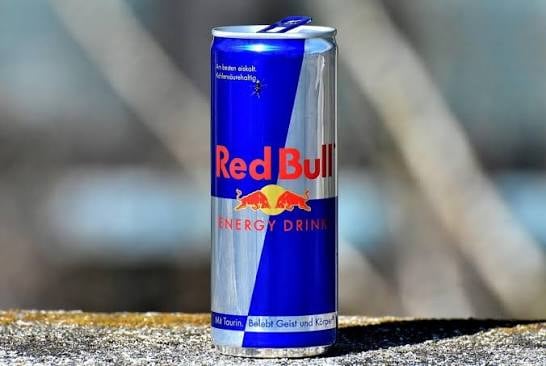

- The FSSAI has ordered six brands, including Red Bull and PepsiCo's Sting, to remove the term "energy drink" from their labels and marketing within 90 days, suggesting "caffeinated beverage" as an alternative due to the absence of a notified standard in India.
- Red Bull has challenged this directive in the Delhi High Court, arguing that it was issued without prior notice and contradicts a previous advisory that allowed the term's use; the case is set for further hearing on September 29.
- The legal dispute raises questions about the extent of the FSSAI's authority over product descriptors and its implications for brand identity, advertising strategies, and consumer recognition in a rapidly growing market projected to reach $1.6 billion by 2028.
- If the term "energy drink" is banned, brands may need to adapt their marketing strategies, focusing on what the product does rather than what it is, potentially leading to a shift in advertising approaches and increased reliance on distinctive brand assets.
For over two decades, the words ‘energy drink’ have done a lot of heavy lifting on Indian shelves, hoardings and sponsorship decks. That shorthand is now in question.
FSSAI has directed six brands, Red Bull, PepsiCo's Sting and Adrenaline Rush, Reliance Consumer Products' Campa Energy Gold Boost, Hell Energy, and the Coca-Cola-backed Monster, to remove the term from labels, marketing and advertisements within 90 days. The regulator says India has no notified standard for the category and has floated ‘caffeinated beverage’ as an alternative.
Red Bull, which says it has sold in India under the descriptor since 2002, has moved the Delhi High Court, citing a March 2024 FSSAI advisory that it says permitted its use. Justice Amit Mahajan has asked whether a show-cause notice was issued before the order; no interim relief has been granted so far, and the matter is listed for further hearing on September 29. PepsiCo, for its part, has said it will drop ‘energy’ from Sting to comply.
The case is being read as a legal test and a creative one. Lawyers are asking how far a food regulator can go in reshaping an established descriptor, while agencies are asking how brands sell a feeling when the category name is taken off the table.
Read: Red Bull moves Delhi HC against ban on ‘energy drink’ descriptor
PepsiCo drops ‘energy’ label from Sting packaging ahead of FSSAI deadline
FSSAI crackdown pushes packaged-food brands to rethink claims, campaigns
Where the law stands
At its core, the dispute is about power and process. Red Bull's petition leans on two arguments: that the direction came without prior notice or a hearing, and that it upends a regulatory position the company had relied on for years. The business stakes are real too. Industry estimates vary widely depending on how the category is defined, but the segment has been pegged at roughly $1.6 billion by 2028, growing at over 12% annually, which explains why every word on the can is being fought over.
Ankit Rajgarhia, Partner at Bahuguna Law Associates, a law firm, says the matter cannot be read as a simple relabelling exercise. “The controversy therefore extends beyond a change in the wording appearing on a can. It potentially affects the commercial identity, advertising strategy, consumer recognition and contractual investments of businesses operating in the sector.”
That framing matters because FSSAI's powers are wide. Sections 23 and 24 of the Food Safety and Standards Act, 2006, give the regulator authority over labelling and advertising, and the Advertising and Claims Regulations, 2018, extend to claims made in digital communication as well. The open question is whether an order aimed at product descriptors automatically reaches every corner of brand communication, or whether its wording and statutory basis leave room for a narrower reading.
Beyond the can
For agencies, this is where the story turns from courtroom to campaign calendar. The 2018 regulations define advertising broadly, covering print, electronic media, the internet and websites, and treat sponsorships and promotions as marketing communications. On paper, that gives FSSAI a long arm if the descriptor is ultimately held to be misleading. In practice, the scope of the June direction will decide whether influencer reels, sponsorship activations and always-on social content need to be reworked or simply reviewed.
Rajgarhia is careful on this point. “However, it is important to distinguish between a labelling restriction and a blanket advertising prohibition. The present dispute does not necessarily mean that every use of the words ‘energy drink’ in every form of communication is automatically prohibited.”
Ankit Sahni, Partner at Ajay Sahni Associates, a law firm, reads the exposure a little more broadly while keeping the same caution. “The implications go considerably beyond product labelling.” In his view, a validly imposed restriction could touch digital campaigns and paid influencer content wherever the expression is used as a product descriptor, though he too separates regulating how a food is described from banning every use of the words in marketing. He also flags the 2024 advisory as a point that could weigh heavily. “To the extent Red Bull’s products fall within those categories, a subsequent reversal of that position assumes greater significance.”
Protecting the brand world
If the descriptor goes, what remains? The answer from the legal side is reassuring for brand custodians. A category word and a brand identity are different assets, and the law treats them differently. Distinctive elements such as the name, logo, colour palette and pack design sit in a separate bucket from a generic product tag.
Rajgarhia puts it plainly. “A restriction on a generic or descriptive product category does not necessarily affect rights in the ‘RED BULL’ mark, logo, trade dress or other distinctive brand assets.” For creative teams, that is effectively a brief in itself: the distinctive assets will have to carry more of the load than they ever did.
Beyond that, the lawyers see a fairly clear playbook for brands in this spot. Companies can seek interim protection against coercive action while the legality of the direction is tested, ask for a reasonable transition period to exhaust packaging, inventory and promotional material, and document their spending on advertising, sponsorships and influencer contracts so that the investment story is on record before the court. Past licences, approvals and advisories can support arguments on procedural fairness and legitimate expectation. Sahni adds a practical note on how brands should behave meanwhile. “Brands which have invested substantially in packaging, advertising and consumer recognition around an established product description would ordinarily seek to protect those investments through appropriate legal challenge, while simultaneously preparing a compliance strategy.”
The compliance track has a very ad-industry flavour to it. Audits of live campaigns, websites, e-commerce listings and creator content are the unglamorous first step, and agencies with always-on retainers will be the ones doing much of the heavy lifting.
The creative rethink
Assuming the descriptor does go, the creative question is how to sell energy without saying the word. A descriptor is efficient because it is short. It tells the consumer what the product is before a single frame plays, and it has powered a whole set of category codes, from extreme sports and gaming universes to cricket and music tentpoles. Losing it pushes brands from borrowing category meaning to owning it through distinctive assets, and it may mean more repetition, more frames and, inevitably, more adex to build the same recall.
Anadi Sah, National Creative Director at tgthr, a full-fledged agency founded by Aalap Desai, believes agencies do not get to argue with the rulebook. “If the regulator says that a company cannot call its product an ‘energy drink’, then it cannot do so. You cannot bypass the government and the law.”
He is equally clear about where the agency sits in the chain. The product definition and compliance sign-offs come from the client, and the creative response follows. In his words, “From an agency perspective, the product comes first, and the agency comes in at a later stage. If we are told that a product is called something else, we will create the advertising around that.” In practice, that shifts the conversation from the noun to the verb. Rather than announcing what the drink is, campaigns will need to dramatise what it does, through insight-led stories around late nights, match days, gym sessions and long commutes, the same occasions the category has always traded on.
The surrogate question
There is also a precedent the fraternity knows well. Alcohol brands, barred from advertising liquor, have long built recall through soda, music and sparkling-water extensions that carry the same colours, codes and campaign territories. It is a playbook that will surely come up in a few brainstorm rooms, and Sah sees it as a legitimate bridge. “Surrogates exist for a reason. If you cannot market something directly, there are alternative ways of building brand recall.”
The approach has limits. Surrogates work only when brand equity is strong enough to travel without its product claim, and they can invite scrutiny of their own. As a stopgap, though, they let brands stay present in culture while the category question is settled. Sah also keeps the door open for challengers who believe they meet the standards, since brands can contest a categorisation if they bring the right evidence, studies and research to prove their case.
What emerges is a category that may have to rediscover how it talks, not what it sells. Courts will take their time, and lawyers will keep parsing the wording of the order. Creative teams do not have that luxury. The brands that come out ahead are likely to be those that treat the label as replaceable and the brand world as permanent, with legal, media, and creative working off the same page.
Read more news about Internet Advertising India, Marketing News, PR and Corporate Communication News, Digital Media News, Television Media News
For more updates, be socially connected with us onInstagram, LinkedIn, Twitter, Facebook YouTube & Google News
