Beyond prescriptions: Why pharma is adopting the FMCG playbook
With consumers expecting clarity, relatability and trust, healthcare companies are adopting FMCG-style branding, storytelling and communication to be discoverable
 by
by
Published: Aug 21, 2026 8:54 AM | 7 min read
 Follow Us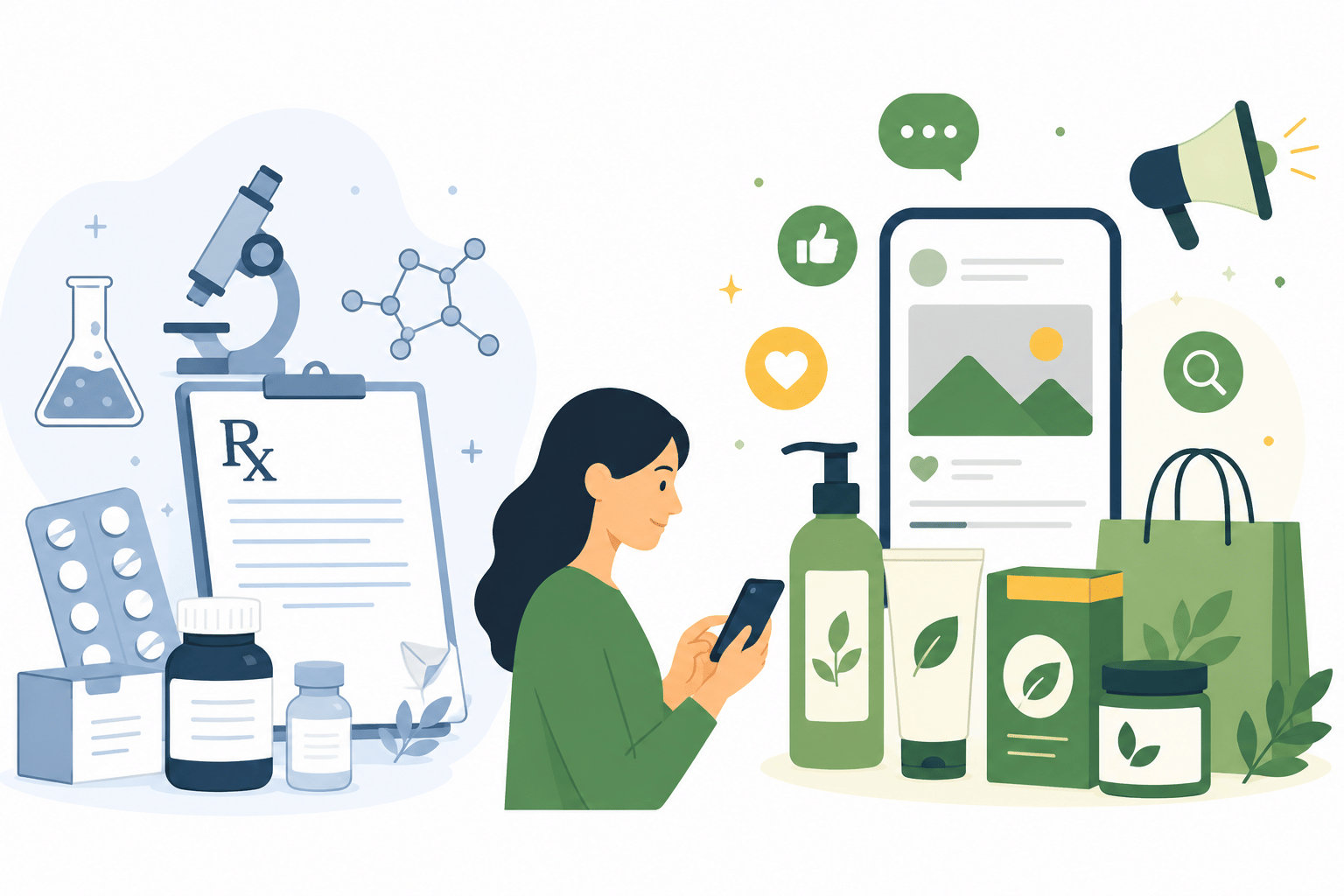

- India's pharmaceutical market is transitioning from a prescriber-led model to a consumer-centric approach, particularly in the OTC, wellness, nutrition, and self-care sectors, as companies adopt FMCG marketing strategies.
- The OTC market is projected to grow from approximately ₹47,000 crore in 2024 to ₹98,000 crore by 2030, highlighting a significant shift towards consumerization in healthcare.
- Consumers are becoming more proactive in their health choices, relying on personal experiences and brand trust for repeat purchases, while initial decisions still often involve healthcare professionals.
- Pharma and OTC brands are increasingly focusing on digital-first advertising, relatable storytelling, and building direct consumer relationships to enhance brand trust and engagement, reflecting a broader change in healthcare marketing strategies.
For decades, India's prescription pharmaceutical market was built around the doctor as the key gatekeeper, with medical representatives, scientific detailing and HCP engagement forming the backbone of brand promotion. Consumer communication existed, particularly in categories such as OTC medicines and consumer healthcare, but the consumer was not always the primary driver of the marketing model.
That is beginning to change.
As pharma companies expand into OTC, wellness, nutrition and self-care, they are increasingly shifting from a prescriber-led model towards a more consumer-centric approach, bringing elements of the FMCG playbook into healthcare. Brand building, benefit-led communication, packaging, digital content, consumer education and stronger retail and e-commerce presence are becoming increasingly important in creating consumer pull.
The opportunity is significant. EY-Parthenon estimates India's OTC market was worth around ₹47,000 crore in 2024 and could nearly double to ₹98,000 crore by 2030, growing at around 13% CAGR. The report describes the opportunity as a structural shift from prescription to consumerisation, requiring pharma companies to rebalance investments from prescriber push towards consumer pull.
The changing role of the consumer is particularly evident in repeat purchases. EY's survey of 624 consumers found that more than 80% still rely on healthcare professionals or experts for their first OTC purchase. But for repeat purchases, usage experience and brand trust increasingly influence the decision.
This is where the FMCG analogy becomes relevant. Pharma may still need the credibility of the doctor and the scientific authority of the category, but OTC and wellness brands increasingly have to win the consumer much like any other consumer brand: by being discoverable, understandable, distinctive and trusted.
The shift is not only changing who healthcare brands communicate with, but also what they seek to achieve through marketing.
Shivam Puri, CEO, One India Business, Cipla said, “Indian consumers today are more health-conscious than ever, with growing awareness of hydration, nutrition, immunity, and preventive care. Yet awareness alone is not enough to create lasting habits. Wellness becomes sustainable when it is accessible, convenient, and embedded in everyday routines.”
Puri added that Cipla Health is focused not just on building awareness but on making healthier choices easier to adopt and sustain. As consumers take a more active role in choosing health and wellness products, brands are increasingly prioritising relevance, simpler decision-making and stronger consumer connections, bringing FMCG-style principles of accessibility, consistency and habit-building into the category.
He further explained that brands are moving beyond awareness to focus on building trust, driving adoption and fostering long-term engagement. While FMCG offers lessons in category creation and consumer engagement, healthcare carries a greater responsibility, with trust at the heart of every decision. The brands shaping the category will be those that combine consumer understanding with scientific credibility and make healthier choices easier to sustain.
This was further reiterated by Mansi Khanna, Chief Operating Officer, Dr. Reddy's and Nestlé Health Science Ltd., who said Indian consumers are becoming more proactive about health choices, researching online, reading reviews and seeking recommendations before purchasing. Greater focus on preventive health and a digitally savvy population are making health decisions increasingly similar to lifestyle choices.
“For pharma and OTC brands, efficacy alone is no longer enough. Consumers expect clarity, relatability and trust. That’s why healthcare players are adopting FMCG-style branding - stronger identities, sharper storytelling and consumer-centric communication. The real opportunity lies in marrying scientific credibility with the simplicity and emotional connect modern consumers demand,” Khanna said.
She noted that consumer communication is now a strategic priority for pharma and OTC brands, with investments shifting towards digital-first advertising, influencers and brand storytelling. As consumers increasingly research beyond doctor-led prescriptions, brands are building direct relationships through social media, search and lifestyle-led campaigns. She added that sharper identities, relatable narratives and digital KOLs are gaining traction, as efficacy alone is no longer enough to drive adoption.
D2C brands also pitch in
For D2C health and wellness brands, this consumer-first approach is built into the business model itself. Unlike traditional pharma players that are now adapting to changing consumer behaviour, these brands have been built around direct consumer relationships, digital discovery and education, making them early adopters of FMCG-style branding and communication.
Varun Kandhari, Chief Marketing & Growth Officer, Wellbeing Nutrition, said consumers are becoming more informed and actively researching ingredients, comparing formulations, reading reviews and seeking expert opinions before making health choices. This is pushing OTC and wellness brands towards FMCG-style branding to make health benefits more relatable, while retaining the credibility, transparency and scientific rigour expected from healthcare. He added that brands that can simplify complex health conversations without diluting the science will be better placed to build lasting trust.
“Digital has enabled health and wellness brands to educate consumers at scale, and social platforms have opened up entirely new spaces for experts, creators and communities to shape the conversation. We're seeing more emphasis on brand storytelling, educational content, expert voices, creator-led experiences and community-driven advocacy, rather than relying only on traditional advertising,” Kandhari said.
Kandhari added that in healthcare, awareness alone is not enough to build influence, with credibility ultimately depending on product quality, evidence and consistency of claims. For Wellbeing Nutrition, this means making science more accessible without compromising rigour. He said the future of health marketing lies in combining scientific credibility with storytelling that consumers can understand, trust and act on.
For Bold Care, the biggest driver is the consumerisation of healthcare across pharma, OTC and wellness. The company said consumers are increasingly researching, comparing products, reading reviews and seeking expert opinions before purchasing. While efficacy remains the foundation, brands now also need clear communication, credible education and a trustworthy consumer experience, with efficacy driving consideration and trust ultimately influencing choice.
Rajat Jadhav, Co-founder & CEO, Bold Care noted, “Marketing spends are increasingly shifting from traditional awareness-led advertising towards digital channels and content-led campaigns, alongside stronger brand assets and sharper communication. As consumer behaviour evolves, pharma and OTC brands are placing greater emphasis on consumer-facing and creator-led communication to build awareness, relevance, and consideration.”
From prescriptions to preference
The shift is also being seen from the agency side, where the changing role of the consumer is influencing how healthcare brands approach media, brand building and measurement.
Amyn Ghadiali, Country Head, Gozoop Creative, explained that pharma's traditional focus on doctors and chemists is being disrupted as consumers take a more active role in healthcare decisions. With self-medication accounting for only around 10% of India's out-of-pocket health spend and the OTC market projected to nearly double from ₹47,000 crore in 2024 to ₹98,000 crore by 2030, he said brands will increasingly need to build consumer preference before a health need arises. In this environment, efficacy is becoming a baseline, while brand trust and recall can determine which product consumers choose.
He said, “The money is moving from the field force to the feed. The rebalancing underway shifts from prescriber push to consumer pull, front-loading ATL, BTL and digital spends. Eight of India's top ten pharma companies have already built dedicated consumer healthcare portfolios to fund this shift.”
He noted that digital now accounts for 60% of India's ₹1.55 lakh crore advertising market, while quick-commerce advertising alone has grown to ₹4,000 crore, a channel that was largely absent from pharma media plans five years ago. As health remains a trust-led category, spends are shifting from reach towards credibility through doctor-led content, condition-first ecosystems and visibility in AI-generated answers. He added that measurement is also evolving, with brands increasingly tracking share of search, AI citations and repeat rates alongside traditional prescription and reach metrics, mirroring FMCG measurement.
The shift, therefore, is not simply about pharma advertising becoming more consumer-facing. It represents a broader change in how healthcare brands build categories, create preference and sustain consumer relationships. The doctor remains an important source of authority, particularly for first-time decisions, but as OTC and wellness expand, brands increasingly need to win the consumer before, during and after the point of need.
Read more news about Marketing News, Advertising News, PR and Corporate Communication News, Digital News, People Movement News
For more updates, be socially connected with us onInstagram, LinkedIn, Twitter, Facebook, YouTube & Google News
