Celebrity Rights vs Creative Freedom: The advertising tightrope in the AI era
In a world where AI can mimic anyone, the ad industry must balance innovation with integrity – redefining what’s fair, ethical, and original in brand storytelling
 by
by
Published: Oct 17, 2025 9:11 AM | 7 min read
 Follow Us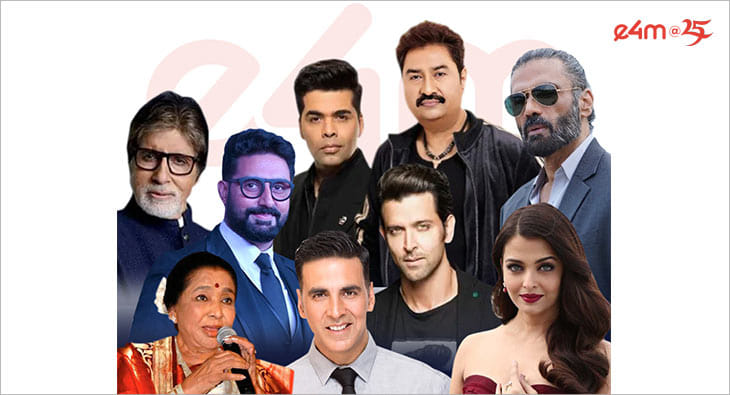

When Suniel Shetty recently approached the Bombay High Court over a set of AI-generated “obscene” images circulating in his name, it wasn’t just another celebrity lawsuit, it was a sign of the times. Within weeks, Akshay Kumar sought similar protection against deepfake videos promoting dubious products. Just months earlier, Asha Bhosle, the Bachchans, and Karan Johar had done the same.
Each of these petitions reads differently, but they all stem from a shared anxiety: in an era where a machine can replicate your voice, your face, and even your personality, what does “ownership” of identity really mean?
For advertising and entertainment, this question has shifted from philosophical to practical. As brands lean into hyper-real AI and personality-driven storytelling, the line between inspiration and infringement continues to blur. Agencies, artists, and lawyers are now negotiating a new grammar of creativity — one that is equal parts expressive and ethical.
Read On: Beyond the Hype: India’s AI reckoning for ads and social media
The Legal Spark That Lit the Fire
The momentum traces back to Amitabh Bachchan’s 2022 Delhi High Court win, which granted him interim protection against unauthorized use of his image and voice. That order quietly set a precedent: it recognized that a celebrity’s persona isn’t just fame, it’s a form of property.
From there, the cases multiplied. Asha Bhosle challenged AI voice cloning on music platforms. The Bachchans targeted Google and YouTube for hosting deepfake content. Karan Johar and Hrithik Roshan secured injunctions over manipulated clips. Suniel Shetty and Akshay Kumar extended the fight to reputational misuse and obscene imagery.
Together, these petitions have expanded what “personality rights” mean in India’s digital context, from commercial protection to emotional and moral rights, especially when AI enters the frame.
Read On: Karan Johar moves Delhi HC seeking protection of personality rights
A System Catching Up to a New Reality
India doesn’t have a standalone personality rights statute yet. The protections emerge from a patchwork of privacy law, tort principles, and trademark rules. Courts have stepped in to fill the gaps, balancing expression with consent on a case-by-case basis.
Chirag Jain, Associate Partner at DSK Legal, says this judicial improvisation is both necessary and revealing, “Courts and regulators are racing alongside technology to define standards that protect rights without stifling creativity. Generative AI has blurred traditional lines of accountability, so the focus is now on intention, commercial gain, and reputational impact.”
He adds that courts are starting to look beyond imitation to the purpose of content, “It’s no longer about who looks or sounds similar, it’s about whether the likeness misleads audiences or monetises a persona without consent.”
That shift, Jain says, will push advertising and entertainment towards greater legal literacy, not less creative freedom.
Read On: Navigating cultural representation: The new creative dilemma in advertising
The Policy Backdrop: Are the IT Rules Enough?
The current IT Rules (2021) empower intermediaries to remove harmful or deceptive content, but they weren’t written with AI-generated likenesses in mind. As a result, takedowns depend heavily on notice-and-action systems rather than proactive detection.
The upcoming Digital India Act, expected to replace the IT Act, is where industry hopes real reform will emerge. Early drafts hint at rules around synthetic content labelling, consent-based AI use, and stricter platform accountability.
Jain notes that while the Act’s details are awaited, its spirit is clear, “Regulation is moving from reaction to responsibility. The new framework will likely require platforms and advertisers to ensure provenance and permissions before deploying AI likenesses.”
For now, industry players are left interpreting “reasonable precautions” through self-regulation and ethics charters.
Read On: Aishwarya Rai, Abhishek Bachchan sue YouTube over AI deepfakes
Inside the Agency Shift
For creative agencies, the deepfake debate isn’t theoretical, it’s already in the brief room.
Krishna Iyer, Director of Marketing, at MullenLowe Lintas Group, says the conversation has evolved from curiosity to caution, “We’ve always used pop culture and celebrity cues to build resonance. What’s changed is the ease with which likeness can now be copied. The moment recognition is involved, consent becomes non-negotiable.”
He points out that speed which is AI’s biggest selling point, is also its biggest trap, “AI can generate a campaign visual in seconds, but the law moves in months. So, we’re creating internal AI-use playbooks, from creative ideation to client approval, that ensure we move fast without breaking trust.”
Iyer believes that the future of celebrity advertising lies in clarity, not caution. “Brands won’t stop using famous faces; they’ll just do it with watertight contracts and better guardrails. The real opportunity lies in original IPs, mascots, avatars, or purpose-led characters that brands can own outright.”
Creativity With Conscience
Ruchita Zambre, Creative Head - West & Design Director, TBWA\India, sees AI less as a threat and more as a test of creative integrity. “True creativity doesn’t rely on borrowing someone’s identity. It’s about using AI as a canvas, not as camouflage.” She believes the responsibility starts within the agency, “When you have a tool that can bend reality, you need strong ethical checks. It’s not about limiting creativity, it’s about protecting what makes it meaningful.”
Zambre also defends humour and parody as essential creative tools, but with intent in the right place, “Spoofs should make people laugh at cultural moments, not at individuals. If the reason for creating satire is empathy or entertainment, it will always land right.”
Read On: In the age of deepfakes, even proof needs proof: Rachana Panda, Bayer
The Grey Zone: Satire, Spoof, and Deepfake
Satire occupies a delicate middle ground. It thrives on exaggeration, but in the AI age, exaggeration can look frighteningly real.
Courts are beginning to treat AI deepfakes differently from traditional parody because they risk deception. Jain explains, “Parody has a long legal tradition of protection when it’s transformative. But when synthetic content looks indistinguishable from reality, disclaimers become essential. Transparency is now a legal safeguard, not just a courtesy.”
For advertisers, that means one new rule of thumb: if it can be mistaken as real, it needs consent or a clear label.
The Industry’s New Discipline
The growing list of lawsuits has had a quiet disciplining effect across adland. Talent contracts now include clauses for digital likeness, AI derivatives, and future technologies. Client-agency agreements often specify how generative tools can be used, and who owns what.
Jain notes, “Brands and agencies are moving towards meticulous documentation. Explicit consent and due diligence are now standard, not optional. This will professionalise the ecosystem and reduce risk over time.”
Iyer adds that this change could actually make creativity more purposeful, “When you know exactly what you can and can’t do, your ideas become sharper. Limits can push invention, they don’t always suppress it.”
Read On: Deepfakes a serious societal risk says Justice Surya Kant
What the Next Act Might Look Like
As the Digital India Act takes shape, experts expect the law to explicitly cover AI-generated impersonations, with penalties for non-consensual likeness use and obligations for content provenance. Platforms may be asked to verify or label synthetic media, while advertisers could face stricter disclosure norms.
Still, Jain cautions against over-regulation, “The goal shouldn’t be to police every creative expression. The aim is to draw a clear boundary where identity misuse ends and imagination begins.”
That middle path, between innovation and integrity, is what Indian advertising now has to walk.
The Tightrope Ahead
The intersection of AI, identity, and advertising isn’t about technology replacing creativity, it’s about technology demanding better judgment. Iyer sums it up succinctly, “The law will define what’s permissible. But culture decides what’s right. And in this business, culture always wins.”
As celebrity rights evolve into a shared code of respect, the industry’s next challenge isn’t just about what we can create, but what we should.
Read more news about Digital Media, Television Media, Out of Home Advertising, Print Media, Latest Advertising India
For more updates, be socially connected with us onInstagram, LinkedIn, Twitter, Facebook, YouTube & Google News
