Healthy snacking market: The next FMCG battle is over trust & convenience
For marketers, snacking is no longer a premium niche. It is becoming an everyday consumption category where product quality, availability and trust matter as much as advertising
 by
by
Published: Jul 7, 2026 9:12 AM | 15 min read
 Follow Us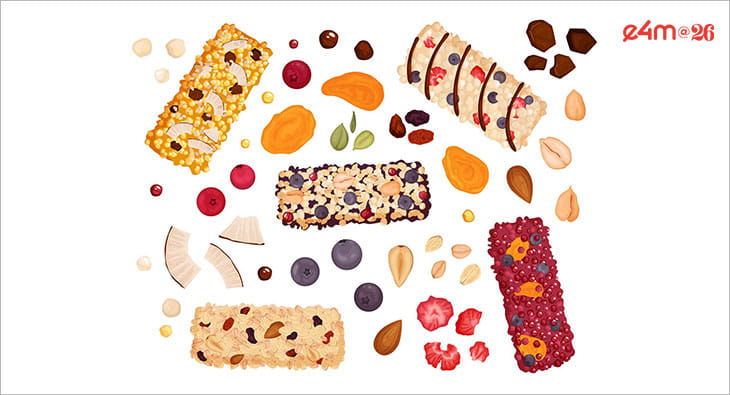

- India's healthy snacking market is growing at nearly 10% CAGR, outpacing the global average, driven by rising health awareness and urban lifestyles, with consumers increasingly favoring protein-rich and clean-label snacks.
- Major FMCG companies are adapting their strategies, focusing on product quality, distribution through quick commerce, and authentic brand storytelling rather than solely relying on traditional advertising methods.
- Consumer preferences are shifting towards ingredient transparency and founder credibility, with 62% prioritizing ingredient transparency over celebrity endorsements when choosing snack brands.
- The Indian government is supporting the growth of the healthy snacking sector through policy measures that enhance food processing, while regional foods are emerging as significant opportunities for branding and distribution in the market.
India's healthy snacking market is growing faster than the global average as consumers increasingly seek protein-rich, cleaner-label and convenient food options. But for brands, success is no longer determined by healthier ingredients alone. Companies are rethinking distribution, advertising and brand building as quick commerce, founder-led storytelling and regional products reshape the playbook.
The definition of snacking in India is changing rapidly. For decades, the category was dominated by indulgence, from chips and namkeen to biscuits and sugary beverages. Today, consumers are increasingly looking for snacks that promise protein, digestive health, clean ingredients and convenience without compromising on taste. The shift is creating one of the fastest-growing opportunities in the country's packaged food industry.
Globally, the healthy snacking market is valued at $107.3 billion and is projected to reach $200.5 billion by 2035, growing at a compound annual growth rate (CAGR) of 6.5 percent. India is expected to outpace the global average, with the category projected to grow at nearly 10 percent CAGR, driven by rising disposable incomes, increasing health awareness, urban lifestyles and the rapid adoption of digital commerce, according to the Indian Healthy Snacking Summit held in Delhi.
The opportunity is attracting everyone from legacy FMCG companies to digital-first startups.
Hindustan Unilever Limited recently expanded its ready-to-drink nutrition portfolio with Horlicks Milkshake, targeting Gen Z consumers seeking convenient nutrition. The launch follows the national expansion of Boost Ready-to-Drink, signalling the company's broader push into healthier beverages.
ITC, meanwhile, has entered the premium functional beverage segment with B Natural Coconut Cola, a sugar-free drink made with coconut water. Rather than competing on price in the crowded soft drink market, the company has chosen a premium positioning and launched the product first through quick commerce before expanding into wider retail channels.
Together, these launches underline how India's largest FMCG companies are betting that healthier, convenience-led products will drive the next phase of growth.
Consumer preferences appear to be moving in the same direction. As per Framley reports, 86 percent of people consider protein when choosing snacks, while 61 percent prefer products sweetened with dates or jaggery over refined sugar. The study also found that ingredient transparency now matters more than celebrity endorsements or influencer recommendations when consumers choose snack brands.
The report further highlighted the growing influence of quick commerce. Around 31 percent of respondents preferred buying snacks through Blinkit, followed by 16 percent through Zepto and 15 percent through Instamart. Even so, traditional retail remains relevant, with 35 percent saying shelf visibility continues to influence purchase decisions.
For marketers, the findings suggest that healthy snacking is no longer a premium niche. It is becoming an everyday consumption category where product quality, availability and trust matter as much as advertising.
The product still comes before the marketing
While advertising channels continue to evolve, brand builders believe the fundamentals of creating a successful food business have changed little.
Viraj Bahl, Founder and Managing Director of Veeba, believes many startups rush into branding before proving that consumers actually want their products.
"Everything starts with the product. If the product fails, the founder and the company fail. Build at least a ₹50-100 crore business first. Once the market has accepted the product, that's when you start investing seriously in building the brand," he said.
Even if additional capital were available, Bahl said his priority would still be product innovation over advertising. "If someone gave me ₹100 crore today, the first thing I'd invest in would be research and development because everything starts with the product."
His views are echoed by Aman Gupta, Head of Marketing at Farmley, who said marketers often get distracted by emerging trends while overlooking the fundamentals of brand building. "The playbook remains the same. First, build a hero product that genuinely solves a consumer pain point. Then create packaging that communicates uniqueness and differentiation, invest in creative campaigns to drive trials, and finally ensure the product delivers a superior consumer experience that brings people back."
According to Gupta, every stage of the consumer journey has to work together. Packaging creates the first impression, marketing drives trial, but repeat purchases ultimately determine whether a brand succeeds.
That philosophy extends beyond traditional advertising.
Arman Sood, Co-founder at The Sleepy Owl believes that for consumer brands, marketing begins with the product itself. "If your product is good, you don't really need to do marketing. The product speaks for itself," he said, adding that consistent product quality, service and availability are the biggest drivers of brand growth.
According to him, ensuring consumers can easily find the product is as important as advertising. As a result, Sleepy Owl prioritises platform marketing, investing in visibility on quick commerce and e-commerce platforms where consumers are actively searching within the category. "If you're available, people try the product, they like it, and they come back. That's the cycle," he said, noting that the company is also exploring newer engagement opportunities emerging on quick commerce platforms.
Quick commerce is becoming the industry's biggest growth engine
As healthy snacking moves into the mainstream, quick commerce platforms are evolving from distribution partners into marketing channels.
Chandan Mendiratta, Chief Brand Officer at Zepto, believes brands need to stop treating television as the default advertising medium and instead let consumer behaviour determine where marketing budgets are spent.
"Not every brand needs to be on television because not every customer watches television anymore. Media consumption has fragmented. Brands should first identify who their customer is, understand what media that customer consumes and let that define their go-to-market strategy," he said.
Mendiratta also believes outdoor advertising should no longer be viewed as static media.
"Don't think of outdoor as just a billboard. Think of it as content. If people photograph it, share it and talk about it on social media, its reach extends far beyond the people who physically pass by it."
He pointed to Zepto's outdoor campaign with Manyavar in Bengaluru, saying its success came from becoming social media content rather than remaining a conventional billboard.
For emerging consumer brands operating with limited budgets, he said, every marketing investment should ideally create both physical visibility and digital conversations.
For startups, quick commerce is also changing how marketing budgets are allocated.
Dishit Nathwani, Founder of True Story and Chief Executive Officer of Gulab Group, said the company has steadily shifted most of its spending towards quick commerce after seeing stronger returns.
"Initially, we invested across influencer marketing, performance marketing for our website and quick commerce. Over time, we realised the returns were strongest on quick commerce. Today, nearly 85 percent of our marketing budget goes towards quick commerce, while the remaining 15 percent is spread across other channels."
However, Nathwani cautioned that advertising alone cannot build a sustainable business on these platforms.
"Advertising may help consumers try your product once. If the product is good, they'll come back. If it isn't, you've lost that customer."
Government policy is encouraging innovation in food processing
The rapid growth of healthy snacking is also receiving support from government policy aimed at strengthening India's food processing ecosystem.
One example frequently cited by startups is the reduction in GST on makhana from 12 percent to 5 percent, which improved affordability and helped regional products compete more effectively with traditional packaged snacks such as namkeen and bhujia.
Chirag Paswan, Union Minister for Food Processing Industries, at a recent event said the sector has received greater policy attention over the past decade, supported by measures including 100 percent foreign direct investment in food processing and schemes aimed at encouraging innovation and entrepreneurship.
"We recognise that startups are playing an important role in bringing innovation, creating value-added products, improving processing technologies and generating employment. The government wants to create an enabling environment for them to grow."
The policy support is also creating opportunities beyond modern packaged foods. Industry executives believe traditional Indian snacks such as makhana, millets and regional products could become the next major branded categories as companies invest in processing, packaging and national distribution.
Trust is replacing celebrity power as the biggest marketing currency
As India's healthy snacking market becomes more crowded, brands are discovering that consumers are no longer persuaded by advertising alone. Ingredient transparency, founder credibility and authentic storytelling are emerging as stronger drivers of purchase than celebrity endorsements.
62 percent of consumers consider ingredient transparency the most important factor when choosing a snack brand, placing it ahead of celebrity endorsements and influencer recommendations. For marketers, the finding signals a broader shift in consumer expectations. Buyers increasingly want to know where products come from, how they are made and whether brands deliver on the health claims they advertise.
That change is particularly evident in the organic food category.
Dishit Nathwani, Founder of True Story and Chief Executive Officer of Gulab Group, said trust has become the foundation of marketing for organic brands.
"Organic is all about trust. That's why we built the brand around authenticity; from the products we source to the way we communicate. We create original content around farming, food sourcing and our products because consumers want to understand where their food comes from," he said.
Consumers are also showing greater interest in the people behind brands.
Nathwani believes founder-led branding has become one of the strongest differentiators in an increasingly crowded market.
"Consumers don't just buy a product anymore. They want to know the founder's journey and what the brand stands for. When there are hundreds of brands competing for attention, the founder's story becomes one of the biggest differentiators."
The rise of founder-led marketing reflects a broader trend across consumer startups, where entrepreneurs have become public faces of their businesses, helping brands establish credibility in categories where trust is difficult to build.
Influencers are evolving from advertising channels into trust builders
If founders are becoming storytellers, influencers are becoming validators.
Industry executives believe influencer marketing is not disappearing, but its role is changing significantly.
According to Aman Gupta, Head of Marketing at Farmley, brands need to stop treating creators as media inventory and instead allow them to communicate naturally with their audiences.
"Influencers will continue to remain relevant, but how brands work with them is becoming far more important. Brands should think of influencers as trust builders rather than just advertising channels. Keep the content native to the creator and genuine to their opinion. Don't push the same communication through every influencer."
The challenge, he said, is maintaining consistency in the brand promise while allowing creators enough freedom to retain their authenticity.
That marks a clear departure from earlier influencer campaigns, where brands often relied on scripted messaging across hundreds of creators. Today, marketers are increasingly looking at creators as long-term partners capable of building credibility rather than simply generating reach.
The shift also reflects changing consumer behaviour, particularly among younger audiences, who are more likely to engage with content that feels personal than highly polished advertising.
Packaging has become one of the most valuable advertising assets
As competition intensifies across online and offline shelves, marketers increasingly see packaging as the first advertisement consumers encounter.
Whether a product is discovered through Blinkit, Zepto, Instamart or a supermarket aisle, packaging often determines whether a consumer pauses to learn more.
Gupta believes packaging remains one of the biggest brand assets available to FMCG companies.
"If you're creating a new category, consumers need to understand your product promise within 30 seconds. If you're competing in an existing category, your communication should explain why your product is superior. Whatever promise you make, the product has to live up to it."
The importance of packaging is reinforced by consumer research. Farmley's Healthy Snacking Report found that 30 percent of consumers prefer resealable packaging, while 25 percent favour environmentally friendly packaging, indicating that convenience and sustainability are becoming integral parts of the overall brand experience.
Creative agencies are also placing greater emphasis on memorable brand assets rather than expensive media buys.
Yash Talwar, Creative Lead at Buffalo Soldiers, who conceptualised and produced Yodley's latest advertising campaign, said effective creativity can compensate for smaller marketing budgets.
"Our marketing budget is very small compared to larger brands. Instead of spending heavily on media, we invested in creating a distinctive jingle that people remember. Since launching the campaign, sales have grown nearly three times. It reinforced our belief that strong creative can make a meaningful impact even with a limited budget."
Talwar added that product development itself should be driven by consumer preference.
"A brand isn't built for the people creating it. It's built for the audience. Consumers are the real judges. If they like it, it sells. If they don't, it stays on the shelf."
India's regional foods are creating the next growth opportunity
Beyond protein bars and ready-to-drink beverages, marketers see India's regional food heritage as the next major opportunity.
Products once confined to local markets are gradually entering mainstream retail as brands invest in packaging, branding and organised distribution.
Farmley's Gupta believes regional snacks have significant untapped potential.
During a recent visit to Bihar, he observed local entrepreneurs successfully selling thekua, a traditional regional snack that remains largely untouched by large FMCG companies.
"There is a significant opportunity to build brands around regional snacks that people already consume and love. We've already seen products like makhana gain national and even global acceptance. Millets are another example of traditional Indian foods finding international markets. Who knows? Thekua could be next."
The success of makhana offers a useful example of how regional products can become mainstream categories through branding, policy support and wider distribution.
As consumers increasingly seek familiar ingredients with perceived health benefits, marketers expect more indigenous foods to move from local shelves into national retail chains and international markets.
Global marketers are choosing precision over mass advertising
The evolution of healthy snacking is also changing media planning across international markets.
Rod Maxfield, Group Head of Marketing at UAE supermarket chain Choithrams, said marketing strategies today are driven less by products and more by consumer demographics.
"The formulation is designed for local tastes. From a branding perspective, the bigger challenge is understanding the consumer. In the UAE, we communicate in Arabic, English, Hindi, Malayalam and Tagalog because different communities respond to different messaging."
Rather than investing heavily in traditional outdoor advertising, Choithrams prioritises owned communication channels.
"A single billboard on Sheikh Zayed Road can cost around $250,000 for one month. Instead, we focus on targeted social media, WhatsApp communication, email marketing and our loyalty programme. We have around 1.6 million loyalty members, allowing us to communicate directly with customers."
The approach mirrors the growing preference among Indian consumer brands to invest in first-party customer relationships instead of relying entirely on mass media.
Marketing budgets are changing, but the fundamentals remain the same
While media channels continue to evolve, executives across the healthy snacking ecosystem agree that the fundamentals of brand building remain remarkably consistent.
For early-stage companies, that often means resisting the temptation to overspend on advertising before achieving product-market fit.
Priyasha Saluja, Founder and Chief Executive Officer of The Cinnamon Kitchen, said the company has deliberately adopted a product-first approach, relying on customer referrals rather than aggressive advertising.
"Word-of-mouth only happens when the product is genuinely good. Branding helps people discover us, but once consumers try the product, they recommend it to others."
The company's appearance on Shark Tank India significantly improved awareness, but Saluja said future marketing investments will continue to be guided by the performance of individual channels rather than a fixed media mix.
At Zepto, Chandan believes founders should prioritise investments that create long-term brand equity instead of chasing short-term metrics.
"If a founder has ₹1 crore to spend, I would choose brand-building. Performance marketing is important, but brands create long-term value."
He also cautioned marketers against becoming obsessed with viral campaigns.
"The most overrated word in Indian marketing today is 'virality'. What matters more is understanding consumers. Your comments section is a live brand tracker. It tells you what consumers are thinking and often where your next campaign idea will come from."
The next phase of healthy snacking will be built on credibility, not just convenience
India's healthy snacking industry is entering a new phase where growth is being driven by far more than changing eating habits.
Quick commerce has compressed the path from discovery to purchase. Consumers are willing to pay a premium for protein, cleaner ingredients and functional nutrition, but they also expect brands to justify every claim they make. At the same time, multinational companies are expanding into healthier beverages and ready-to-drink nutrition, while startups continue to build categories around traditional Indian foods.
For marketers, the industry's evolution offers a clear lesson. Distribution may have shifted from kirana stores to smartphones, and advertising may have moved from television to creators and community-led content, but lasting brands are still built on the same foundations: products that solve genuine consumer needs, transparent communication, consistent quality and trust that extends beyond the first purchase.
As India's healthy snacking market moves into its next stage of growth, the winners are unlikely to be the brands with the loudest campaigns. They will be those that combine strong products with credible storytelling, intelligent distribution and marketing that earns repeat customers rather than simply attracting first-time buyers.
Read more news about Marketing News, Advertising News, PR and Corporate Communication News, Digital News, People Movement News
For more updates, be socially connected with us onInstagram, LinkedIn, Twitter, Facebook, YouTube & Google News