Philips bets on India’s mother & baby market; channels 60% of marketing budget to creators
Philips’ Marci El-Deiry, VP Global BU Leader, Mother & Child Care, & Vidyut Kaul-Head of Personal Health for the Growth Region, explore how the brand is navigating India’s evolving parenting landscape
 by
by
Published: Apr 9, 2026 9:33 AM | 6 min read
 Follow Us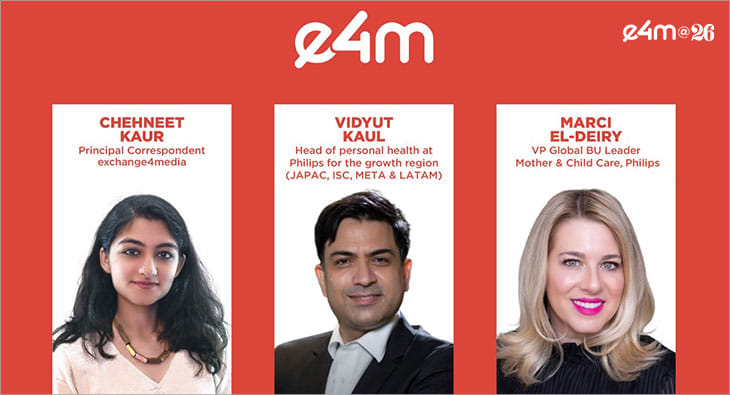

- The mother and baby care segment in India is experiencing a shift towards premiumization, driven by rising spending per child and the emotional realities of parenting, despite declining urban fertility rates.
- Philips is focusing on building trust through partnerships with healthcare professionals and localizing marketing strategies, with a significant portion of their budget allocated to creator-led content that resonates with diverse cultural nuances.
- Key consumer insights include a demand for convenience, safety, and hygiene, leading to innovations like sterilization solutions, while the market is characterized by value-conscious consumers willing to pay for perceived quality.
- India is identified as Philips' fastest-growing market, expected to become one of the top five globally, prompting increased investments in local manufacturing and a focus on emotional connection in marketing campaigns.
In a market where declining urban fertility coexists with rising spending per child, the mother and baby care segment is undergoing a structural shift. Trust remains the backbone of the category, but brands are now being pushed to build emotional relevance, local nuance, and creator-led resonance.
In a conversation with Marci El-Deiry, VP Global BU Leader, Mother & Child Care at Philips, and Vidyut Kaul, Head of Personal Health for the Growth Region (JAPAC, ISC, META & LATAM), Chehneet Kaur, Principal Correspondent, exchange4media, explores how the brand is navigating India’s evolving parenting landscape.
With urban fertility declining and rural demand remaining strong, how is this reshaping your growth strategy from volume to value?
Marci El-Deiry:
India for us is both a scale market and a premium market. It is not about choosing between volume and value but about ensuring that every solution we create delivers meaningful value.
Value is not just about pricing. It is about solving real problems for parents. Whether in urban or rural India, the emotional realities of parenting such as anxiety, uncertainty, and mental load remain similar.
Our focus is on identifying these universal pain points and designing solutions that reduce that burden, making parenting easier across segments.
This is a category deeply rooted in trust. How are you strengthening that trust while also driving growth?
Marci El-Deiry:
Trust is fundamental in this category. At the same time, families may be having fewer children but spending significantly more per child, which is driving premiumisation.
Philips Avent already has strong global equity in trust. We reinforce this through partnerships with healthcare professionals. In India, first-time mothers rely heavily on doctors and hospitals. Our collaborations with Cloudnine Hospitals help strengthen that credibility.
We also ground our innovation in science. A feeding bottle may look simple, but it is designed after studying how babies feed.
However, trust alone is not enough anymore. With Gen Z mothers, brands need to be loved. Our Share the Care platform focuses on recognising the mental load on mothers and encouraging shared parenting.
Creator-led engagement is becoming central to marketing. How does it play into your strategy?
Vidyut Kaul:
Close to 60 percent of our marketing budget in India goes into creator-led content. India is not one homogeneous market. Cultural nuances change every few kilometres.
We operate a multi-layered content engine. At the top is a master narrative like Share the Care. To make it resonate locally, we work with creators.
We partnered with Yami Gautam for a campaign built around the concept of nazar. Creators help us translate such cultural insights across regions.
Creators are not just amplifiers. They help us localise meaningfully.
What are the key consumer insights shaping innovation in India?
Marci El-Deiry:
Premiumisation is a strong trend driven by higher spending per child and dual-income households. There is also a growing need for convenience.
Safety and hygiene are critical concerns in India, which has led to local innovations like sterilisation solutions.
Another key insight is quick commerce. It is changing how parents access urgent-need products. This required us to rethink assortment and availability.
India is often seen as cost-sensitive, yet premiumisation is rising. How do you balance this?
Vidyut Kaul:
India is not cost-conscious. It is value-conscious. Consumers are willing to pay if they see value.
Affluent Indian consumers are spending at par with global markets in childcare. We introduced a premium product priced at Rs 45,000 and it sold out within a month.
There is a strong premium market as long as the value is clear.
With many D2C brands entering the space, how do you stay competitive?
Vidyut Kaul:
Brands will come and go. We have been in India for 97 years and globally for over 135 years.
Philips Avent is among the most searched brands even in categories where we are not present. This comes from trust and peer recommendations.
Mothers trust what other mothers recommend, and that has been our biggest strength.
How does India perform globally for Philips?
Marci El-Deiry:
India is our fastest-growing market with strong double-digit growth. It also has the highest brand love.
We expect India to soon be among our top five markets globally. It is also becoming a source of innovation for other markets.
How are you navigating global uncertainties?
Marci El-Deiry:
We focus on what we can control. India stands out as a stable, high-growth market.
We are increasing investments in local manufacturing and strengthening a local-for-local approach.
India will play a key role in our growth over the next few years.
How do online and offline channels differ across markets?
Vidyut Kaul:
Around 60 percent of the category is online. In metros, discovery and purchase both happen online.
In Tier 2 and Tier 3 markets, discovery often happens offline, while purchases may shift online due to pricing and variety.
Around 40 percent of consumers still prefer touch and feel before buying, especially for high-value products.
What is the objective of your upcoming campaign?
Marci El-Deiry:
The objective is emotional connection.
Parenthood brings joy but also stress and anxiety. Our global study showed mothers have less than one hour a day to themselves.
This insight led to Share the Care. We want to show that self-care is not selfish and that shared parenting is important.
This thinking is also embedded in our innovation. We design products that are simple enough for anyone in the family to use.
What will the media mix for the campaign look like?
Vidyut Kaul:
It will be digital-first with strong creator-led storytelling.
We are focusing on real-life stories from parents. The campaign builds on cultural insights like nazar and connects them to modern concerns like hygiene and safety.
How important is relatability in communication today?
Vidyut Kaul:
Relatability is critical. Parenting is already stressful, and communication should feel real and human.
We prefer real stories over scripted expert messaging. That builds stronger connections.
What role will India play in your global growth going forward?
Marci El-Deiry:
India is growing five to six times faster than some mature markets.
We expect it to become one of our top global markets soon. Strong ROI from India gives us confidence to invest more.
We will continue to double down on marketing, manufacturing, and innovation in India.
India is becoming central to our global strategy.
Read more news about Marketing News, Advertising News, PR and Corporate Communication News, Digital News, People Movement News
For more updates, be socially connected with us onInstagram, LinkedIn, Twitter, Facebook, YouTube & Google News
