#e4mExclusive: We want to give India the global voice it deserves: Palki Sharma
Palki Sharma, Founder and Director of India Global Review, speaks to e4m on why she chose entrepreneurship after two decades in journalism, changing media landscape, AI's role in newsrooms and more
 by
by
Published: Jun 15, 2026 9:07 AM | 7 min read
 Follow Us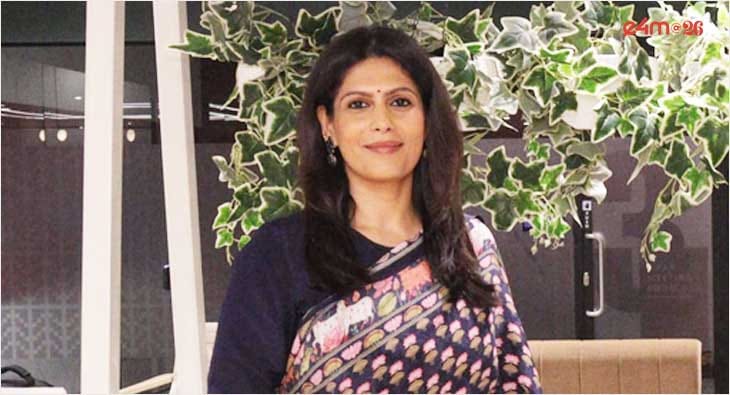

- Palki Sharma, a prominent Indian news anchor, has launched India Global Review (IGR), a digital media platform aimed at providing global news from an Indian perspective, emphasizing depth and clarity in reporting.
- Sharma aims to address the trust deficit in journalism by ensuring that growth and revenue do not compromise the integrity and purpose of news coverage, while also recognizing the importance of both traditional media institutions and journalist-led companies.
- She highlights the need for Indian media to establish credible institutions that can compete globally, stressing that India has the talent and resources to tell its own story effectively on the world stage.
- Sharma expresses concerns about the erosion of trust in journalism and the challenges posed by AI and algorithms, while remaining hopeful about the dedication of journalists in India who continue to pursue impactful stories despite difficulties.
Palki Sharma, one of India's most recognisable news anchors and international affairs journalists, has embarked on a new journey as Founder and Director of India Global Review (IGR), a digital-first media platform focused on global news through an Indian lens.
In this exclusive conversation with exchange4media, Sharma discusses why she chose entrepreneurship after two decades in journalism, the changing media landscape, AI's role in newsrooms, the trust deficit facing journalism, and her vision for building an Indian voice in global media.
Excerpts from the conversation:
After being part of some of India's biggest news organisations, why did you decide to start your own venture?
At this stage of a career, people usually buy a farmhouse or start playing golf. I have made more questionable choices. On a serious note, I have been fortunate to work with outstanding organisations and colleagues, and I have learnt a great deal from them. But the most rewarding phases of my career were at Firstpost and WION because those were platforms that my team and I built from the ground up. We didn't inherit them; we created them.
IGR is, in many ways, a continuation of that journey. We want to take everything we have learnt over the last two decades about storytelling, technology, journalism and audiences, and use those learnings to create something with more freedom and, importantly, more responsibility.
There is already considerable global coverage in Indian media. What gap is India Global Review trying to address?
I don't like framing it as what others are doing or not doing. I would rather focus on what we want to do. There is undoubtedly greater interest in international affairs today, which is encouraging. However, news cycles are often dominated by content that attracts immediate attention and has a shorter shelf life.
We are looking to build something with greater depth, clarity and longevity. We are not reinventing journalism. In fact, we are relying on an older approach, one based on patience, consistency and clarity, and doing more of it. That's the mission.
Can India build media institutions that rival organisations like the BBC, CNN or The Economist?
Absolutely, and we should. But it won't happen overnight. The BBC is around a hundred years old. The Economist is over two centuries old. Institutions begin as efforts and become credible through consistency over time.
India has the talent, the resources and the need for such a voice. What we require is a long-term mindset and sustained investment. If not now, then when? India is at a stage where it needs to tell its own story to the world.
What's the biggest lesson you learnt from working inside large media organisations that you are determined not to repeat as a founder?
Running a business is very different from running a newsroom. I have led teams and built newsrooms, but entrepreneurship is a new challenge.
One thing I want to ensure is that growth always remains aligned with purpose. Media businesses face immense revenue pressure, and there is growing dependence on sponsored and branded content. Those are realities of the business. But the key question is: where do you draw the line? Are you covering something because it's newsworthy, or are you becoming part of a product's marketing strategy?
For me, it's critical that while we pursue growth, revenue and scale, we never lose sight of our purpose.
We are seeing the rise of journalist-led media companies. Is this the future?
I think both models can coexist. The barrier to entry has never been lower. If you have a phone, a stable internet connection and strong content, you can reach audiences.
At the same time, institutions remain important. As information overload and AI-generated content increase, the winning formula will be institutional credibility combined with strong individual voices. That balance is where the future lies.
Has journalism become too dependent on algorithms and too disconnected from ground reporting?
Real reporting requires investment, and that's where the challenge lies. But AI and technology are here to stay. They are tools, and we must learn to use them effectively.
The danger is when algorithms begin dictating editorial priorities. If that happened entirely, news would become little more than celebrity gossip and viral videos. Journalism is fundamentally about curiosity, asking difficult questions, knocking on doors and uncovering what people may not want discussed.
AI can optimise workflows, improve efficiency and assist with tasks, but it cannot replace human instinct, emotional intelligence or editorial judgment. Bots are not journalists, and we must remember that distinction.
Many journalists say the media has lost public trust. Do you think journalism failed the public, or did the public stop valuing journalism?
It's a bit of both. The industry has challenges, and many of us acknowledge that. At the same time, audiences increasingly expect news to be free, which creates its own pressures.
Today, news organisations aren't just competing with other news outlets. They are competing with every form of content, from recipes and beauty hacks to entertainment videos. Attention is fragmented.
The first task before journalism is rebuilding trust. People need to believe that news exists to inform, expose and explain, not to serve vested interests. That's our responsibility as journalists.
Many broadcasters have traditionally prioritised domestic news. Do you think viewers today are more interested in global affairs than ever before?
They always have been. The assumption that audiences only care about local stories is flawed. Today, everything global is local, and everything local is global.
What's happening in the Strait of Hormuz affects fuel prices. China's policies matter. Decisions taken in Washington matter. Global supply chains affect everyday lives.
Indian audiences are highly aware and politically engaged. The notion that viewers cannot understand complex international issues is simply incorrect. In fact, underestimating audiences is one reason many people are moving away from traditional news formats.
What worries you most about journalism today, and what gives you hope?
The biggest concern is the erosion of trust. Many people assume that if something appears in the news, it's either inaccurate or serving someone else's agenda.
What gives me hope is the number of journalists across India who continue to do remarkable work, often at great personal risk. We focus too much on Delhi and major metros, but there are reporters in smaller towns exposing powerful interests, despite poor pay and job insecurity.
The fact that young people still choose journalism because they believe certain stories need to be told, that remains deeply encouraging.
Is entrepreneurship more challenging than journalism?
Journalism feels natural because I have been doing it for more than two decades. Entrepreneurship is a new education.
As journalists, we ask questions. As entrepreneurs, we have to answer them. Those answers affect budgets, hiring decisions and strategy. It's a steep learning curve, but it's also enormously exciting.
Your shows succeeded without relying on the noisy debate format common in television news. What does that say about audiences?
It shows that audiences are often misunderstood. There is room for many formats. Drama and spectacle have audiences too. But there is also a large audience for calm, explanatory journalism.
The debate-heavy format evolved partly because it is more cost-effective than producing original content. Building a strong hour of journalism requires far greater investment.
Our experience showed that many viewers appreciate substance over noise. Ultimately, whatever format you choose, you must believe in it and execute it well.
What does success look like for India Global Review over the next two years?
We want to tell good stories and build a meaningful connection with our audience. The team coming together is energetic, creative and eager to experiment with formats.
For me, success would mean having a stable organisation, attracting the best talent in the industry and creating an environment where people enjoy what they do. Most importantly, I hope we can contribute to giving India the global voice it deserves. We are a nation of 1.4 billion people and should occupy our rightful place in the global conversation.
Read more news about Digital Media, Television Media, Out of Home Advertising, Print Media, Latest Advertising India
For more updates, be socially connected with us onInstagram, LinkedIn, Twitter, Facebook, YouTube & Google News