Ad Review: STARE - Bhavya Ramesh and NorBlack NorWhite turn the evil eye into armour
Directed by Bijoy Shetty of Hanumankind fame, this ad review looks at how STARE swaps jewellery advertising’s bridal script for folk horror, chillies and a woman who stares back
 by
by
Published: Jul 30, 2026 9:25 AM | 4 min read
 Follow Us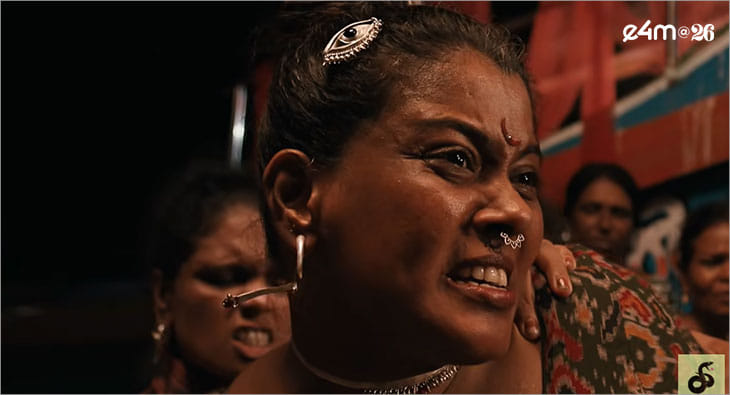

- The campaign 'STARE' by jewellery label Bhavya Ramesh and fashion house NorBlack NorWhite, directed by Bijoy Shetty, features women in Kerala's forests adorned with unconventional jewellery, challenging traditional bridal imagery in Indian advertising.
- The film explores themes of protection and empowerment through folk horror aesthetics, incorporating elements from Indian folklore, such as the 'Chudail' and 'Daayan' figures, and uses jewellery as both prop and narrative device.
- The 15-piece jewellery collection translates protective folk symbols into adornments, with pieces like the Gaze eye clip and Viper earrings emphasizing a bold, confrontational gaze rather than passive beauty.
- While the film's unique approach offers a fresh perspective on women's agency in jewellery selection, its reliance on folklore and slower pacing may limit its appeal to a broader audience, raising questions about its effectiveness in driving sales.
For an industry that has spent decades filming brides on the verge of tears, ‘STARE’ arrives like a jumpscare. There is no mandap, no solitaire close-up, no farewell song cueing the tagline. Instead, women walk through Kerala's forests wearing eyes, fangs and snakes as jewellery, looking directly into the lens rather than away from it.
The campaign is a collaboration between jewellery label Bhavya Ramesh and fashion house NorBlack NorWhite, directed by filmmaker Bijoy Shetty, whose previous credits include Hanumankind's "Big Dawgs" and "Run It Up" music videos as well as Ramesh's earlier "Paraloka" collection. Shot on location in Kerala and featuring actors Tillotama Shome and Karthika Nair, the film is built around one clear provocation: What if the nazar battu, the lemon-and-chilli talisman traditionally hung outside Indian homes, were worn on the body instead?
It is genuinely cinematic rather than cinematic in the way an ad copy usually claims to be. The visual grammar leans into folk horror rather than the soft-focus glamour that jewellery advertising in India typically reaches for, and it is a deliberate choice. One sequence shows a woman, dark-skinned and unbrushed, sitting peacefully and humming a tune in a forest until the camera reveals her feet twisted backward. This is a direct nod to the ‘Chudail’ and ‘Daayan’ figures of Indian folklore, women who were branded monstrous for defying social convention.
Another sequence stages a possession, tying the moment to ‘Spell’, a nail ring from the collection designed to sit like a guard around the fingertip. The narrative device works because the jewellery performs double duty (as prop and as plot point) rather than being cut away to in a separate product shot.
The 15-piece collection itself, done in silver and gold, translates protective folk symbols into adornment with a fair amount of internal coherence. The Gaze eye clip, with lemon and chilli danglers falling beneath it, is the collection's clearest thesis statement: an eye that does not flinch from being watched but meets the gaze instead. The ‘Viper’ earrings borrow the coiled menace of a snake while the ‘Rattle’ anklets bring in ghungroos as instruments of both ritual and watchfulness.
Where the film earns real credit is in refusing an easy resolution. It does not stage its "empowerment" moment as a single triumphant crescendo. Instead, the argument builds through repetition, the same idea of protection recurs across product, styling and performance until the point lands cumulatively rather than in one big line. It is a subtler strategy than most category advertising attempts, and it mostly pays off, provided a viewer is willing to sit with three minutes of folk horror imagery rather than fifteen seconds of soft sell.
That said, the film is not without friction. Its heavy reliance on folklore and horror aesthetics, however well executed, is also a crowded lane right now in Indian creative advertising, and STARE's version, while well-shot, does not always distinguish itself from the wider trend of brands reaching for mysticism as a shortcut to depth. The pacing, too, asks a fair amount of patience from a scrolling audience, and the film's more oblique symbolism (the possession sequence, the red mask, the reversed feet) may reward those who already know the reference points far more than the average shopper encountering the brand for the first time. Whether that audience gap converts into actual purchase intent, as opposed to admiration, remains an open question that only sales data can answer.
What is not in question is the intent. ‘STARE’ treats its audience as women who choose jewellery for themselves rather than women to whom jewellery is given, and it treats folklore as material to be reclaimed rather than sanitised. In a category that has run the same script for years, that alone counts as a departure worth watching.
Read more news about Internet Advertising India, Marketing News, PR and Corporate Communication News, Digital Media News, Television Media News
For more updates, be socially connected with us onInstagram, LinkedIn, Twitter, Facebook YouTube & Google News