The rise of AI-driven search will define the next era of PR & Communications landscape
Ruder Finn’s CTO, Tejas Totade, highlights important shifts impacting the industry, evolving role of AI, strategies to build tech-enabled communicators for the future, and more
 by
by
Published: Jan 9, 2026 3:27 PM | 10 min read
 Follow Us
In today’s rapidly evolving communications landscape, technology has moved from the background to the very centre of how organisations operate, engage and build credibility. As artificial intelligence, analytics and automation increasingly influence communications strategies, the role of leadership at the intersection of technology and communications holds the center stage.
Steering this transformation at Ruder Finn, one of the world’s leading global communications and public relations agencies, is Tejas Totade, Chief Technology Officer, who brings a sharp focus on innovation, data and future-ready capabilities.
To explore how technology is reshaping the communications landscape, we engaged in an insightful and engaging conversation with him on:
- His journey as the youngest C-suite executive in Ruder Finn’s 70+ year history
- The shift from AI as a tool to AI as a strategic partner in communications
- Role of technology in managing crisis, risk & reputation
- Lessons global market should learn from India talent
- Strategies to building AI-ready communicators
Excerpts:
As the youngest CTO in Ruder Finn’s history, how has your journey evolved from when you started till now?
When I joined this industry back in 2010, I already had work experience in the consultancy realm with TCS. After that, I made a pivot from a pure-play technology or tech consultancy background into public relations, communications, and marketing because I felt there was a huge unmet need for a tech-focused approach in the industry. I had a vision that, in the near future, this would be an industry ripe for disruption, an industry where I could build something, create something, and truly own it. That drive to create and build is what motivated me to join public relations, marketing, and communications.
Over the last 15 years, I’ve been fortunate enough to be at the helm of several industry firsts. When I joined, it was the dawn of the mobile revolution, with Android and iOS growing from burgeoning platforms into the mainstream. I was deeply involved during that phase, creating applications for some incredible clients at Ruder Finn. That was followed by the AR and VR wave, including things like Pokémon Go, virtual reality, and mixed reality. We did impactful work with clients such as Amgen in the US using VR, and with Mountain Dew in the AR space. It was one innovation after another. This then led to the voice revolution with Alexa. Ruder Finn became one of the first communications agencies to be an Alexa-certified developer and a preferred agency for skill development.
From there, data science and analytics emerged as major drivers. It was no longer about thinking a creative idea would work just because someone liked it; data informed everything that went out. The “data is the new oil” phase began around 2018 and has continued since.
Most recently, we’ve entered the AI revolution following the emergence of ChatGPT. Overall, the transformation of this industry over the past 15 years has been extraordinary as technology has now become a core driver of everything we do in PR & Communications.
How do you define AI’s role as a strategic partner in communications today? In your views, what makes India uniquely positioned in the AI-led communications landscape?
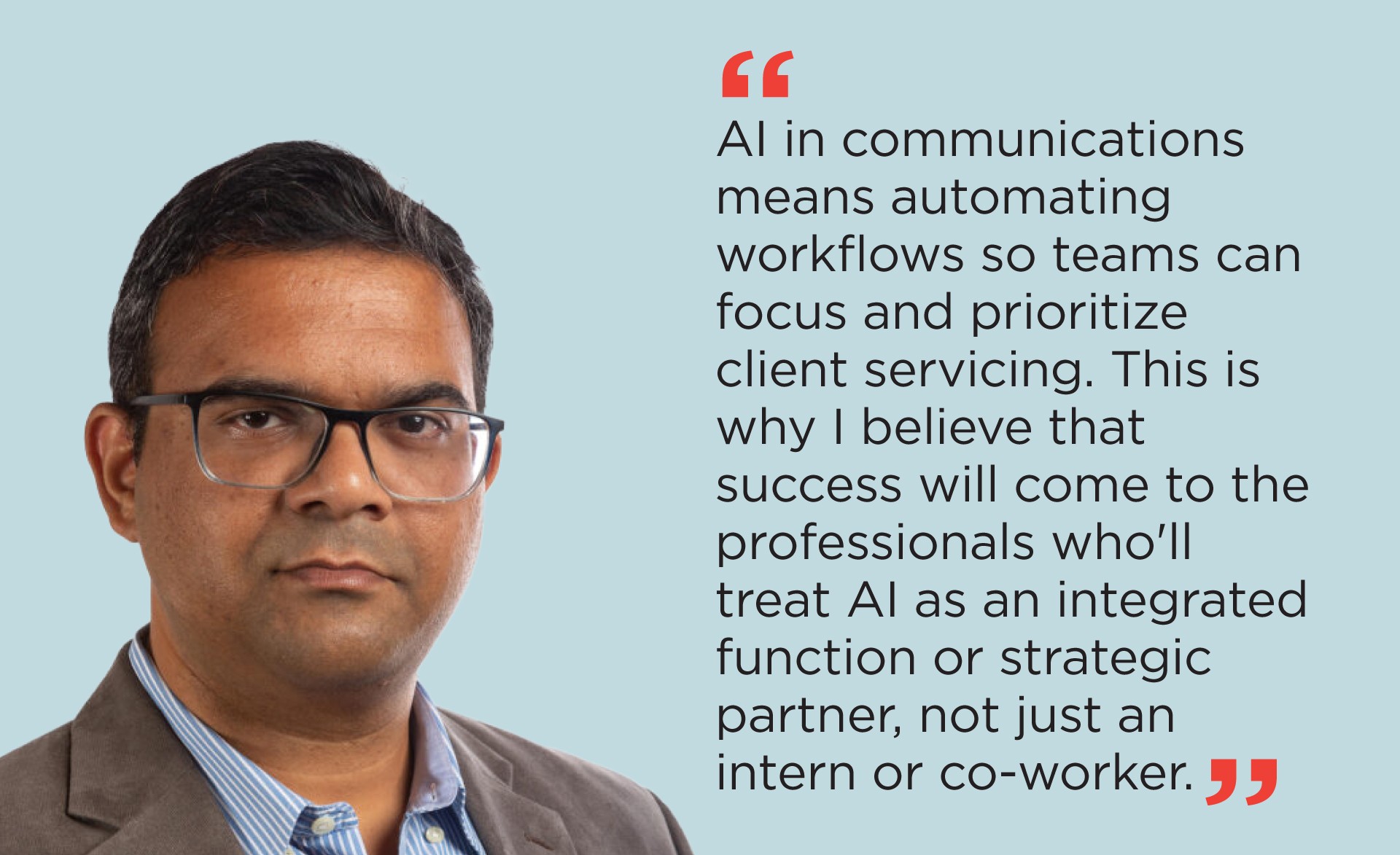
AI is often described as a “new intern or co-worker,” but that’s an outdated view. It puts AI in a silo, but, in reality, AI is most valuable when fully integrated into workflows. In communications, AI is about identifying workflows across the organization that can be automated, allowing people to focus on what truly matters in client service.
In our services industry, workflows have evolved, and many checkpoints can now be automated seamlessly with AI, often without conscious effort. The focus should be on end-to-end integration, not just ad hoc tasks like drafting a press release. For example, initial research to build rapport with a reporter or analyst can be efficiently handled using tools like ChatGPT, Perplexity, or Gemini. This is why I believe that the communicators who will thrive are those who treat AI not as an assistant, but as a strategic partner.
How has technology changed the way crises are detected, managed, and mitigated?
Crisis has always been at the forefront of much of what communicators do, but AI is now bringing structure and foresight to how crises are managed across pre-incident, during-incident, and post-incident phases.
Today, AI’s biggest impact lies in the pre-incident phase. By tracking trajectories, trend acceleration, and early signals of virality, it helps teams spot patterns sooner and prepare faster. While stopping virality isn’t in the control of professionals, early detection enables quicker playbook development and sharper scenario planning before issues escalate. Moreover, preparedness remains the cornerstone of crisis management, and AI has significantly accelerated it. From automating scenario planning to testing messages, AI now handles much of the heavy lifting, alongside media monitoring and social listening, which are already table stakes.
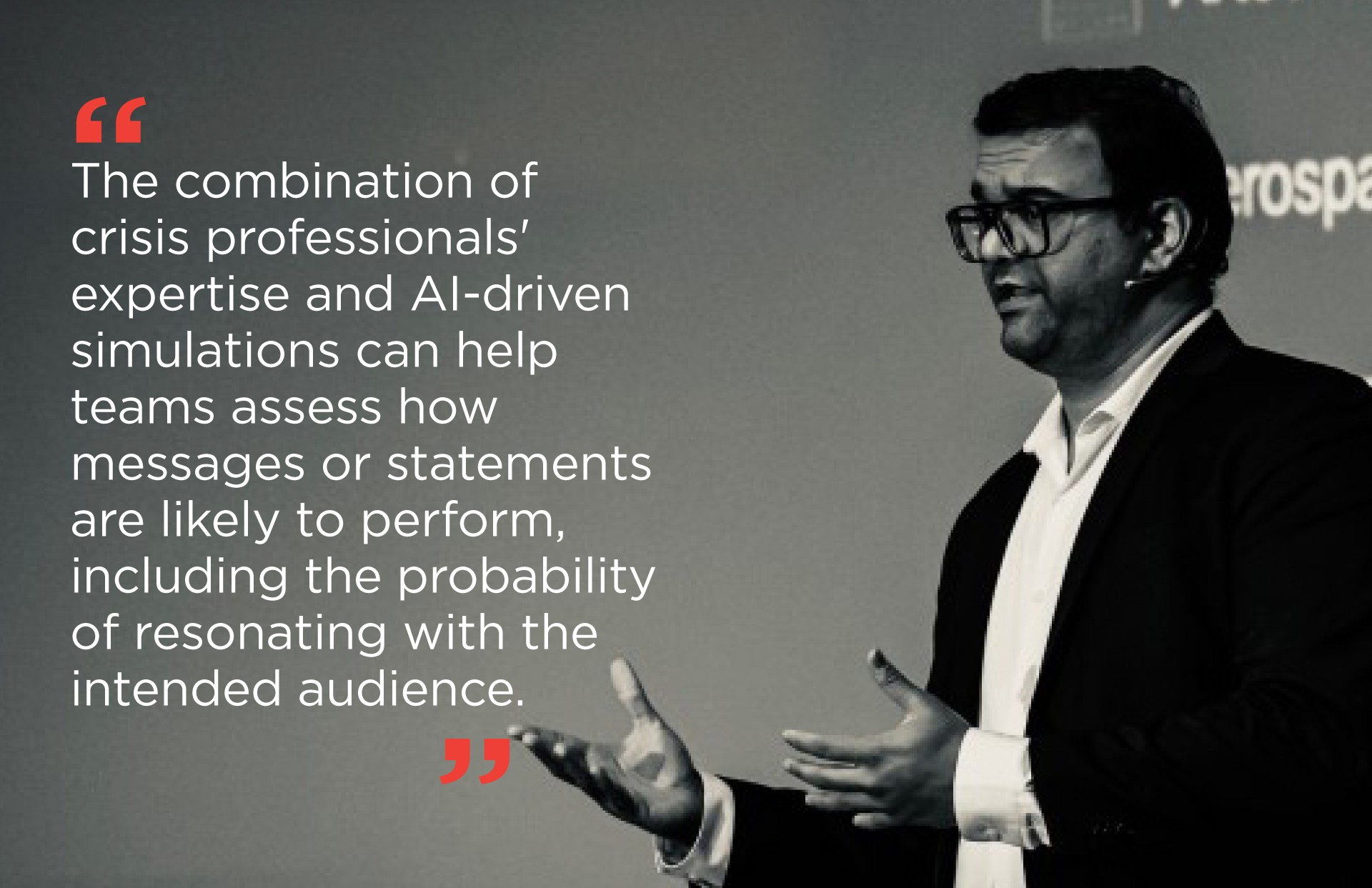
During a crisis, real-time intelligence becomes critical. Tools such as synthetic respondents allow communicators to test messages on simulated audience personas in advance, combining human judgment with AI-driven insights. The result is faster, more confident decision-making, helping brands respond with credibility, clarity, and alignment when it matters most.
Globally, enterprises are investing billions in AI, yet many struggle to show ROI. From a global CTO’s lens at Ruder Finn, how is Ruder Finn innovating India's agency landscape and how does it change in 2026 and beyond?
Companies that struggle to demonstrate ROI from AI often fail to integrate it into core workflows, treating it as a standalone function managed by a small group of experts. This creates a knowledge gap, where only a few understand AI deeply while the wider organisation remains unsure how to apply it in practice.
At Ruder Finn, the approach to AI is distinctly different. A global team of nearly 20 engineering and technology leaders serves as catalysts, translating AI capabilities into everyday workflows while driving innovation and democratizing AI knowledge across the organisation. This focus also underpins ongoing engagement in markets like India, working closely with teams, on boarding new talent, and building momentum as the firm grows.
AI is widely seen as a significant growth opportunity at Ruder Finn. Instead of chasing short-term ROI, the emphasis is on sustaining momentum, scaling impact, and embedding AI deeply across practices.
How do Ruder Finn’s initiatives like TechLab and RF Studio contribute to building future-facing, tech-savvy talent?
.jpg)
TechLab is our in-house incubator for emerging technologies and analytics, created in response to a rapidly evolving tech landscape and the need to stay ahead of the innovation curve. This began as a passion project between me and CEO Kathy Bloomgarden and has now grown into a full-fledged practice.
Today, TechLab advises clients and has delivered several industry-first initiatives, including Alexa skills and AI-led tools. The current focus is on building the next layer of talent. With a team of around 20 engineering professionals already in place, we are expanding this practice through a structured programme to create a strong pipeline of tech-enabled talent.
In our vision, India presents a significant opportunity. While many clients have been established in the market for decades, we are exploring substantial scope for disruption through technology.
Since you work across India and global markets and represent India at a global level, how do you see Indian talent influencing global communication strategies, and what major lessons can global markets learn from India?
First and foremost, I’m proud to represent India on the global stage and feel a strong responsibility to contribute to the industry while nurturing the next generation of talent. India presents immense opportunity and many members of my team are based here, and their passion for technology and its role in transforming communications is truly inspiring.
In my views, India’s contributions to the global market are extremely valuable, especially in how its services industry has evolved. Today, there is far more depth and opportunity in India than is often recognized globally. While India is widely known for its technology and IT talent, that view only captures one part of the story. The country also has strong, diverse talent across communications, marketing, design, and leadership, that is shaping global businesses and culture. The presence of Indian leaders at the helm of some of the world’s largest multinational companies is a perfect exemplar of the impact Indian talent making at the global stage. Most importantly, I appreciate the growing recognition of India as a hub for diverse and world-class talent and working to extend its growth.
What I try to inspire people to do is think outside the box and, most importantly, not try to put India into a box.
What do you think are some of the technology trends emerging in the AI-led communication landscape?
The one area everyone really needs to pay close attention to is “The rise of AI-driven search.”
We are entering an era where AI, or AI agents, are essentially disintermediating the end user or customer from the brand. Earlier, search was an activity you performed in order to complete another activity. For example, if you were planning a trip, you would search for the top beach destinations, land on platforms like TripAdvisor or MakeMyTrip, browse options, choose a hotel or itinerary, and then proceed.Now, that entire experience has been pulled into a single interface like ChatGPT or Gemini. What this means is that referral traffic to websites has dropped significantly. We are in the era of zero-click searches, where users are no longer clicking through in the same way.
The big question then becomes: How do you ensure your content and key messages show up clearly within that limited response window that describes your brand, service, or offering? The first page of Google has effectively become the first response in ChatGPT, and influencing that response is a major challenge for marketers, communicators, brands, and publishers.
At Ruder Finn, we have an offering called RF.AIO, and we were among the first agencies to introduce it. We actively monitor our clients and competitors and formulate strategies to ensure, in a white-hat and ethical way, that our clients feature in top AI-driven responses and that their key messages appear accurately and in good faith.
Could you share some of your favourite technology tools, or tools that you believe will be most helpful for today's professionals?
I believe that more than technological tools what really matters is how one uses these tools. The important part is that whatever function you are working in, identify the tools that are best suited for your role and integrate AI into your job function. It shouldn’t be treated as something sitting in a silo. To that extent, Gemini might be number one and ChatGPT number two, or vice versa. Claude is another great tool. Eventually, all these tools sit very close to each other in terms of output, and while there will be some industry-specific tools used by certain professionals, from a general professional standpoint, the tools are already well known. The real effort is in truly integrating them into the way you work.
What is one important lesson you would like to pass on to future professionals in the industry?
I strongly feel that now that AI is doing much of the heavy lifting, we owe it to ourselves to think outside the box. While it may sound clichéd, our organisation’s motto “What’s next” truly defines this era, with AI moving from a side story to the centre of conversations in just a few years. At this stage, it’s important for everyone to challenge the existing narrative.
.jpg)
So, everyone should aim to stay relevant and add consistent value, not through long hours, but by working smarter with the technology and time they already have.
Read more news about PR and Corporate Communication News, Internet Advertising, Marketing News, Digital Media News, People Movement News
For more updates, be socially connected with us onInstagram, LinkedIn, Twitter, Facebook YouTube & Google News
