Why More Men Are Buying Jewellery for Themselves, Not Just for Weddings
Men's jewellery is evolving from occasion-based purchases to everyday self-expression, with brands focusing on personal style, customer trust and shopping experiences.
.png) by
by
Published: Oct 15, 2026 1:29 PM | 7 min read
 Follow Us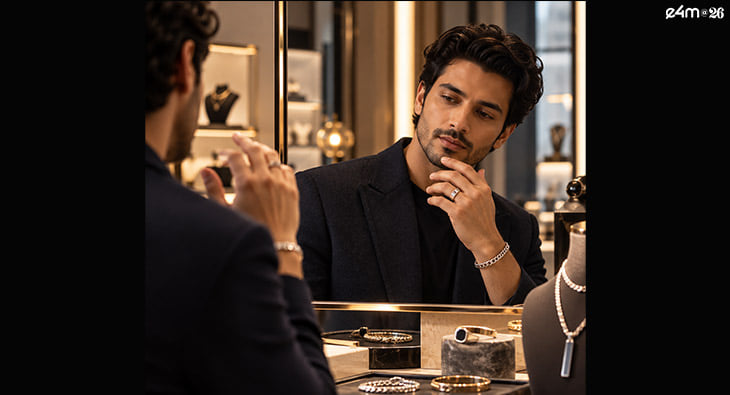

- Men's jewellery shopping is evolving, with an increasing number of men purchasing pieces for personal expression rather than solely for special occasions, such as weddings or milestones.
- Brands are challenged to create a comfortable shopping experience that encourages men to explore their style preferences and find jewellery that fits seamlessly into their everyday lives.
- Male shoppers exhibit diverse behaviors, ranging from first-time buyers seeking guidance to those who arrive with a clear design in mind, emphasizing the importance of personalized service and knowledgeable staff.
- The shopping experience is enhanced by digital research, allowing customers to compare designs and prices before visiting stores, ultimately leading to more confident purchasing decisions.
A man tries on a ring, turns his hand and looks in the mirror. Before questions about price, craftsmanship or the occasion comes a more personal one - Does this feel like me? That question offers a useful starting point for understanding the male jewellery shopper today. Jewellery may still mark a wedding, carry religious significance or celebrate a milestone. But the perspectives shared by four jewellery brands suggest that men are also making room for pieces they choose for themselves, to wear on an otherwise ordinary day.
A bracelet does not need a birthday. A chain does not need a wedding invitation. Sometimes, the occasion is simply wanting to wear it. For jewellery brands, this creates an interesting challenge. What makes a man comfortable enough to try his first piece? What brings another into a store knowing precisely which design he wants? The answers reveal a customer experience shaped as much by confidence and individuality as by craftsmanship.
A chain worn with an open collar. A signet ring that becomes familiar on the hand. A bracelet chosen because it works with the clothes already in the wardrobe. Everyday jewellery gives personal style another detail to play with. Damayanti Ray, Co-founder and Creative Director, Maaya 47, describes this movement towards buying for oneself, stating, “The modern male consumer increasingly purchases jewelry for themselves, viewing it as a means of self-expression and a way to celebrate their individuality in everyday life. For contemporary, fashionable men, bracelets, signet rings, wrist bands and chains are increasingly becoming everyday style essentials rather than being reserved for weddings, religious occasions or milestone celebrations. They look for innovative designs in jewellery and accessories which suit their over-all personality.”
Her reference to personality is particularly telling. A shopper is choosing something that will sit alongside his clothes, habits and sense of himself. The piece has to belong in his life. That changes the conversation at the counter. A design can look attractive in a display, but the customer still needs to picture himself wearing it to work, over a weekend or at dinner. Helping him make that connection becomes part of the brand’s role.
Deepak Kumar, Retail & Marketing Head, Sri Jagdamba Pearls, sees a widening range of choices, adding, “The modern male shopper is experimenting with multi-layered jewellery, coloured gemstones and pearls. Grooms, in particular, are exploring Kundan, emeralds and rubies to create a distinctive royal look, while contemporary pearl bracelets, chains, rings and pendants are gaining popularity for everyday wear.”
Wedding dressing and daily dressing can sit within the same customer’s world. The man exploring an elaborate piece for his wedding may want something much simpler for the following week. For brands, understanding the purpose behind each purchase offers a useful starting point. Does the customer want something he can wear often? One striking detail for a particular outfit? A fresh interpretation of a style he has worn for years?
Age alone cannot answer those questions. A younger shopper may prefer a discreet chain; an older buyer may enjoy experimenting. Asking how someone wants to wear a piece gives more useful direction than assuming what someone like him should choose.
The opportunity is to make room for those individual preferences.
The first purchase begins before the billing counter
Interest does not always arrive with certainty. A man can like the idea of wearing jewellery and still be unsure about the length of a chain, the width of a ring or whether a bracelet feels right on his wrist. Shubham Patil, Head of Marketing & CRM, Lukson, identifies this space between curiosity and purchase, also highlighted that one noticeable shift in male jewellery shopping is that the interest is there, but many men are still figuring out what suits them and how to incorporate jewellery into their everyday style. Before making a purchase, they look for designs they can relate to, styling inspiration and confidence that they are getting good value for their money. For brands, the real opportunity lies in making this first purchase easier and more comfortable. When the product meets their expectations and becomes a natural part of their style, they are more likely to return and explore other designs.
His observation brings the discussion to a practical question: can the customer see himself wearing what he is about to buy? Styling guidance can make that decision tangible. Showing how a bracelet sits against a shirt cuff, explaining different chain lengths or allowing time to compare two rings can help someone discover his preference.
The first purchase also carries significance beyond the transaction. If a bracelet becomes something the customer instinctively reaches for while getting dressed, jewellery has found a place in his routine. That experience can give him the confidence to explore further. A successful first purchase, then, is one the customer feels comfortable wearing after he leaves the store.
The shopper who already knows
Alongside the customer seeking guidance is another who arrives with a clear brief. Sanoj V, Manager, KR Puram branch, Jos Alukkas, observes that men buying for themselves often know which design they want, said, “From what I have observed, at Jos Alukkas, when men come in to buy jewellery for themselves, they often already have a fairly clear idea of what they want. So, rather than coming in and browsing a lot of options, their first question is usually, “Do you have this kind of design or product?”, If they find exactly what they are looking for, they are quite willing to consider the price. In many cases, the price is not the first deciding factor. They are more particular about the design.” This adds an important dimension to the story. Guidance matters, but so does recognising when the customer has already made a stylistic decision.
For that shopper, a useful interaction begins with listening closely. What matters most about the design he has in mind which basically may include the shape, finish, thickness or overall appearance? How closely does the available piece match it?
Appearance may attract the customer, but quality, authenticity and pricing help him assess the purchase. Those questions can become especially relevant when he is still getting to know the category.
Deepak brings these expectations together and further highlighted an interesting perspective, stating, “At Sri Jagdamba Pearls, we see growing demand for jewellery that combines sophistication, versatility and craftsmanship. Men want designs that complement both traditional and contemporary wardrobes, along with transparency in pricing, quality, certification and authenticity.” He also points to the experience surrounding the product: “The shopping experience is equally important. Customers value knowledgeable staff, personalised guidance, a seamless buying journey and the freedom to explore without pressure. Digital platforms also influence purchase decisions, as men increasingly research designs, brands and prices before visiting a store.”
The freedom to explore without pressure deserves attention. Trying something unfamiliar becomes easier when there is room to ask basic questions, reconsider a choice or take time before buying.
Digital research adds another layer. A customer may arrive having compared designs and prices, while still needing to understand how a piece looks and feels when worn. The store experience needs to help him carry that research into a confident decision. Clear information and patient service allow the customer to judge the piece on his own terms. He should leave understanding what he is buying and feeling comfortable with why he has chosen it.
The piece he reaches for tomorrow
Taken together, these perspectives describe several male shoppers: the first-time buyer looking for reassurance, the customer with a precise design in mind, the groom exploring a statement piece and the everyday wearer adding a familiar detail to his wardrobe. Their expectations meet at a simple point.
Jewellery should feel personal, and choosing it should feel comfortable. That gives brands a task extending beyond expanding a men’s collection.
The moment that matters may come after the customer leaves the store: when he gets dressed, reaches for the piece and puts it on without a second thought.
It has become his.
Disclaimer: All data points and statistics are attributed to published research studies and verified market research. All quotes are either sourced directly or attributed to public statements.
Read more news about Marketing News, Advertising News, PR and Corporate Communication News, Digital News, People Movement News
For more updates, be socially connected with us onInstagram, LinkedIn, Twitter, Facebook, YouTube & Google News
