GARGI NOMICS: The Perception Gap
Guest Column: Gargi Sarkar, Founder & MD of RA Brand Consultant, explores the perception gap between what a business believes it is and how customers see it
.jpg) by
by
Published: Sep 2, 2026 6:01 PM | 5 min read
 Follow Us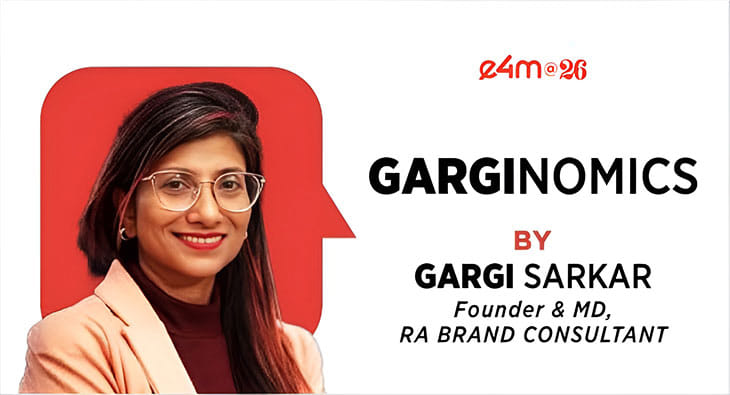

- The article discusses the concept of the "Perception Gap," which is the difference between a business's self-image and how it is perceived by the market, emphasizing the importance of effective branding to bridge this gap.
- It highlights that customers form opinions based on their experiences with a brand, including communication, service, and overall interaction, rather than the company's internal beliefs about itself.
- The author, Gargi Nomics, argues that successful branding aligns what a business promises with what it delivers, fostering trust and credibility by making real value visible and relevant to customers.
- Continuous assessment of brand perception is essential, as market dynamics and consumer expectations evolve, requiring businesses to adapt their branding strategies accordingly.
Why Bridging the Gap Between What You Are and How You Are Perceived Matters
There is always a story a business tells itself.
And then there is the story the market tells about it.
The difference between the two is the Perception Gap.
At Gargi Nomics, I believe one of the most important jobs of branding is not simply to make a business look better.
It is to bridge this gap.
Because a business may have an exceptional product, decades of experience, strong leadership and genuine intent—but if the market doesn't see, understand or feel that value, the business has a problem.
Not necessarily a product problem.
Not necessarily a business problem.
A perception problem.
What You Think You Are vs. What People See
Every business has an internal view of itself.
“We are premium.”
“We are innovative.”
“We offer exceptional service.”
“We are different.”
But customers don't experience your intention.
They experience your brand.
They see your communication.
They see your website.
They see your packaging.
They see your people.
They experience your service.
They hear how you speak.
They notice how quickly you respond.
They form an opinion.
And that opinion becomes their reality.
This is where branding, marketing strategy and consumer psychology intersect.
The Bridge Is the Brand
For me, branding is essentially a bridge.
One side is the business reality.
The other side is customer perception.
And somewhere in between lies the brand.
If the business says it is premium but everything around the customer experience feels ordinary, there is a gap.
If a company has incredible expertise but communicates like everyone else, there is a gap.
If a founder has a powerful vision but the brand doesn't communicate that vision, there is a gap.
If the product has evolved but the brand hasn't, there is a gap.
And every gap is an opportunity.
Why Bridging the Gap Matters
A successful brand creates alignment.
What you promise should connect with what you deliver.
What you stand for should connect with what people experience.
What you believe internally should be translated externally.
That is what creates trust, credibility and perceived value.
The objective is not to create a false perception.
Quite the opposite.
The objective is to make the real value visible, understandable and relevant to the people who matter.
That distinction is critical.
Because good branding doesn't hide reality.
Good branding reveals it.
The Gargi Nomics Perspective
This is where Gargi Nomics comes in.
I look at brands through a different lens.
Not just:
“What are you selling?”
But:
“What are people believing?”
Not just:
“What are you communicating?”
But:
“What are people understanding?”
Not just:
“What do you want to be known for?”
But:
“What are you actually becoming known for?”
The answers often reveal the gap.
And once the gap is visible, it can be addressed.
From Communication to Connection
The future of branding is not about shouting louder.
There is already too much noise.
It is about creating clarity.
A customer should be able to understand:
Who you are.
Why you matter.
What makes you different.
Why they should trust you.
And most importantly—
Why should they care?
That is when communication becomes connection.
And connection is where brands become memorable.
Bridging the Gap Is a Continuous Process
The market changes.
Consumers change.
Generations change.
Technology changes.
Expectations change.
Therefore, the perception of a brand can change too.
What worked five years ago may no longer work today.
That is why brand strategy cannot be a one-time exercise.
It requires listening, observing, questioning and constantly recalibrating.
The strongest brands don't assume they know how they are perceived.
They keep checking.
The Question I Would Ask Every Founder
Stand outside your business for a moment.
Forget what you know.
Forget how hard you have worked.
Forget what you intended to communicate.
Look at your business as if you were experiencing it for the first time.
Then ask:
“Is the value we believe we create the same value our customer perceives?”
If the answer is yes, you have alignment.
If the answer is no, you have a gap.
And that gap deserves attention.
Because somewhere between what you are and what people perceive you to be lies the real opportunity to build a stronger brand.
THIS IS GARGI NOMICS.
For me, Gargi Nomics is about finding these invisible gaps in business, branding and human behaviour—and building the bridge between them.
Because the most powerful brands aren't necessarily the ones that communicate the most.
They are the ones where reality, perception and experience meet.
That's where a brand stops being a name—and starts becoming a belief.
#GargiNomics #BrandStrategy #Branding #ConsumerPsychology #BrandPerception #MarketingStrategy #ConsumerBehaviour #BrandBuilding #CustomerExperience #PerceivedValue #FounderMindset #BusinessStrategy #BrandPsychology
Read more news about Marketing News, Advertising News, PR and Corporate Communication News, Digital News, People Movement News
For more updates, be socially connected with us onInstagram, LinkedIn, Twitter, Facebook, YouTube & Google News