From Celine Dion to Smriti Mandhana: How Barbie became a multi-generational cultural IP
Mattel is repositioning Barbie as a multi-generational cultural IP, combining nostalgia-driven collectibles with role models who champion diversity and empowerment
 by
by
Published: Oct 17, 2026 9:15 AM | 3 min read
 Follow Us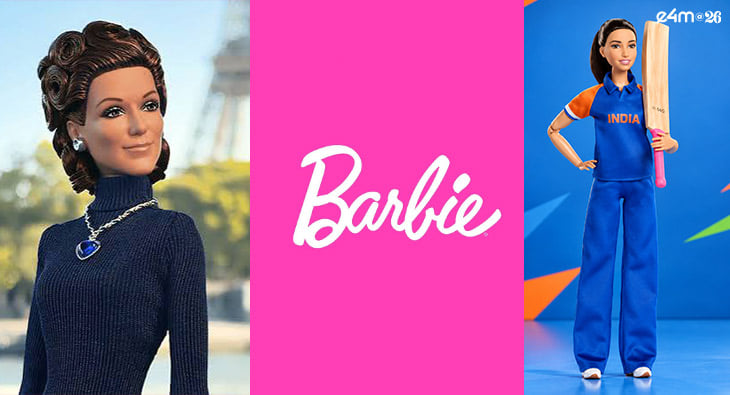

- On October 14, 2026, Mattel launched a $60 limited-edition Barbie inspired by Celine Dion's 1998 Academy Awards look, following the earlier release of a Barbie likeness for Indian cricketer Smriti Mandhana, the first Indian athlete to receive this honor.
- Mattel's strategy aims to shift Barbie from a traditional children's toy to a high-margin cultural intellectual property, targeting the growing 'kidult' demographic, which accounted for over 17% of total toy sales in the U.S. in early 2024.
- The Celine Dion Barbie is part of the Barbie Signature collector line, allowing Mattel to capitalize on pop-culture nostalgia and command premium pricing, while the inclusion of Mandhana supports the brand's expansion into the Indian market and promotes female empowerment in sports.
- Mattel's marketing strategy focuses on cultural participation rather than traditional advertising, leveraging partnerships with celebrities to reach their fan bases and generate organic media coverage, thus transforming Barbie into a modern lifestyle brand.
On 14 October 2026, Mattel released a $60 limited-edition Barbie modelled on Celine Dion's 1998 Academy Awards appearance. Seven months prior, Indian cricketer Smriti Mandhana became the first Indian athlete to receive a one-of-a-kind Barbie likeness. On the surface, these are disparate PR exercises. Analytically, they represent a dual-engine marketing strategy by Mattel to transition its flagship property from a traditional children’s toy into a high-margin, multi-generational cultural IP.
The 'Kidult' Commercial Reality
Facing flat or declining traditional toy sales globally, legacy toy manufacturers are pivoting to the lucrative 'kidult' demographic (consumers aged 18 and older). According to Circana data, adult consumers drove $1.5 billion in US toy sales in the first quarter of 2024 alone, and the segment now accounts for over 17% of total toy industry sales.
Mattel has aggressively targeted this segment through its direct-to-consumer platform, Mattel Creations. The Celine Dion release - which replicates her pale blue Michael Kors gown and the 'Heart of the Ocean' necklace from Titanic - is purposefully restricted to the Barbie Signature collector line. This approach allows Mattel to command premium pricing while monetising pop-culture nostalgia, rather than relying solely on volume-based retail sales.
View this post on Instagram
The strategy places Dion among a highly curated portfolio of music icons commemorated through collectibles, including Whitney Houston, Stevie Nicks, Tina Turner, and Elton John.
View this post on Instagram
Role Models and Brand Equity Repositioning
While the nostalgia pipeline drives high-margin direct sales, Mattel's parallel "Role Models" programme is engineered to modernise the brand's equity and secure long-term relevance. The inclusion of Smriti Mandhana in March 2026 highlighted Mattel's strategic expansion into the Indian market, positioning the brand alongside female empowerment in a sports category traditionally dominated by men.
This local execution mirrors Mattel’s global sporting initiative. Capitalising on the build-up to the 2024 Paris Olympics, the company released custom dolls for nine international athletes, including US tennis player Venus Williams, Australian footballer Mary Fowler, and French boxer Estelle Mossely. These one-of-a-kind dolls function less as retail products and more as high-impact corporate communications. By celebrating real-life trailblazers, Mattel generates significant earned media and aligns the brand with peak athletic achievement rather than outdated beauty standards.
View this post on Instagram
The Licensing and Earned Media Ecosystem
The marketing architecture behind these releases is highly efficient. By partnering with legacy icons like Dion or contemporary athletes like Mandhana, Mattel effectively co-opts the celebrities' existing fan bases. The dolls serve as physical manifestations of cultural moments.
For marketers, the core takeaway is the shift from product advertising to cultural participation. Mattel is not heavily relying on traditional paid media inventory to sell these specific dolls; the cultural resonance of the celebrities ensures organic amplification across entertainment and sports media.
View this post on Instagram
Mattel’s strategy underscores a critical shift for heritage brands. Survival in the modern consumer economy requires transcending the original product category. By balancing premium, nostalgia-driven commerce with aspirational, diversity-led brand marketing, Barbie has engineered a blueprint for converting a 60-year-old toy franchise into an agile media and lifestyle property.
Read more news about (internet advertising India, internet advertising, advertising India, digital advertising India, media advertising India)
For more updates, be socially connected with us onInstagram, LinkedIn, Twitter, Facebook YouTube & Whatsapp