Insurance ads are shifting from uncertainty to confidence: Sourabh Lohtia, PNB MetLife
Sourabh Lohtia, Chief Marketing & Communications Officer at PNB MetLife, talks about their latest campaign with Smriti Mandhana, marketing in the insurance sector, and more
 by
by
Published: Apr 23, 2026 12:58 PM | 4 min read
 Follow Us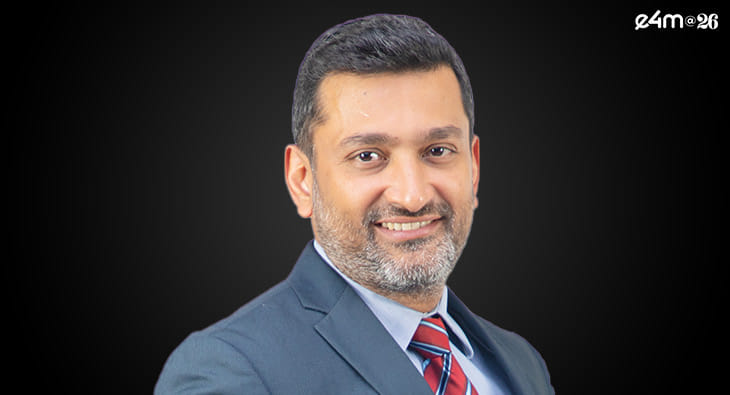

- The insurance advertising landscape in India is shifting from fear-based messaging to themes of confidence, aspiration, and financial empowerment, driven by a younger, digitally savvy audience.
- The insurance sector has seen significant growth, with a projected market size of ₹19.3 lakh crore by FY26, and life insurance premiums reaching ₹40,206 crore in September 2025.
- PNB MetLife is leading this transition by adopting contemporary narratives featuring relatable figures like cricketer Smriti Mandhana, emphasizing preparedness and confidence over caution and fear.
- The industry is increasingly utilizing digital tools for consumer engagement, focusing on clarity and flexibility, while maintaining a hybrid media strategy to reach diverse customer segments across urban and rural areas.
Insurance advertising, long dominated by fear-led messaging and worst-case scenarios, is now moving towards confidence, aspiration and financial empowerment, driven by a younger, digitally aware audience and a market that is scaling rapidly.
According to India Brand Equity Foundation (IBEF), the sector has grown at a CAGR of 17% over the past two decades and is projected to reach ₹19.3 lakh crore by FY26. Life insurance continues to gain momentum, with new business premiums at ₹40,206 crore in September 2025 and year-to-date collections rising to ₹2,03,668 crore. Policy reforms such as 100% FDI in insurance and the rise of digital platforms are further expanding access across urban and rural India.
At the same time, emerging segments like IoT-based insurance are expected to grow at nearly 55% annually to ₹1.83 lakh crore by 2033, signalling a tech-led future for the category.
As the sector evolves, insurers are rethinking not just distribution, but also how they communicate.
At the centre of this transition is PNB MetLife, which has consciously moved from its earlier caution-driven storytelling, including the widely recalled “magician” ads, to more contemporary, confidence-led narratives featuring cricketer Smriti Mandhana.
Sourabh Lohtia, Chief Marketing & Communications Officer at PNB MetLife said, “Traditionally, insurance communication focused more on caution, fear, and worst-case scenarios because it deals with uncertainty. But we realised that if people are well prepared, anxiety can turn into confidence. That is the shift we are driving, from uncertainty to confidence, so people can live in the present while being ready for the future.”
For many consumers, the brand’s earlier campaigns built strong recall through storytelling rooted in risk and protection. However, the Mandhana-led campaigns signal a strategic pivot towards relatability, aspiration and youth engagement.
“Life insurance is long term, so whatever we do is also long term. This is our third year of association with Smriti Mandhana. Her story of discipline, preparation and performance aligns perfectly with our brand promise of being ‘always ready for life’,” Lohtia explained.
This evolution reflects a deeper shift in consumer behaviour. Younger audiences are entering the insurance category earlier, but with very different expectations. They seek clarity, flexibility and purpose-driven financial decisions rather than fear-based persuasion.
“If I start talking to a 25-year-old about retirement at 60, I will miss the bus. For them, retirement is financial freedom to do what they love. Our engagement focuses on tools like digital calculators that help them plan early and build that journey,” he said.
This approach marks a move from communication-led marketing to utility-led engagement, where digital tools play a central role in conversion. Platforms, calculators and guided journeys are increasingly being used to simplify decision-making in a category that has traditionally been perceived as complex.
Despite the growing importance of digital, PNB MetLife continues to adopt a hybrid media strategy that blends online and offline channels to maximise reach and trust.
“Our media mix depends on the customer segment. For younger audiences, we are active on social platforms. But we also invest in on-ground activation through bank branches to reach consumers across Bharat. Insurance is a need for every segment, not just digitally savvy users,” Lohtia noted.
Interestingly, even as influencer marketing becomes mainstream across sectors, insurance brands are taking a more cautious approach. Credibility and trust continue to outweigh reach.
“As of now, we have not worked with fin influencers. We believe stronger and more loyal connections come from real customer stories and testimonials rather than just reach-driven influencer content,” he said.
This stands in contrast to categories like fashion and beauty, where influencer-led campaigns dominate. In insurance, authenticity and lived experiences are emerging as more effective storytelling tools than sponsored endorsements.
Measurement metrics are also evolving. In an ecosystem increasingly driven by virality, PNB MetLife is prioritising depth over scale.
“I would give less emphasis to ‘viral’. Making meaningful connections is more important. Engagement, whether through customer feedback, app usage or direct communication, is what we track closely,” Lohtia added.
The broader shift in insurance advertising reflects the industry’s transition from selling fear to enabling confidence. As digital adoption rises and younger consumers reshape the category, brands are being pushed to rethink both message and medium.
For PNB MetLife and others in the sector, the goal is no longer just to highlight risks, but to empower consumers with a sense of preparedness.
“If consumers consider PNB MetLife when choosing an insurance provider, that is success for us. If our association makes them more confident about their financial future, that is what truly matters,” Lohtia said.
As competition intensifies and new-age insurers enter the market, the category’s storytelling playbook is being rewritten. The focus is shifting from protection against uncertainty to enabling a life lived with confidence, marking a defining moment in the evolution of insurance advertising in India.
Read more news about Marketing News, Advertising News, PR and Corporate Communication News, Digital News, People Movement News
For more updates, be socially connected with us onInstagram, LinkedIn, Twitter, Facebook, YouTube & Google News