Tesla's Roadster reveal raises a question for marketers: Can hype last until 2028?
Tesla's Roadster reveal shows how spectacle can generate attention, but sustaining interest until production begins in 2028 may prove a bigger marketing challenge
 by
by
Published: Oct 17, 2026 11:28 AM | 5 min read
 Follow Us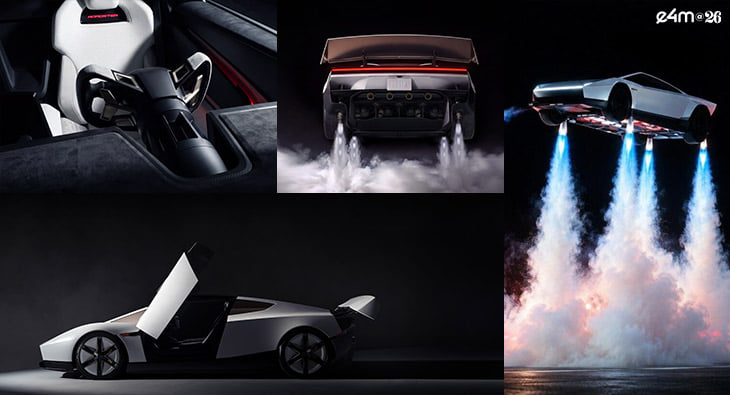

- Elon Musk unveiled Tesla's next-generation Roadster on October 15, 2023, at SpaceX's facility, showcasing its capabilities through dramatic demonstrations, including rocket-style thrusters, but production is not expected to begin until 2028.
- The launch highlights the tension between generating media attention and delivering a product, as Tesla's history shows that early interest does not guarantee successful manufacturing and sales.
- The marketing strategy relies on spectacle and earned media, but the effectiveness of this approach is questioned, especially given the long wait for the Roadster's release and the potential for consumer interest to wane over time.
- Unlike Tesla's focus on engineering demonstrations, Apple’s product reveals emphasize consumer benefits, suggesting that successful marketing requires clear communication of how a product solves problems and its value to consumers.
Elon Musk's latest Tesla Roadster reveal highlights a marketing strategy built on spectacle, anticipation and earned media. But with production expected to begin only in 2028, it also exposes the limits of launch-driven hype: attention is easy to generate, harder to sustain and ultimately dependent on delivery.
Unveiled on October 15 at SpaceX's facility in Texas, the next-generation electric sports car was showcased through dramatic demonstrations, including mid-air manoeuvres enabled by rocket-style thrusters developed with SpaceX. Musk described the vehicle as a flying car and called it the car from a James Bond film, positioning it as a technological showcase rather than simply another electric vehicle. According to Reuters, production is expected to begin in 2028, nearly nine years after the car was first unveiled in 2017.
View this post on Instagram
The launch shows how visual spectacle can create headlines, discussion and social media shares. It also highlights the gap between generating attention and delivering a product to customers. In India, however, much of the internet compared the Roadster with the flying car from the Bollywood film Tarzan: The Wonder Car.
The reaction illustrates how audiences can reinterpret a brand's intended positioning through local cultural references, sometimes adding an unexpected layer to the conversation.
Selling the future before it arrives
Tesla has repeatedly generated interest well before its vehicles reached the market. The 2016 Model 3 unveiling attracted more than 250,000 orders in its first 36 hours, according to Reuters. Its proposed $35,000 starting price gave consumers a clear proposition and a reason to reserve the car before mass production began.
That example demonstrates the power of anticipation when it is tied to a tangible consumer benefit. But reservations are not completed sales, and early demand does not remove the challenges of manufacturing and delivery.
The Roadster offers a different proposition. Its headline-grabbing capabilities and SpaceX collaboration make it a technological spectacle, while Musk has previously suggested that the project would have limited direct financial impact on Tesla. Its value may therefore lie in reinforcing the company's image as an engineering-led technology brand.
For marketers, the distinction matters. A launch can build awareness and strengthen brand associations without driving immediate sales. Its commercial value depends on whether attention eventually converts into trust, demand and delivery.
When spectacle becomes the strategy
Tesla's live demonstrations can also create publicity beyond their intended message. At the 2019 Cybertruck unveiling, the company sought to demonstrate the vehicle's durability. Although the body withstood a sledgehammer test, its supposedly armoured windows cracked when struck by metal balls.
Elon Musk stood on stage in 2019 and watched his armored glass shatter in front of a live audience. The truck was the Cybertruck. Stainless steel body, angular enough that people assumed it was a placeholder rendering. The demo before it had worked. A sledgehammer swung at the door panel, no dent, the metal holding. Then came the windows. The claim was armor glass, and the plan was to throw a steel ball at it. The ball hit. The glass cracked through. Musk stood there for a second, said something about it not breaking through, and told them to try the other one. The second window cracked too. He finished the presentation standing beside a truck with two shattered windows, saying maybe the throw had been a little too hard. Tesla stock fell about 6% the next day. Coverage called it the most embarrassing launch in modern automotive history. Then the orders came. Hundreds of thousands of reservations within days, with a $100 deposit each. He later explained the sledgehammer test had cracked the base of the glass before the ball ever hit it. The failure did more for the truck than a clean demo would have.
The incident made the launch memorable, but also raised questions about the product claims. Earned media is not automatically positive: a dramatic demonstration can amplify a brand while exposing it to scrutiny when reality falls short of expectations.
Tesla's reliance on publicity and word of mouth has also evolved. In 2023, Musk said the company would experiment with traditional advertising, a shift for a business that had historically depended on media coverage and its existing customer community. Reuters reported that the aim was to communicate features, safety and affordability to audiences beyond those already persuaded by the brand.
The change suggests that earned media can create awareness, but paid communication may be necessary to explain specific benefits and reach new customers.
The Apple comparison: From spectacle to consumer benefit
Apple offers a contrasting model. At the original iPhone unveiling in 2007, Steve Jobs introduced the device as three products: an iPod with touch controls, a mobile phone and an internet communicator. The framing helped audiences understand the proposition before he moved into the features.
Musk's presentations often centre on ambitious engineering demonstrations, while Apple's keynotes have traditionally focused on translating technology into consumer benefits. Both approaches can generate anticipation, but a memorable reveal is only effective when consumers understand why the product matters, what problem it solves and whether it is worth waiting for.
Can the hype last until 2028?
The Roadster's timeline puts launch-driven attention under scrutiny. Tesla first unveiled the next-generation model in 2017 and initially indicated that deliveries would begin in 2020. The latest reveal has renewed interest, but production is now expected in 2028.
The key question is not how many people watch a launch or share its most spectacular moments. It is whether that interest survives long enough to influence purchase intent, generate sales and build lasting brand trust.
Tesla's Roadster may succeed as a showcase for engineering ambition. But its marketing value will ultimately depend on turning anticipation into delivery. The central lesson for brands is that hype can open a conversation, but only a credible product and a realistic path to ownership can keep it alive.
Read more news about (internet advertising India, internet advertising, advertising India, digital advertising India, media advertising India)
For more updates, be socially connected with us onInstagram, LinkedIn, Twitter, Facebook YouTube & Whatsapp