Why marketers must rethink the bundled vs unbundled debate
Guest Column: Rajiv Dubey, Vice President, Head of Media and Head of Brand Activations at Dabur India, explains why modern marketers must move beyond the agency-versus-specialist debate
 by
by
Published: Feb 26, 2026 7:01 PM | 5 min read
 Follow Us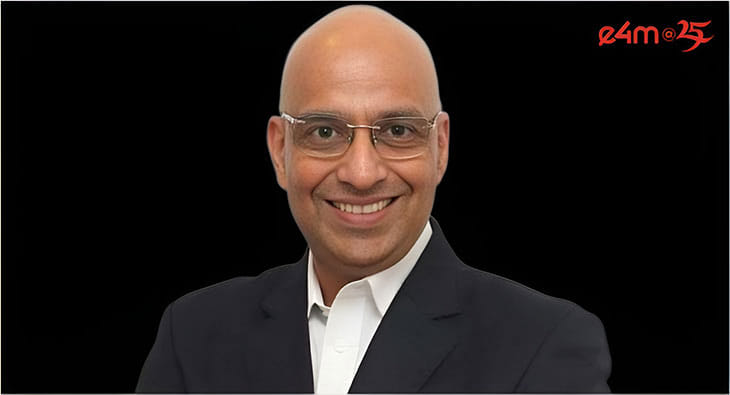

- Marketers face an architecture problem rather than an agency problem, as their brand ecosystems now involve multiple specialized partners, including creative agencies, social specialists, and e-commerce performance partners, alongside increasing in-house capabilities.
- The rise of AI tools is transforming marketing by automating processes and enhancing audience discovery, leading to a fragmented landscape where each partner optimizes their domain, complicating unified growth efforts for marketers.
- Multi-brand organizations experience significant pressure due to the need for diverse strategies across different brands, making it challenging to manage complexity without a strong internal structure to support external specialists.
- The future of marketing lies in a hybrid model that balances in-house capabilities with external specialists, emphasizing the importance of orchestration and integration of creativity, technology, and data to drive continuous growth.
Most marketers today do not have an agency problem. They have an architecture problem.
A typical brand ecosystem now includes a creative agency, a social specialist, an e-commerce performance partner, a content studio, a martech integrator, a media agency and often an audit agency. Parts of this ecosystem are also being pulled in-house. AI tools powering creative production, automation and audience discovery are entering the stack at speed and destroying layers of decision making.
As each partner claims expertise, each optimises its own domain and the marketer sits in the middle trying to turn fragmented excellence into unified growth for its business.
The debate is no longer bundled versus unbundled agency. It is about how to integrate specialisation, technology and speed without losing coherence and still grow your business.
The age of the specialist is irreversible
Digital did not expand marketing. It fractured it into full-time disciplines. For example:
E-commerce performance is algorithmic. Social runs on content velocity. Influencer ecosystems require cultural fluency, moment marketing and trends identification. Martech is pure infrastructure.
AI is accelerating every layer. Creative teams use generative AI tools for quick turnaround, iteration and hyper personalisation at scale. Martech automates journeys. Audience discovery is increasingly machine led moving from probabilistic to more deterministic signals.
Expecting one agency to deliver equal depth across all of this is unrealistic.
This is why most marketers now work with multiple specialist partners. India’s marketplace-first growth stories have accelerated this shift. Brands scaling through Amazon, Flipkart and quick commerce platforms depend on experts who live inside those ecosystems every day. Speed beats generalisation.
At the same time, brands are selectively in-housing their analytics, CRM functions, AI dashboards and content production. This is not about replacing agencies. It is about owning core growth levers and data.
But specialisation, whether human or machine-driven, introduces a new tax. Integration.
Why multi-brand companies feel the pressure first
The strain is most visible in multi-brand organisations.
A portfolio company is not running one strategy. It is running several at once. Some brands chase e-commerce acceleration. Others build awareness. Others defend mature categories. Forcing all of this through a single master agency rarely works.
Large Indian advertisers like Dabur have learned that brands sitting in different product life cycles require different operating rhythms and talent mixes. One structure does not fit all.
Yet a fully fragmented model is equally risky. Duplicate vendors, disconnected AI tools and siloed data systems create governance fatigue. Marketers end up managing complexity instead of growth.
This is where in-housing becomes a stabiliser. Internal teams increasingly act as custodians of data, AI infrastructure and brand governance, while external specialists execute at speed. The internal spine provides continuity. The external network provides edge.
The creative risk of closed systems
There is another risk marketers quietly recognise. Ideas dry up inside closed systems.
Long-standing single-agency partnerships build trust, but they can reduce creative tension. Fresh thinking often enters through new partners. Different agencies bring different instincts and problem-solving styles.
AI does not remove this need. When tools are widely available, differentiation comes from perspective. Marketing needs friction to stay sharp. Over-consolidation, whether through one agency or an oversized in-house machine, can flatten imagination.
Many brands deliberately maintain multiple specialist relationships for this reason. They are buying creative oxygen, not just services.
One partner or many specialists is the wrong question
The industry often frames the debate as a choice between one integrated partner and a network of super-specialists. In reality, the winning model is hybrid and situational.
Large ecosystem businesses such as portfolio FMCG players or retail platforms need a central integration layer. Without shared measurement and unified AI frameworks, fragmentation becomes expensive. A hub-and-spoke structure works best. An orchestrating core, selective in-house capability and specialist external spokes.
Focused challenger brands operate differently. Speed matters more than architecture. Many Indian D2C companies run lean internal teams supported by tight specialist circles that function like embedded partners. But even these companies eventually hit a scale threshold. What works at ₹100 crore strains at ₹1,000 crore. Brand coherence and data ownership demand structure.
Agency architecture is not permanent. It evolves with business maturity.
The real gap is orchestration
The core problem is not bundling or unbundling. It is weak orchestration.
Marketers struggle to connect brand storytelling, AI systems and platform execution into one operating model. Emotional brand building and technical delivery still live in separate worlds. The next generation of agencies will be defined by integration capability. The ability to make specialists and technology operate as one system.
The agencies that win will not be those claiming to do everything. They will be those that know how to collaborate with in-house teams, deploy AI intelligently and bring the right expertise at the right moment.
The marketer’s new mandate
Agency structure can no longer be fixed. It must be modular.
Early growth rewards specialists. Scale demands integration. Mature portfolios require orchestration. In-housing becomes strategic. AI becomes foundational.
Bundling will survive, but only in flexible form. Decentralisation will continue, but it needs discipline. In-housing will expand, but it cannot replace external perspective.
The competitive advantage lies in balancing all three.
Because in today’s marketing economy, the marketer’s role is not to choose agencies.
It is to design systems where people, platforms and AI work together to keep ideas fresh, execution fast and growth continuous.
The future will not belong to the biggest agencies or the most specialised ones. It will belong to the ecosystems that integrate creativity, commerce, data and AI seamlessly around the consumer.
Read more news about Marketing News, Advertising News, PR and Corporate Communication News, Digital News, People Movement News
For more updates, be socially connected with us onInstagram, LinkedIn, Twitter, Facebook, YouTube & Google News
