When brands enter their own Uncanny Valley
Guest Column: Yesudas S Pillai, Entrepreneur, Investor, Marathoner and a Curious observer, shares his take on why a brand chooses to change the logo and messaging
 by
by
Published: Sep 7, 2026 8:30 AM | 7 min read
 Follow Us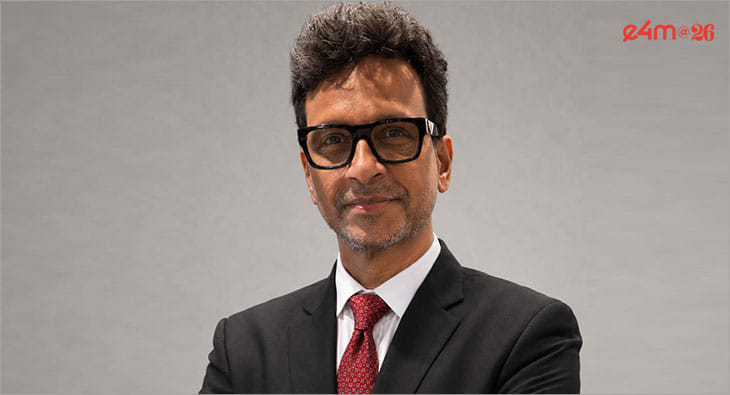

- Vodafone has updated its visual identity by relocating its logo's yellow dot, accompanied by a promotional message from brand ambassador Shah Rukh Khan.
- The author expresses skepticism about the effectiveness of such branding changes, questioning their significance for long-term customers who seek genuine communication rather than marketing gimmicks.
- The article critiques brands like Vodafone and Air India for failing to acknowledge customer loyalty and for relying on automated, impersonal communication methods.
- It argues that brands should prioritize meaningful interactions and understanding customer relationships over flashy advertising, emphasizing the need for a more human approach in customer engagement.
Vodafone moved the little yellow dot from below the I to the top. A new visual identity. According to an email from the CEO, I am apparently going to experience something “fabulous” in the days to come. There was also a message from Shah Rukh Khan, who has “joined the Vi family”. I was asked to click on to play the same. I didn’t.
I presume that if he had been on another network, he would have ported to Vi. But for me, he is a brand ambassador. I am sure he has no problem telling brands what they want to hear, just as he had no qualms telling someone that if they wanted him to dance at their wedding, they should be prepared to pay him crores. I actually like that clarity. So I’m sure Vi paid him to say what they wanted him to say.
Then I saw this newspaper ad which interestingly had a flap that covered half of the ad, and the portion which I could see said “OW VI” in huge letters. I read “OWCH”
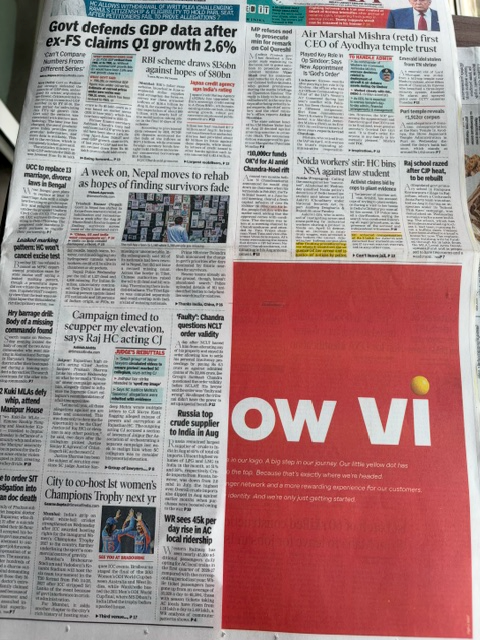
I don’t dislike Vi. I have been with this network for decades, from Orange to Hutch, Vodafone and now Vi. I watched friends move to other operators. I watched others migrate to 5G. I resisted the temptation and stayed. So when a brand has a customer who has stayed with it for decades, what does a new logo and a yellow dot moving upstairs actually mean to that customer?
I am still waiting to find out. This is where I think many brands are missing something fundamental. We have become very good at communicating to customers. We are becoming less good at communicating with them.
Imagine if, instead of another front-page advertisement, Vi had sent its long standing customers a personal message: “You have stayed with us through Orange, Vodafone and now Vi. We know that loyalty. Here is what this change means for you. And here are two or three things we are doing differently because of it.” That would have meant far more to me than crores in newspaper campaigns. It would have made me feel seen.
I had a similar experience recently with Air India. They downgraded my booking from Premium Economy to Economy apparently because the aircraft operating the flight had changed and the new aircraft did not have a Premium Economy cabin, which I subsequently figured out.
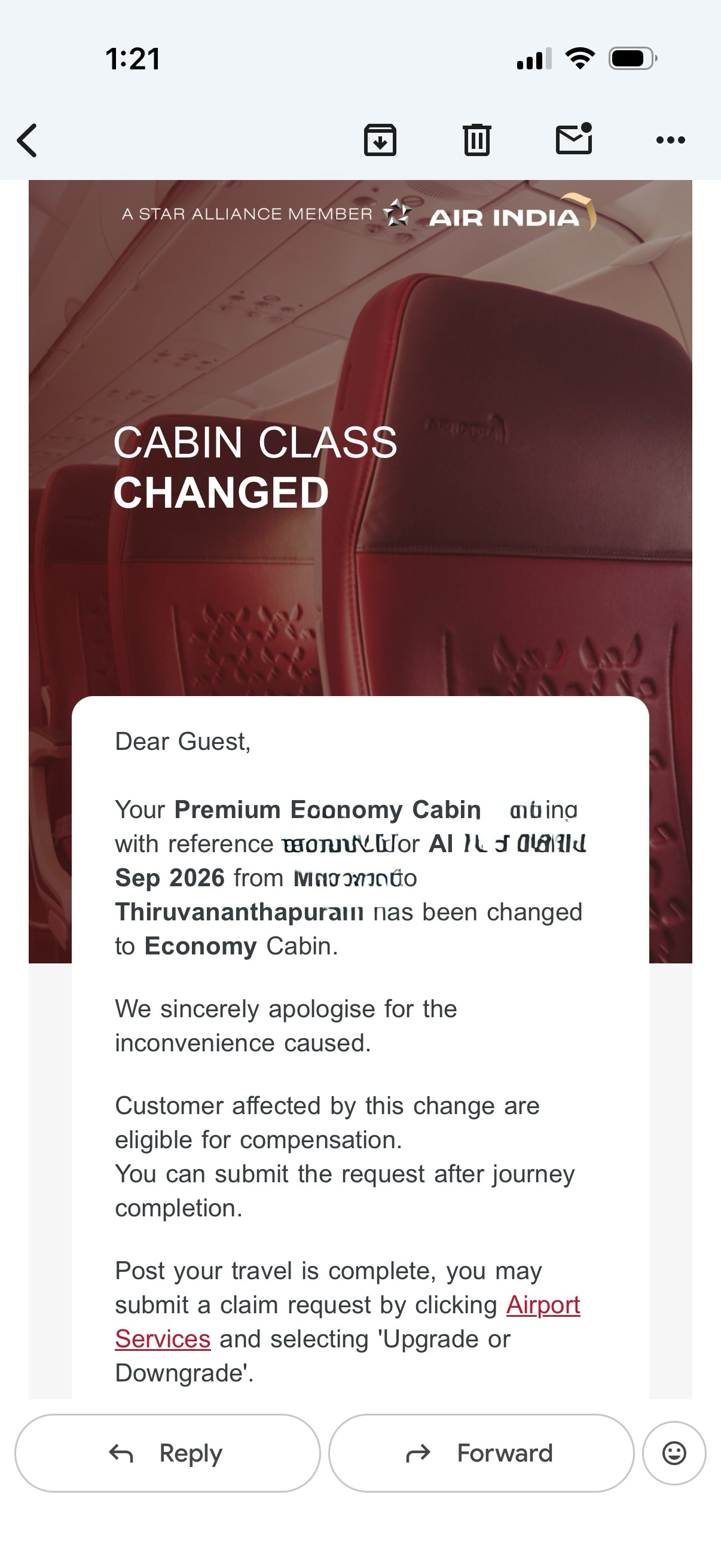
Aircraft change happens. Customers can understand operational realities. But the communication came from a computer, which proudly announced Dear Guest “Cabin Class Changed” and that I could “request” for the fare difference after completing my journey. I wrote about it on social media. To Air India’s credit, they reached out to me after seeing the post, and I appreciated that. I told them something simple.
Why not explain the reason when you communicate the problem? Why not say: “We know you booked Premium Economy. Unfortunately, the aircraft has changed and this aircraft does not have that cabin. We are sorry. Here are your options.” May be offer an upgrade to Business at a marginal difference or help the passenger secure a better Economy seat. In my case, interestingly, there was also a return sector booked on the same PNR but in the Economy cabin. If Premium Economy was available on that aircraft, why not offer an upgrade there?
The same airline had done something similar earlier with my frequent flyer status. After years of being a Gold member, I was downgraded to Silver because I had fallen short of the tier qualification by just a couple of flights. The communication was a cold, computer generated message that simply told me I had been “downgraded.”
That one word says a lot. There was no acknowledgement that I had been a Gold member for years. No context. No recognition of the loyalty that had got me there in the first place. I fully understand that there are rules for qualifying for a tier. But surely there is a difference between applying a rule and communicating it like a human being.
Imagine if the message had said: “You’ve been a valued Gold member with us for several years. You have missed the qualification by just two flights. We’d like to give you an extended window to complete the requirement because we value your relationship with us.” Same system. Same rules. Same customer. A completely different feeling.
None of this requires a revolution in aviation. It requires someone to think. This, in my view is becoming the bigger challenge for brands. We are spending huge amounts of money making communication look human, while fully removing the human element from the actual experience.
It isn’t that technology or automated communication cannot be personal. I received this from MakeMyTrip recently.
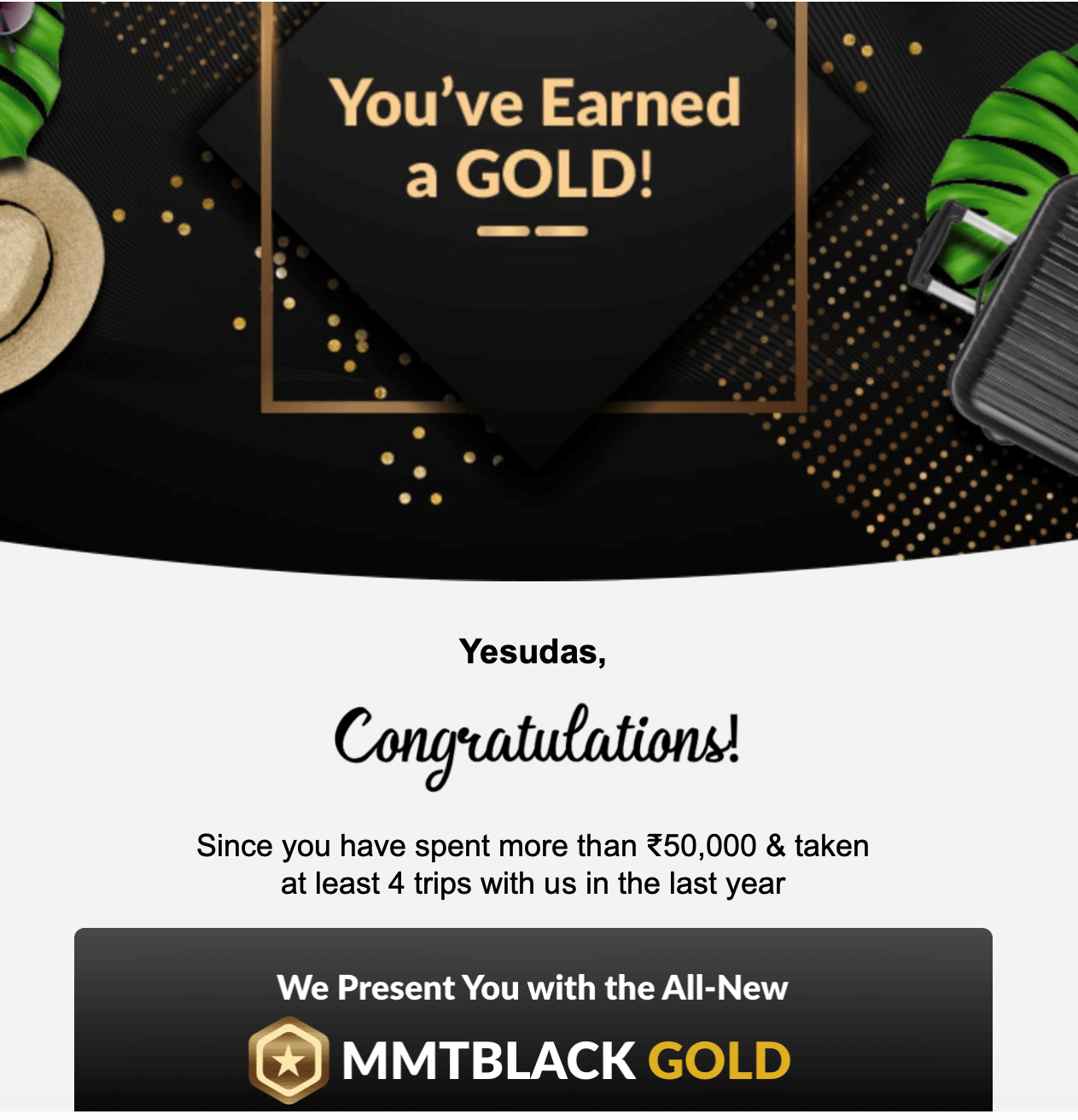
It was clearly system triggered but told me something very different. “You’ve earned a GOLD, you spent x amount of money with us and taken certain trips last year” I wasn’t aware. I hadn’t asked for this. This automation felt personal as the system had used the data it had about me, it addressed me by my name and also detailed out the benefits I can expect. It wasn’t a mass mail which said “Dear Customer/Guest”, we have something fabulous coming for you. It simply told me, we have noticed what you did. We value that and as a result you have earned something.
In 1970, the Japanese robotics professor Masahiro Mori spoke about the “Uncanny Valley” the idea that as technology becomes more human like, we initially respond positively. But when it becomes almost human without actually being human, something changes. Instead of comfort, we feel discomfort.
I really wonder if brands are walking into their own Uncanny Valley. We are using AI to write warmer emails, AI to create human looking campaigns, AI to personalise communication and even AI to predict what we might want. But what happens when everyone starts manufacturing human emotion?
Is the answer then more AI? Absolutely not. It is simply taking 10% of what brands traditionally spend on marketing and putting it into a small team whose job is to ask “What would we do differently if we actually knew our customers?” Bring in people from outside who think differently as advisors. Challenge the conventional. Look for transformative opportunities. Then use technology to scale what is genuinely human.
Customers don’t need brands to sound more human. They need brands to behave more human. That is the point I keep coming back to. We don’t have a problem with automation. We have a problem when automation becomes an excuse not to apply judgement. The smallest gesture, recognising the history of the relationship, understanding the context, giving a little leeway, can mean far more to a customer than another expensive advertising campaign
A yellow dot can move, A logo can change, An aircraft can change and A celebrity can say whatever the script asks him to say. But after decades of loyalty, what I really want to know is, What does any of this change for me? That is the conversation brands need to start having if they want to build something called empathy even remotely.
Disclaimer: The views expressed here are solely those of the author and do not in any way represent the views of exchange4media.com.
Read more news about Marketing News, Advertising News, PR and Corporate Communication News, Digital News, People Movement News
For more updates, be socially connected with us onInstagram, LinkedIn, Twitter, Facebook, YouTube & Google News