Advertising is being replaced by content: DS Group’s Rajeev Jain on the new FMCG playbook
Rajeev Jain, SVP-Corporate Marketing at DS Group, shares how marketers are rethinking brand communication, innovation and cultural relevance in today’s digital-first ecosystem
 by
by
Published: May 25, 2026 9:01 AM | 6 min read
 Follow Us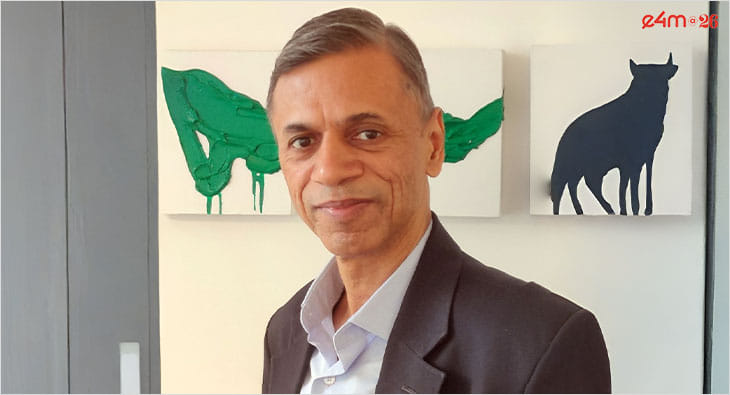

- Rajeev Jain, Senior Vice President of Corporate Marketing at DS Group, emphasizes a shift from traditional advertising to content-led engagement as FMCG brands adapt to changing consumer behaviors and preferences, particularly among Gen Z consumers who prioritize authenticity and transparency.
- The rise of influencer marketing is highlighted as a critical strategy for brands, especially in smaller markets, where micro and nano influencers resonate more effectively with local audiences.
- Jain notes that digital media is overtaking traditional formats in advertising spend, with platforms like connected TV offering targeted engagement opportunities, while quick commerce is reshaping consumer shopping behaviors towards convenience.
- He advocates for "always-on" marketing strategies that prioritize engaging storytelling and diverse communication formats to maintain consumer interest, warning against monotony in brand messaging.
As FMCG brands grapple with shrinking attention spans and rapidly evolving consumer behaviour, traditional advertising is steadily losing ground to content-led engagement, according to Rajeev Jain, Senior Vice President, Corporate Marketing at DS Group.
Speaking to exchange4media, Jain said marketers today are being forced to rethink how brands communicate, innovate and stay culturally relevant in a digital-first ecosystem.
From one-way advertising to conversational content
According to Jain, one of the biggest shifts in the industry is the transition from one-way advertising to conversational and content-driven communication. Consumers today are constantly consuming content across platforms, making it increasingly difficult for traditional advertising formats alone to hold attention.
“What I feel is that advertising is being replaced with content now. Earlier, brands used to make one big TVC, put up billboards and run campaigns around it. But now consumers are absorbing content on a daily basis, and unless the brand becomes part of the content consumers interact with, advertising alone may not meet the objective,” Jain said.
He added that this shift is fundamentally changing how brands approach engagement and storytelling, with consumers increasingly expecting entertainment, relevance and interaction instead of passive messaging.
Why Gen Z consumers are changing the rules
Jain said this evolution is particularly visible among Gen Z consumers, who are emerging as one of the most influential consumer cohorts for brands. Unlike earlier generations, Gen Z consumers are far more sceptical of conventional brand messaging and place greater emphasis on authenticity and transparency.
He noted that Gen Z consumers no longer take brand claims at face value and instead prioritise authenticity, transparency and lived product experience before building loyalty towards a brand. According to Jain, younger audiences also expect brands to move beyond “plain vanilla advertising” and engage them through more conversational, two-way communication formats.
He further pointed out that Gen Z consumers are increasingly drawn towards brands associated with sustainability and social impact, making purpose-driven positioning more important across categories.
The growing influence of creators and regional voices
The growing demand for conversational engagement is also fuelling the rise of influencer-led marketing in the FMCG ecosystem. Jain believes influencers today play a far more critical role than simply amplifying campaigns, especially as audiences increasingly follow creators they trust rather than relying solely on brand communication.
Jain added that many consumers today follow their own set of influencers. Particularly in smaller towns, micro and nano influencers understand the local intellect and local narrative much better, so consumers connect with them very fast. “The ROI is also very strong in those markets,” Jain noted.
According to him, the creator economy is becoming increasingly important for brands trying to build deeper local relevance and cultural resonance, especially across Tier 2 and Tier 3 markets.
Innovation must stay rooted in culture
Beyond communication, Jain said changing lifestyles and exposure to newer formats are also reshaping product innovation in FMCG. However, he stressed that innovation cannot come at the cost of cultural familiarity and consumer behaviour patterns built over time.
“I am a very strong believer in cultural marketing because the kind of taste buds, value systems and motivations we develop in childhood continue to stay with us. The role of marketers is to study those tastes and bring novelty around them, whether through packaging, product twists or newer experiences,” he said.
He added that consumers today are open to experimentation, but still seek familiarity and emotional connection in the products they choose.
Digital takes centre stage in FMCG media spends
Jain also pointed to the growing dominance of digital media in FMCG advertising spends. According to him, digital has already moved ahead of traditional formats because consumer attention itself has shifted online.
Jain noted that media spends are naturally shifting towards digital as consumer attention increasingly moves online. According to him, digital platforms are not only commanding more time from audiences but are also offering marketers newer and more engaging formats for communication compared to traditional media.
Within the digital ecosystem, he identified connected TV (CTV) as a fast-emerging opportunity for advertisers, noting that it combines the large-screen impact of traditional television with the precision targeting capabilities of digital media. He added that lower clutter levels on CTV platforms also allow brands to stand out more effectively compared to linear television.
How quick commerce is reshaping shopping behaviour
Jain also highlighted how quick commerce is fundamentally reshaping shopping behaviour in India, with consumers increasingly moving away from traditional monthly or weekly stock-up patterns in favour of convenience-led purchases enabled by instant delivery platforms.
According to him, the growing expectation of faster deliveries is steadily changing how consumers interact with FMCG brands and products. He also noted that e-commerce platforms are allowing consumers to experiment with a wider range of SKUs and newer product formats more easily than traditional retail channels.
Why ‘always-on’ marketing is becoming essential
Jain argued that these behavioural shifts are also making “always-on” marketing increasingly important for brands operating in highly competitive categories. However, he warned that constant communication does not mean repetitive advertising.
“Fatigue happens only when there is monotony in communication. Brands have to entertain consumers through different formats such as moment marketing, gamification, experiential activities and occasion-led engagement. Unless brands stay relevant and visible, somebody else may take that space in the consumer’s mind,” he said.
He further stressed that storytelling has become central to modern brand-building as consumers increasingly reject intrusive advertising formats.
“Consumers today want stories and content they can engage with organically. If communication remains only plain advertising, brands may miss their larger objective,” Jain said.
AI, data and the future of marketing
Talking about the broader marketing ecosystem, Jain described the current phase as one of intense disruption and fragmentation, driven by AI, data and changing media habits. He said marketers who can effectively combine technology with deeper consumer understanding will be best placed to navigate the evolving landscape.
“This is the era of AI, tech and data. Earlier marketers relied heavily on broad consumer definitions and traditional market research. Today, digital platforms are giving brands far deeper insights into consumer lifestyles, habits and sentiments,” he said. “The smarter brands will be the ones that use this understanding wisely and creatively.”
Read more news about Marketing News, Advertising News, PR and Corporate Communication News, Digital News, People Movement News
For more updates, be socially connected with us onInstagram, LinkedIn, Twitter, Facebook, YouTube & Google News