2025: The year digital media moved from transition to dominance
Guest Column: Hemant Jaiin, President & Head of Digital Business, Lokmat Media, writes on how the media, including advertising, has adjusted and shifted according to consumer behaviour
 by
by
Published: Jan 2, 2026 9:26 AM | 7 min read
 Follow Us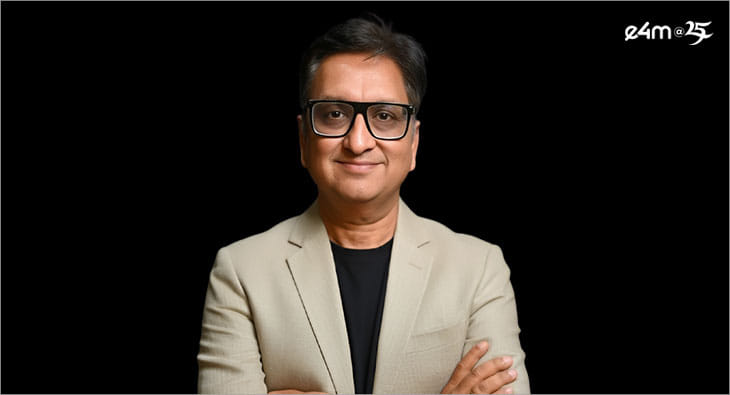

India’s shift toward digital has been building for some time, but it now feels firmly established. Lower data costs, smartphones in every hand, and the growing trend of using online platforms for every purchase have altered consumer behaviour and the way they engage with brands. The media, including advertising, adjusted and shifted according to consumer behaviour.
By 2025, it was clear that digital had led in advertising growth. The overall spending had remained somewhat stagnant, but an overall increase was registered in the online platforms of advertising. Digital online advertising now accounts for almost half of the country's overall advertising spending.
The move towards digital is being driven by necessity among the brands. It enables more precise targeting, faster feedback, and mid-course corrections in the campaign as needed. Of course, traditional media is still critical today. Television continues to reach audiences during those (selected) moments when many more are gathered, and print media continues to score for its authenticity and interaction levels in defined geographies and genres.
What is shifting is the proportion, not the importance, of the channels. This is apparent in big FMCG corporations as well. The brands today allocate, on average, 55-60% of their ad expenditure on digital, as opposed to 30% five years back. This is because the way overall marketing is decided has changed, and digital, alongside television and printed media, is helping meet not just brand objectives but also business objectives. By 2025, digital media had become the engine of growth in the overall Indian ad business, while traditional print remained the stable, trustworthy component.
Another significant trend in 2025 was Retail Media. Retail Media, which served as a testing ground for brands and retailers, has now evolved into a mature, widespread field, transforming digital advertising approaches. Retail Media is already on its way towards becoming a brighter, stronger, and more crucial part of media planning, thanks to its reach and impact. It is evident that Retail Media has now completed its testing phase and isn’t an additional or secondary channel anymore—it is emerging as a crucial arm of digital advertising.
The past year was a defining period for Retail media, as it not only changed but also matured, emerging as a robust advertising platform. This was very evident, especially in the case of e-commerce and quick commerce delivery platforms, such as Amazon and Flipkart, which consolidated their dominance, while quick commerce platforms such as Blinkit, Zepto, and Swiggy Instamart grew their ad business. Retail media’s closed-loop approach, delivering consumers a seamless purchasing experience with strong first-party data, gave it distinctive appeal and encouraged FMCG, Electronics, and Lifestyle brands to shift a greater chunk of their budgets towards these platforms.
The Indian OTT (Over-the-Top) sector came to the forefront in 2025, emerging as one of the fastest and most rapidly expanding fronts of the New Age Digital Economy. From the beginning, the OTT sector was built on the guise of traditional television, and today, the process has evolved into the very spine of the Media & Entertainment industry, shaping the consumption, distribution, governance, and monetisation of content across the industry. The most prominent turning point in the new-age Media & Entertainment industry was the Reliance Jio-Disney Star takeover, announced in the last month of 2024 and executed in 2025. This symbolised the beginning of a new Digital Age Media Monolith in the industry, and the impact is evident in sports streaming
The global streamers also changed their strategy. Amazon Prime Video launched an AD-Supported service in 2025, increasing competition in the AVOD sector as well. Other significant acquisitions occurred in mid-2024 when the American e-commerce giant, Amazon, bought the highly popular Indian Over-the-Top media platform MX Player from the Times Internet India entity, merging it with Amazon’s miniTV service to form “Amazon MX Player”, a free streaming platform with over 250 million users by 2025.
With the increasing momentum of the digital economy in the ‘Digital India and Viksit Bharat 2047’ agenda, digital media services are being facilitated in the new economy by OTT in an effective manner. Additionally, the most attractive form of digital media service in the OTT industry was Connected TV. Connected TV combines the experience of traditional television with the capabilities of digital media. The advertisements on the larger screen drive varying levels of attention and recall, whereas the logged-in audience enables highly targeted execution with robust measurement capabilities. Connected TV provides an uncluttered, safe atmosphere by integrating the capabilities of both brand and performance advertising. It is not an innovation for media buyers, as CTV has become an integral part of OTT strategy.
In 2025 the linear TV viewership in India was significantly challenged by the rapid growth of digital video streaming. While linear TV still has a large reach, especially in rural areas, its market share and advertising revenue are declining as audiences, particularly younger demographics, have shifted to Over-The-Top (OTT) platforms for content
Online news consumption also grew rapidly in 2025, driven by mobile use and local-language content. With smartphones emerging as the most preferred screen for news, consumers resorted to online news channels to access news regularly, breaking news, and local news. Online news consumption rose significantly, not only for news consumption in English, but also in Marathi, Tamil, Telugu, and Malayalam, seeing particularly high adoption due to ample local content availability. Meanwhile, publishers also expanded multilingual offerings, launching regional editions, and used tools like AI translation and audio formats to reach broader audiences. However, while consumption increased, revenues did not rise at the same pace. Many digital news publishers faced pressure on monetisation. Advertising revenues and unit yield remained challenged due to a significant shift from inventory-based to an audience-based buying, availability of publisher ad inventory through open ad exchanges at much lower CPMs, and a steady rise in programmatic and performance-led buying, making revenues less predictable in 2025. On the traffic side, changes in Google’s search algorithms, along with the growing use of AI-powered search results, reduced direct visits to publisher websites.
The rise of “zero-click” searches became a key concern. Users increasingly consumed news summaries directly on search pages or AI responses without clicking through to the original source. This limited opportunities for publishers to generate ad impressions or subscription conversions, even as their content continued to be widely consumed. Despite these challenges, the digital news ecosystem continued to expand. Regional and hyperlocal publishers gained relevance, and brands showed interest in language-led and location-based targeting. The gap between growing audience demand and sustainable monetisation remains a central issue, making revenue innovation a priority for the next phase of digital news growth.
Creators and influencers alike have evolved within a similar, professional, performance-oriented ecosystem. Regional language creators have contributed much to Tier-2 and Tier-3 markets, thereby encouraging brands to localise their campaigns. AI became a crucial catalyst in this aspect, contributing to improving the efficiency, scale, and creativity of creators and media organizations.
AI became the creator’s co-pilot in 2025. Far from replacing creativity, AI tools were widely adopted to enhance it. Today, Digital-first strategies have become non-negotiable, retail media has reshaped advertising priorities, OTT platforms have redefined viewing habits, and creators have evolved into influential media entrepreneurs. AI stitched these shifts together—boosting efficiency, reach, and innovation, while prompting new governance and quality challenges. The transformation of 2025 is not the peak—it is the foundation for a more dynamic decade ahead.
Disclaimer: The views expressed here are solely those of the author and do not in any way represent the views of exchange4media.com.
Read more news about Television Media, Digital Media, Advertising India, Marketing News, PR and Corporate Communication News
For more updates, be socially connected with us onInstagram, LinkedIn, Twitter, Facebook YouTube & Google News