Monetisation Over Exclusivity: Why broadcasters are putting fresh content on YouTube?
Broadcasters are easing traditional windowing norms, taking fresh content to YouTube earlier as they explore new monetisation pathways across platforms
 by
by
Published: May 7, 2026 8:22 AM | 9 min read
 Follow Us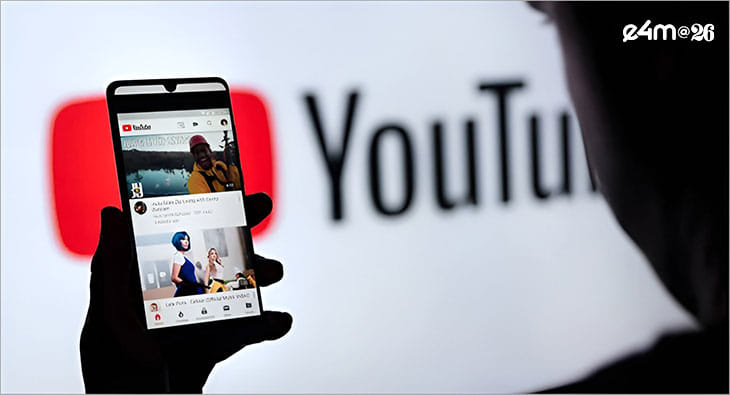

- Sony SAB's decision to upload full episodes of its show "Hui Gumm Yaadein" on YouTube shortly after its launch reflects a significant shift in television monetization strategies, prioritizing broader reach over traditional exclusivity.
- Industry experts note that this trend is not isolated to Sony, as other channels like Zee and Dangal TV are also releasing content on YouTube to engage audiences amid declining linear TV viewership and advertising revenues.
- The move aligns with a global trend where broadcasters are increasingly adopting ad-supported models and multi-platform distribution to maximize content value, as traditional television faces structural pressures and a shrinking subscriber base.
- Broadcasters are experimenting with "microdrama" formats, breaking down long-form content into smaller, consumable pieces for digital platforms, indicating a transformation in how television content is perceived and monetized.
For decades, television monetised content by controlling it—deciding when, where, and at what price audiences could access it. That model is now under visible strain.
Sony SAB’s recent move to upload full episodes of Hui Gumm Yaadein – Ek Doctor, Do Zindagiyaan on YouTube within weeks of launch—despite an ongoing linear run and availability on their own OTT platform SonyLIV—is emblematic of that shift.
Nearly 15 episodes have already been made available online on YouTube for the TV show which was launched in April only. This is despite the fact that the channel has its own streaming platform SonyLiv which has a massive reach in India.
Media consultant Deepak Tolani points out that putting full episodes on YouTube not only raises serious questions about the channel’s monetising strategy but also risks “cannibalizing SonyLIV” while delivering only “a fraction of the CPM revenues.” His observation captures the tension at the heart of this transition.
Incidentally, most TV channels have started doing so of late, however, the speed of Sony SAB’s move to go on YouTube immediately suggests a clear pivot: broadcasters are no longer optimising for windowing discipline, but for yield—how quickly and widely content can be scaled and monetised.
Ashish Sehgal, CEO – Times TV Network & Chief Growth Officer – Times Media & Entertainment, and former Chief Growth Officer (Broadcast & Digital) at Zee Entertainment Enterprises, says,“Most entertainment channels in India, including Zee and Sony, have started putting their shows on YouTube. Typically, TV content moves to OTT after a window period—which varies across channels—and then eventually to YouTube,” Sehgal explains.
“YouTube also enables additional monetisation through advertising. If the content performs well, channels start seeing payouts after a year, usually with a 55:45 revenue share,” Sehgal adds.
Producer Yubraaj Bhattacharya echoes the sentiments. “Sony SAB is not alone. Dangal TV and a few others are also streaming some of their shows on YouTube parallelly to expand their reach.”
As Indian audiences are increasingly consuming microdrama and user generated social media content, TV channels are feeling the pressure to engage and retain the audience, industry leaders remark.
e4m reached out to Sony Pictures Network India for comments. Their response was awaited till the time of publishing this story. We also reached out to Zee, Jiostar and Dangal TV. Their response was also awaited.
Global trend
The trend is prevalent across various countries, industry experts told e4m. “In parts of Southeast Asia, broadcasters have quietly experimented with releasing selected episodes or even entire series on open platforms shortly after television broadcast to build scale and monetise through digital advertising,” says Pep Figueiredo, COO - PTPL India, ex-SonyLIV exec.
He added, “In Latin America, certain daily soaps have built massive secondary audiences on YouTube, sometimes rivaling their linear reach. These experiments rarely receive mainstream attention because they challenge long held assumptions about exclusivity, yet they are steadily influencing distribution strategy.”
This shift marks a deeper transformation: television content is no longer just programming—it is inventory, designed to be sliced, redistributed, and monetised across platforms. In this model, exclusivity becomes a constraint. The question is no longer where content lives, but how often it can be repackaged and monetised without diluting value.
For Digital Scale?
Broadcasters’ accelerated push to platforms like YouTube signals a shift that goes beyond experimentation, aligning India with a broader global playbook. Across the US and Europe, networks are increasingly leaning on ad-supported models, syndication, and multi-platform distribution to unlock greater value from content libraries.
In India, however, the shift carries added urgency. With subscription growth under pressure and linear advertising revenues plateauing, broadcasters are being forced to look beyond traditional monetisation levers. Open digital ecosystems are emerging as a key outlet.
“The early digital release of full episodes may be less about monetisation and more about reach—especially for networks like Sony, where viewership on linear has been under pressure,” says Yubraaj Bhattacharya.
“Not just monetisation, the YouTube strategy might also be about reaching a wider audience. They have a reason to adopt this route. Many of their TV shows have long been available on SonyLIV, but it has not helped the channel much.”
The scale differential is hard to ignore. India has the world’s largest YouTube audience, with approximately 518 million users as of April 2026, according to Statista. Top channels are dominated by music and entertainment, with T-Series leading at 309 million subscribers, followed by SET India (188M) and Zee Music Company (122M).
“SonyLIV’s subscribers (26M) are a fraction of YouTube’s total universe. Streaming content on YouTube doesn’t only help take our content to a far wider audience, but also helps monetise it,” a senior executive from the channel said.
However, the share of ad revenue attributable to YouTube remains unclear.
Linear TV under stress?
The pressure on linear television is no longer cyclical—it is structural. Once India’s most dominant mass medium, TV is now seeing steady erosion across subscribers, viewership, and advertising.
Over the past six years, India has lost nearly 40 million pay-TV households. Viewership is declining in absolute terms, and ad revenues have fallen for two consecutive years—even as the overall ad market continues to expand. Data from Kantar, Crisil Ratings, and industry studies indicate that audiences are not abandoning screens, but shifting from scheduled TV to digital, connected, and free alternatives.
The decline is visible in scale metrics. India’s linear TV audience dropped from 705 million in March 2025 to 689 million by September, according to Kantar’s Media Compass Report, Q3 2025. Even the Indian Premier League—long the benchmark for mass reach—is showing early signs of fatigue on linear, even as digital consumption rises.
The audience mix is also changing rapidly. As per Kantar, 313 million Indians—26% of the 15+ population—are now “digital-only” viewers, a cohort that has grown 30% in a year. Notably, three out of four of these users are in rural India, once considered television’s last bastion.
The sharpest stress point is paid television. India’s pay-TV base has shrunk from 151 million households in 2018 to about 111 million in 2024, according to data compiled in an EY and All India Digital Cable Federation report—a loss of nearly 40 million subscribers, with DTH platforms hit the hardest.
Advertising trends reinforce the slowdown. Linear TV ad revenues declined by 10%, alongside a 3% drop in advertiser count, according to a FICCI–EY report. However, when combined with Connected TVs—whose reach has expanded to around 40 million units from 30 million in 2024—overall TV ad revenues have remained stable.
Content Fragmentation
Broadcasters push toward digital monetisation is not limited to uploading full episodes. Increasingly, broadcasters are also experimenting with breaking content down into smaller, more consumable formats—what the industry is beginning to call the “microdrama” play.
Clips, short arcs, and repackaged narratives are being carved out of long-form shows and distributed across platforms like YouTube and other short-video ecosystems. The objective is not just reach, but frequency—more touchpoints, more impressions, and therefore more monetisation opportunities.
This marks a fundamental shift in how television content is being treated. A single episode is no longer a unit of consumption; it is a reservoir of multiple monetisable assets. Each scene, storyline, or emotional beat can be extracted, repackaged, and redistributed to extend the revenue lifecycle.
Globally, this playbook is already in motion. Media giants like Disney and NBCUniversal routinely fragment content for digital distribution, feeding both short-form platforms and ad-supported streaming environments. In parallel, FAST ecosystems such as Pluto TV and Tubi have created new monetisation layers for both long-form and repackaged content.
Scale vs Value?
The underlying logic is simple: more distribution equals more monetisation. But the economics are more complex.
Digital platforms offer scale and discovery, but often at lower yields per impression. Traditional television and OTT environments, on the other hand, offer tighter control and higher pricing power. The current shift suggests broadcasters are willing to trade some of that value for reach—betting that aggregate monetisation across platforms will compensate for the dilution.
Rewriting the Value Chain
The push toward digital monetisation is no longer limited to uploading full episodes. Broadcasters are increasingly experimenting with breaking content into smaller, more consumable formats—what the industry is beginning to describe as the “microdrama” play.
Clips, short arcs, and repackaged narratives are being carved out of long-form shows and distributed across YouTube and other short-video ecosystems. The objective is not just reach, but frequency—creating more touchpoints, more impressions, and, ultimately, more monetisation opportunities. In this model, a single episode is no longer a unit of consumption; it becomes a reservoir of multiple monetisable assets.
This playbook is already visible globally. Media giants like Disney and NBCUniversal routinely fragment content for digital distribution, feeding both short-form platforms and ad-supported streaming environments. At the same time, FAST ecosystems such as Pluto TV and Tubi have opened up additional monetisation layers for both long-form and repackaged content.
At its core, the shift is driven by a simple premise: more distribution can unlock more monetisation. But the trade-offs are becoming harder to ignore. Digital platforms deliver scale and discovery, often at lower yields per impression, while traditional television and OTT environments offer tighter control and stronger pricing power.
What is unfolding, therefore, is not just a distribution shift but a recalibration of value. Broadcasters are increasingly willing to trade exclusivity for reach, betting that cumulative monetisation across platforms will offset the dilution in pricing.
India’s market dynamics are accelerating this transition. With subscription growth constrained and linear advertising revenues plateauing, the urgency to unlock new revenue streams is more pronounced. The shift, however, mirrors a broader global convergence, where broadcasters across the US and Europe are leaning into ad-supported models, syndication, and multi-platform distribution to maximise content value.
Taken together, these changes point to a deeper transformation. Television content is no longer just programming—it is inventory. Inventory that can be sliced, redistributed, and monetised across formats, platforms, and audience segments.
In that context, exclusivity begins to look less like an advantage and more like a constraint.
Read more news about Digital Media, Internet Advertising, Marketing News, Television Media, Radio Media
For more updates, be socially connected with us onInstagram, LinkedIn, Twitter, Facebook, YouTube & Google News