Retail media will grow, but LLMs are the next major opportunity: Monks’ Fay Denis du Peage
Fay Denis du Peage, Senior Vice President, Media APAC at Monks, says retail media and LLMs represent the next major opportunities, with Monks focused on helping brands operate in real time
 by
by
Published: Jul 17, 2026 1:24 PM | 8 min read
 Follow Us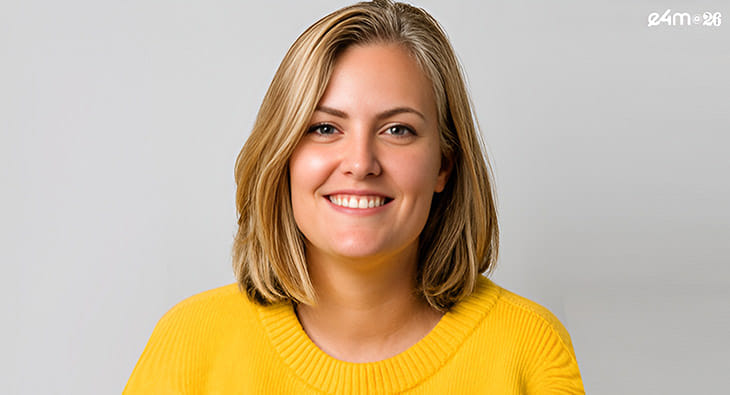

- Fay Denis du Peage, Senior VP at Monks, emphasizes the importance for brands to understand their voice in AI-generated responses, highlighting the need for real-time branding and breaking down internal silos.
- Monks is focusing on using AI tools to enhance media strategy, planning, and optimization, while maintaining human oversight in creative processes to ensure quality and relevance.
- The introduction of the Share of Model (SoM) metric is aimed at helping brands assess their visibility and representation in AI outputs, which is becoming increasingly critical as consumer behavior shifts towards AI recommendations.
- Looking ahead, Denis du Peage identifies significant opportunities in large language models (LLMs) and retail media, noting that brands need to adapt to these changes to remain competitive in the evolving advertising landscape.
In an exclusive interaction with exchange4media, Fay Denis du Peage, Senior Vice President, Media APAC, Monks shares that in the world of large language models (LLMs), every brand needs to prioritize, understand and find its voice and how it appears in AI-generated responses. She adds that a major emphasis in Monks’ go-to-market today is helping brands become real-time brands effectively and breaking down the silos among agencies and internally within the agency as well as guiding clients to do the same.
She highlights that AI capabilities and advanced tools allow the agency to pitch with half the team that would have been needed earlier. However, a challenge is client readiness to accept the change as well as shifting most AI-led work from just being tested to becoming the approach for major campaigns. Looking ahead, Denis du Peage reiterates that LLMs and retail media are the big future opportunities.
Edited excerpts
I would like to start with the 'Discovery Rewired: The Essential Guide to AI Search, Engine Optimisation, and Growing Your Share of Model' report, where a new metric, Share of Model (SoM), was introduced. The metric measures how frequently, accurately, and favourably a brand is cited in AI-generated responses. How does this metric help clients drive maximum client value and competitive advantage? Are clients across APAC now adapting to this shift or are you seeing some resistance in some markets?
Fay:
I don't think we're seeing resistance as much as we're seeing a lack of understanding. There's still an education gap, and that's something we're actively helping clients navigate on how their brand will be more relevant across platforms.
Consumer behaviour is already changing. People aren't relying solely on Google search anymore on brand recommendation — they're asking large language models (LLMs) for recommendations on everything from supermarkets to washing machines. That means every brand needs to prioritize and understand how it appears in AI-generated responses.
For us, Share of Model isn't simply about creating additional value—it's a necessity. If brands aren't paying attention to how they're represented within LLMs, and creating their strategy accordingly, then they're missing a significant opportunity. AI models curate information differently. They draw insights from sources such as Reddit, Wikipedia and online communities. How people talk about your brand, whether positively or negatively, directly influences how AI presents it. Brands therefore need to actively participate and have a voice in these ecosystems to build a credible presence so that they then come up favourably on LLMs.
This provides incremental value for clients and new opportunity is growing further as advertising becomes available within AI platforms like ChatGPT. The tools we’re using help brands better understand how competitors are performing, how they're being surfaced in AI responses and how they compare within these emerging ecosystems. That intelligence and data is extremely valuable, and it's something clients need to start prioritising today.
In India, AI adoption has largely been centred around creative production. How do you see AI transforming media strategy, planning, personalisation and optimisation at scale?
Fay:
At Monks, we strongly believe in keeping humans in the loop. We are architecting and creating tools to supercharge our teams—not replace them. Human judgement remains essential and even though the technology has become remarkably advanced, we still need a vetting system in place. As a company, over the past few years we've invested heavily and put a big emphasis in AI for creative capabilities and we now have a number of case studies showing, capabilities on, on the creative side. More recently, our focus has expanded to supercharge media.
We've developed tools such as Monks IQ, which supports strategic planning, research and consumer insights, to understand what our consumers and brands are looking for. We also use AI to build personas such as synthetic audiences and identify behavioural patterns that help us understand consumers more deeply. Beyond strategy, AI is helping automate optimisation, reporting and campaign management. Initially, these tools were designed to improve our own teams' capabilities, but increasingly we're enabling clients to use these tools. The benefits have been significant.
When pitching to clients today, what are they looking for? Is technology becoming more important than creativity, effectiveness or media planning?
Fay:
A big emphasis in our go-to-market today is helping brands become real-time brands. We believe time is the new currency and AI allows brands to move to market much faster—provided they use it effectively.
At Monks, we help organisations become more real time, less siloed within teams, adopt technology more effectively and rethink both media buying and creative production. We're already seen success with clients, particularly in India. We work with brands like Air India, Tata companies and P&G, and clients are embracing AI to transform their business and the way they operate.
Marketing metrics are evolving—from effectiveness to efficiency, and from viewability to attention. With growing investments in CTV, retail media and influencer marketing, how should brands approach measurement?
Fay:
When we talk to clients about measurements there are a number of basics that we have to implement before we can dive deeper into Incrementality. This is a priority as we are making sure that every aspect of the client's measurements is taken into account, for example like profitability, which is usually a metric that they don't really measure.
Given the current global economic uncertainty, are brands becoming more cautious with their marketing investments?
Fay:
It varies by market. We expected to see a sharper slowdown than we've actually experienced. In some cases, brands are finding efficiencies and savings in production and reinvesting those spends into media rather than reducing overall spend. In terms of brand sentiment, we see caution — particularly in terms of dipping their toes in AI.
At Monks, our AI capabilities and advanced tools allow us to pitch with half the team that we would need earlier, even till a year ago. I don't think clients are ready for this yet or their procurement teams are probably still not. Clients are coming to us for testing and how it can be made seamless. However, most AI-led work is still being tested rather than becoming the approach for major campaigns.
Consumers are evolving faster than brands. What behavioural shifts should marketers be paying attention to—particularly among Gen Z?
Fay:
Technology has reached a point where we can personalise both creative and media at a much greater scale than before. We are able to communicate with a lot more people than we would originally base on the wallet that a client originally had, that really opens up far greater possibilities.
What are your expectations from the Indian market for Monks?
Fay:
We're incredibly optimistic about India with Ketan (Desai) and Niranjan (Singh) leading the team in India. We've invested heavily in building our leadership team and expanding our capabilities to meet growing demand. Our integrated team model is a highlight as it brings together ideation, production, media and data under one structure, allowing us to solve business problems more holistically.
India is also producing some outstanding case studies, with teams pivoting and transforming the way they work and onboard our technology while also helping clients with advisory to transform the way they work.
Q: India's advertising landscape is being reshaped by retail media, commerce platforms, CTV, influencer marketing and short-form content. What do you see as the next major platform?
Fay:
Retail media will certainly continue to grow, but I believe the next major opportunity lies with LLMs. Until recently, AI platforms were essentially non-clickable environments. That's changing rapidly. Platforms like ChatGPT are introducing advertising ecosystems, and we'll increasingly see them become one-stop shop where consumers can navigate, discover products, make purchases and even use AI agents to buy on your behalf. This is a big area to look out for.
From a consumer perspective, retail media is also evolving beyond commerce. Retailers are increasingly monetising their own data and media inventory. Retailers will create their own buying environment and build proprietary advertising ecosystems instead of relying solely on third-party platforms.
How do you view the future of social commerce, particularly in a market like India where digital payments and UPI have accelerated dramatically?
Fay:
Sir Martin (Sorrell) always says that despite the market appearing fragmented, it is actually getting consolidated within the big four. As acquisitions and consolidations continue, this will make buying even more seamless and easy.
Finally, are brands making the most of the vast amounts of consumer data now available to them?
Fay:
There's still a significant opportunity. At Monks, our team work together with our account team working closely with our data team. Together, they clean, organise and interpret data to generate actionable insights rather than simply collecting information.
Combined with our transparent operating model, this is effective and helps ensure that we get the best out of every dollar that our clients spend.
Read more news about Marketing News, Advertising News, PR and Corporate Communication News, Digital News, People Movement News
For more updates, be socially connected with us onInstagram, LinkedIn, Twitter, Facebook, YouTube & Google News