Unleashing India’s soft power – The future is now
Guest Column: Bhuvan Lall shares insights on India’s soft power potential, highlighting how AI and social media could amplify its global cultural influence and reshape its international narrative
 by
by
Published: May 13, 2026 12:30 PM | 8 min read
 Follow Us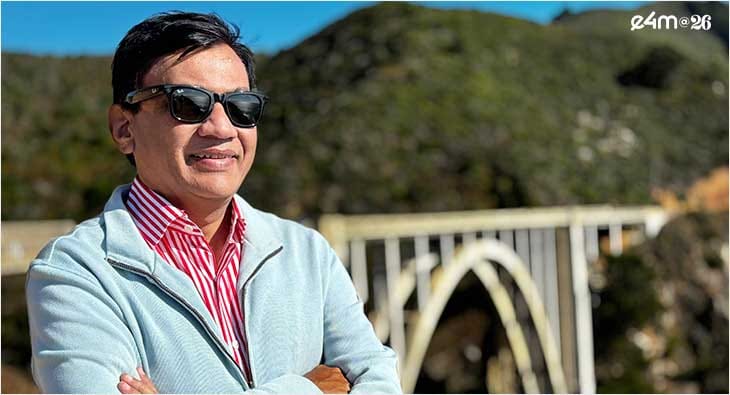

- The Cannes Film Festival presents a significant opportunity for India to enhance its global soft power, leveraging its rich cultural heritage and cinema industry, which produces more films annually than any other country.
- Despite India's cultural assets, it has historically struggled to translate them into geopolitical influence, ranking 32nd in the Brand Finance Global Soft Power Index 2026, with underinvestment in public diplomacy and a fragmented cultural promotion infrastructure.
- The rise of artificial intelligence and social media offers India new tools to overcome linguistic barriers and amplify its cultural narratives globally, provided there is strategic intent and coherent institutional support.
- India stands at a pivotal moment to project its diverse cultural identity and values on the world stage, with the potential to emerge as a soft-power superpower by 2047, aligning its ancient wisdom with modern technological advancements.
The Cote d’Azur is calling up. The red carpet is warming up. The stars are landing up. The screening rooms are filling up. The cameras are looking up. The hotel rooms are all booked up. The meetings are lined up. The invitations to screenings, cocktails, dinners and yacht parties are coming up. The traffic is held up. The World biggest film festival at Cannes is setting up the greatest cinematic dreams.
This is the world stage where the soft power of India needs to show up.
There is a peculiar paradox at the heart of India’s global standing. A civilization that gave the world yoga, astrology, Buddhism, chess, the decimal system, the binary system that powers the algorithms and some of the most enduring philosophical traditions known to humanity has, for decades, punched well below its weight in the arena of soft power. That era may now be ending. The convergence of artificial intelligence and social media is creating an unprecedented moment, one that India, if it acts with strategic clarity, could exploit to reshape its global image, amplify its cultural reach, and cement its influence as a defining power of the twenty-first century.
Political scientist Joseph Nye’s concept of influencing others through attraction rather than coercion has become the currency of global leadership. By any measure, India’s raw material for soft power is extraordinary. Our epics like the influenced Southeast Asian art, architecture, and governance. This legacy of our cultural osmosis, peaceful, adaptive, and inclusive, contrasts sharply with colonial or ideological impositions. India’s cinema industry with its own star system produces more films annually than any other country on earth. The Indian cinema’s blend of song, dance, drama, and family values transcends language barriers, captivating audiences from Lagos to Lima. The lives of its film stars and sports champions dominates social media. Its writers are brand names by themselves.
India’s music and fashion have achieved genuine global ubiquity. Spices once traded along ancient routes now symbolize cultural fusion, with Indian restaurants serving as informal embassies of taste and hospitality.Its diaspora, over 32 million people spread across every continent, forms one of the most educated and economically influential communities in the world. The United Nations’ International Day of Yoga, proposed by Prime Minister Narendra Modi in 2014 and first celebrated in 2015, now draws millions annually. Yoga and meditation, now practiced by hundreds of millions globally, are perhaps the most successful cultural exports of any nation in modern history.
Yet despite these assets, India has historically struggled to translate cultural richness into geopolitical influence. According to Brand Finance’s Global Soft Power Index 2026, India ranks 32nd overall with a score of 48.0, slipping two places from 2025 but excelling in familiarity (13th), influence (17th), and culture/heritage (19th). Yet its true potential remains vastly underleveraged. The reasons are complex: decades of non-alignment policy that prioritized neutrality over narrative, underinvestment in public diplomacy, linguistic fragmentation, underestimating the value of international film festivals and sports events, and a domestic media ecosystem that remained largely inward-looking.
The question for this generation is not whether India has the content, it clearly does, but whether it has the strategy and the tools to deliver it.
The rise of social media has fundamentally democratized the global information environment. Governments no longer hold a monopoly on narrative. Individual creators, a musician out of Kargil, a chef based in Kanyakumari, a filmmaker from Kohima or a fashion designer from Kutch can accumulate audiences that dwarf those of national broadcasters. India is beginning to understand this shift. Indian content creators have built some of the most-followed accounts on YouTube, Instagram, and TikTok globally. The appetite for Indian stories, told in Indian voices, already exists.
What remains missing is coherent institutional support. Countries like South Korea have demonstrated what deliberate soft power investment can achieve. The Korean Wave, K-pop, K-drama, Korean cuisine, did not emerge organically. It was nurtured by government agencies, export boards, and strategic public-private partnerships that recognized culture as an instrument of national power. India’s cultural diplomacy and heritage promotion infrastructure remains, by comparison, fragmented and modest. The Indian Council for Cultural Relations operates with limited reach and fraction of the budgets of its international counterparts. Consequently there is no equivalent of the British Council’s scale or the Alliance Française’s global network. This is a structural gap that AI and digital platforms could help bridge but only if the political will exists to use them.
Artificial intelligence introduces capabilities that are transformative for soft power projection at scale. AI-powered translation and dubbing tools can now render Indian content, films, documentaries, podcasts, educational programs into dozens of languages within hours and at a fraction of traditional costs. This addresses one of India’s most persistent barriers to global cultural reach: the linguistic divide between its rich multilingual output and the audiences it wishes to reach.
Consider the potential of AI-localized Indian cinema content reaching audiences in West Africa, Latin America, or Southeast Asia,regions that already carry latent warmth toward Indian culture with high-quality dubbing in local languages and culturally adapted subtitles. Or the possibility of AI-powered platforms that bring Indian classical music, Ayurveda tutorials, or philosophical lectures to algorithmically targeted global audiences hungry for spiritual and cultural alternatives. These are not speculative scenarios; they are within immediate technical reach.
India also possesses a unique advantage in the AI era that is frequently overlooked: its diaspora’s presence in the technology industry. Indian-origin professionals lead some of the world’s most influential AI companies. This creates informal but powerful networks of technological influence that, with greater coordination, could be channeled into initiatives that amplify Indian cultural and intellectual exports.
Effective soft power requires not just cultural output but a coherent narrative about who you are and what you stand for. India currently has a remarkable opportunity to own several powerful narratives at the same time. As the world’s largest democracy and a nation with ancient traditions of meditation, environmental philosophy, and communal living, it speaks directly to a global generation anxious about technological alienation and ecological collapse.
India’s digital public infrastructure Aadhaar, UPI, the digital framework is increasingly admired by developing nations seeking sovereign, affordable technological solutions. By actively sharing this expertise and framing it as a public good rather than a commercial product, India can position itself as a trusted technology partner in the Global South. This is precisely the kind of values-based influence that constitutes durable soft power.
The soft power arena is not static. The sophisticated cultural diplomacy operations of many nations are actively working to shape perceptions across Asia, Africa, and beyond. Meanwhile, Western entertainment platforms continue to set global cultural defaults that crowd out non-Western voices. If India does not act strategically in this environment, the window of opportunity that the AI and social media era has opened will close and India will find itself once again a rich cultural civilization with limited global narrative authority.
Domestically, there is also the challenge of internal coherence. India’s soft power is most compelling when it reflects its diversity the multiplicity of languages, cuisines, faiths, and artistic traditions that make it genuinely unlike any other civilization on the planet. Narratives that flatten or homogenize this diversity risk undermining the very authenticity that gives Indian culture its global appeal. India’s civilizational story is one of the most compelling on earth. The question is no longer whether the world is ready to hear it. The question is whether India is ready to tell it. The most successful soft power strategies must celebrate the uniqueness of India on the world stage.
India stands at a rare inflection point. The tools now exist to project its culture, values, and ideas at a scale and speed that previous generations could not have imagined. The global appetite for non-Western perspectives, alternative development models, and ancient wisdom systems is genuinely growing. And India’s diaspora, its technology sector, and its creative industries are better positioned than ever to serve as the vectors of this influence.
What is needed now is strategic intent, a national soft power doctrine that brings together policy makers, stake holders, diaspora engagement, and public diplomacy into a coherent whole. Other nations have demonstrated that such investment yields outsized returns, not just in prestige but in trade relationships, diplomatic leverage, and the ability to shape the rules of the international order.
By 2047, as it marks a century of independence, demographic dividends, technological leaps, and diaspora synergies could catapult it into the top tier of global influencers. In a world fatigued by confrontation, India’s offering ancient wisdom meeting modern pragmatism, provides an attractive alternative that can enrich the world with a model of inclusive, empathetic power. The potential of Indian soft power is limitless in the age of AI and social media. If India chooses to wield it will emerge as a soft-power superpower.
Bhuvan Lall is the author of Namaste Cannes and India on the World Stage. He is also the biographer of Subhas Chandra Bose, Har Dayal and Vallabhbhai Patel. He is also the founder of Nirvana the Indian Culture and Cinema festival worldwide.
Read more news about Digital Media, Television Media, Out of Home Advertising, Print Media, Latest Advertising India
For more updates, be socially connected with us onInstagram, LinkedIn, Twitter, Facebook, YouTube & Google News