The mother tongue advantage: Why Bharat is the new boardroom priority
Hemchandra Shetty, an Independent PR Consultant, explains why the English-only marketing era is over and how brands are tapping India’s 22 languages to unlock a $53B growth opportunity
 by
by
Published: Jan 23, 2026 2:27 PM | 5 min read
 Follow Us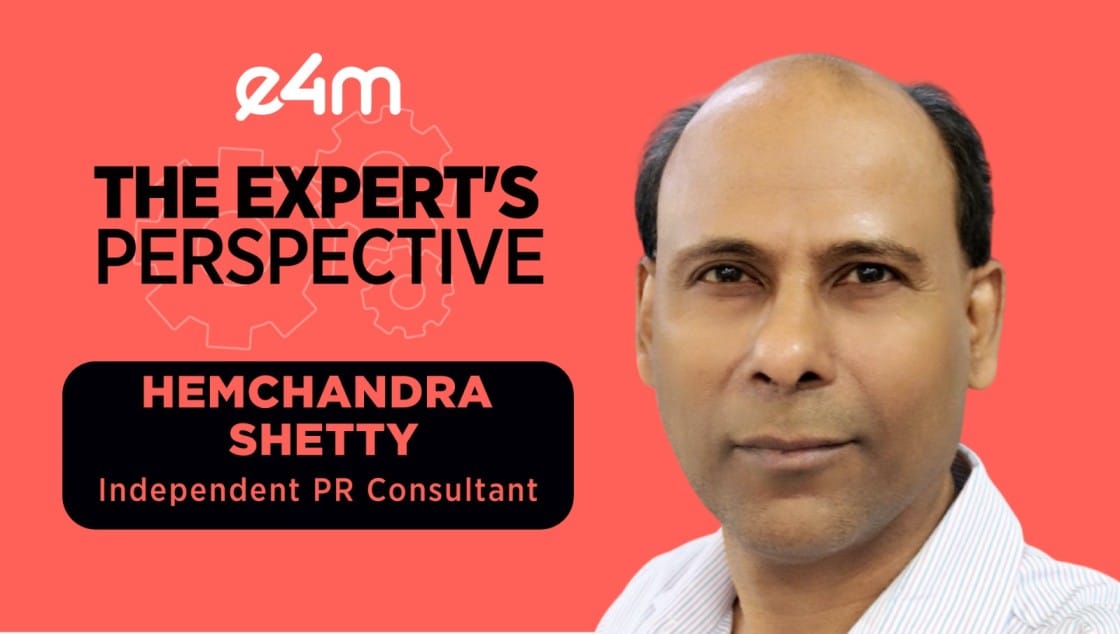

The map of the Indian consumer landscape is being redrawn, not by urban planners in Mumbai or Delhi, but by smartphone users in towns like Jhansi, Tumkur, and Siliguri. As we navigate the midpoint of this decade, the traditional marketing playbook—once dominated by a "one-size-fits-all" English-first approach—has become a relic of a previous era. We are witnessing the rise of a bilingual, aspirational, and fiercely local consumer base that demands more than just a translated version of a global slogan. For the veteran marketer, the challenge is no longer about reach; it is about resonance. The "Bharat" opportunity, valued at an estimated $53 billion as we enter 2026, is not a trend to be monitored but a seismic shift that requires a fundamental reimagining of brand identity.
For decades, the industry operated under the assumption that English was the language of aspiration and influence. However, data from 2025 reveals a startlingly different reality where over 73% of internet subscribers in India now prefer content in their regional languages. This is a behavioral revolution fueled by the democratization of data and the ubiquity of high-performance, affordable hardware. When a consumer in a Tier-III town scrolls through their feed, they aren’t looking for a brand that speaks "at" them in a foreign tongue; they are looking for a brand that speaks "with" them in their mother tongue. This shift is substantiated by the fact that vernacular campaigns are now seeing nearly 2x higher engagement rates compared to their English counterparts.
The primary mistake many legacy brands make is confusing translation with localization. A literal translation of a tagline often strips away the humor, the cultural nuance, and the emotional "hook" that makes a message land. Consider the recent success of Myntra’s Big Fashion Festival or Zomato’s Hyper-local regional ads, WhatsApp’s Bataan Hi Baatan Mein , Amazon India’s Aur Dikhao' & 'Apni Dukaan , Disney+ Hotstar’s Regional 'Bigg Boss' Integrations etc where the strategy moved beyond linguistic accuracy to embrace regional idioms and local aesthetics. These brands recognized that a Marathi-speaking customer and a Telugu-speaking customer don't just speak different languages—they live in different cultural contexts with distinct festivals, dietary habits, and social values. Authentic communication in 2025 requires a deep dive into these "micro-cultures" to ensure the brand feels like a local neighbor rather than a corporate visitor.
Furthermore, the rise of the "Regional Influencer" has fundamentally altered the trust architecture of the Indian internet. While Bollywood celebrities still hold mass appeal, it is the micro-influencer from a small town—who speaks the local dialect and understands the specific humor of the region—who is driving actual conversion. These creators have become the bridge between global brands and local trust. By collaborating with these voices, marketers are tapping into pre-built communities where the "lo-fi" and "authentic" nature of the content carries more weight than a high-production studio commercial. In this 60-second economy, the first three seconds of a video must establish an immediate cultural connection, or the brand risks being swiped away into digital oblivion.
Strategic marketing in this new era also demands a technological pivot. We are seeing the integration of AI-driven vernacular chatbots and voice-search optimization as critical components of the customer journey. Since over 86% of Google searches in India are now happening in regional languages, the SEO game has shifted from English keywords to phonetic and vernacular queries. A brand that isn't optimized for a voice search in Hindi or Tamil is effectively invisible to a majority of the new internet users. The goal is "Frictionless Commerce," where a user can discover, evaluate, and purchase a product without ever feeling the "language barrier" that once characterized the Indian e-retail experience.
As we look toward the future, the brands that will dominate the Indian market are those that view "Bharat" not as a secondary market to be harvested, but as the primary engine of growth. This requires a shift in the boardroom from a "Centralized Narrative" to a "Distributed Storytelling" model. It means empowering regional teams, investing in local creators, and having the humility to listen to the nuances of the street. The mother tongue is not just a medium of communication; it is a gateway to the consumer’s heart. In a world of infinite digital choices, the most powerful thing a brand can say is, "I understand you."
The transition to a vernacular-first strategy is undoubtedly resource-heavy and requires a sophisticated understanding of data distillation. Yet, the ROI on "cultural resonance" is far higher than any generic mass-media campaign. As veterans of this industry, we must lead this change, moving beyond the comfort of the metro-centric bubble to embrace the vibrant, diverse, and high-growth reality of the new India. The boardroom of tomorrow is being built in the languages of today—Hindi, Tamil, Bengali, Marathi, and many more. To ignore this is to miss the greatest growth story of our professional lives.
Read more news about PR and Corporate Communication News, Internet Advertising, Marketing News, Digital Media News, People Movement News
For more updates, be socially connected with us onInstagram, LinkedIn, Twitter, Facebook YouTube & Google News
