The end of static media planning
Guest Column: Haresh Nayak, CEO of Connect Network Inc., on why the next decade of marketing belongs to organisations that plan with intelligence, not assumptions
 by
by
Published: Jul 11, 2026 8:30 AM | 4 min read
 Follow Us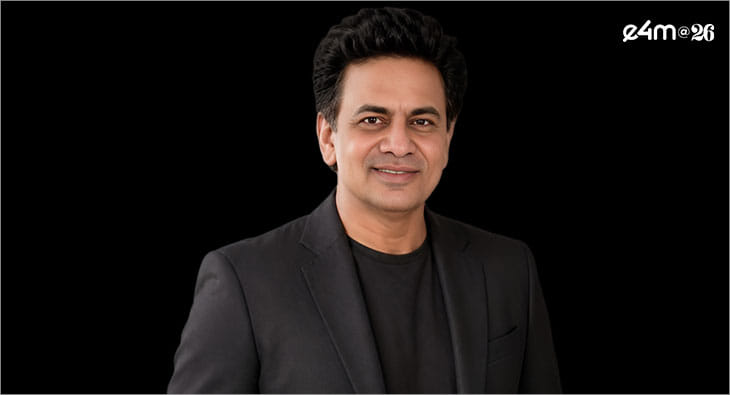

- Traditional media planning in marketing is becoming obsolete due to rapidly changing urban environments, consumer behaviors, and media options, which require a more dynamic approach.
- Current planning methods often rely on outdated data sources and static assumptions, leading to a disconnect between planned campaigns and real-time market conditions.
- The marketing industry has access to extensive data, but the challenge lies in integrating this information effectively to inform decision-making and adapt to evolving consumer behaviors.
- Future success in marketing will depend on continuous planning processes that incorporate real-time intelligence, allowing organizations to respond proactively to changes in consumer movement, market dynamics, and infrastructure developments.
There was a time when media planning was relatively straightforward.
Cities grew gradually. Consumer behaviour was more predictable. Media options were limited. Campaigns were built around broad demographics, fixed schedules and historical market data. Once a plan was approved, it was expected to remain largely unchanged until the campaign concluded.
That approach served the industry well for decades.
Today, it no longer reflects the reality marketers operate in.
Marketing Now Operates in a Living Environment
Every day, Indian cities change.
New metro stations become operational. Commercial districts emerge. Retail clusters shift. Airports expand. Traffic patterns evolve. Festivals influence mobility. Weather affects footfall. Digital behaviour intersects with physical movement in ways that were unimaginable even a few years ago.
Consumers are no longer following linear journeys.
A single purchase decision may begin on social media, continue through online research, be influenced by a billboard during a commute, reinforced by an in-store experience, and finally completed through an e-commerce platform.
Marketing has become dynamic.
Planning, however, often remains static.
The Cost of Planning Yesterday's Reality
Across the industry, significant marketing investments are still planned using disconnected data sources, spreadsheets, historical performance reports and manual assumptions.
The issue is not that these tools are ineffective they were built for a different era.
The challenge is that campaigns are frequently based on a snapshot of reality rather than reality itself.
Between planning and execution, countless variables can change.
A new competitor enters the market.
Infrastructure improves access to a neighbourhood.
Traffic shifts due to construction.
A sporting event changes audience movement.
Weather influences retail visits.
A viral trend alters consumer sentiment.
Yet the media plan often remains exactly as it was on the day it was approved.
The gap between planning and reality continues to widen.
More Data Isn't Solving the Problem
The marketing industry has never had access to more information.
Brands now collect first-party customer data, analyse digital engagement, monitor retail performance and subscribe to sophisticated research platforms.
The problem isn't a lack of data.
It's the inability to bring that information together in a way that supports better decisions.
Data, on its own, doesn't improve marketing.
Context does.
Understanding how audience behaviour, mobility, infrastructure, competition, media availability and market dynamics interact is what creates meaningful intelligence.
Without that connection, organisations risk making faster decisions without necessarily making better ones.
Planning Should Be Continuous, Not Periodic
Most campaigns still follow a familiar sequence.
Research.
Plan.
Buy.
Launch.
Measure.
Repeat.
But consumer behaviour doesn't operate in fixed phases.
It evolves continuously.
Marketing systems need to evolve in the same way.
Instead of treating planning as a one-time exercise, organisations should think of it as a continuous process—one that constantly absorbs new information, evaluates changing conditions and refines decisions as campaigns progress.
This isn't about replacing human expertise.
It's about equipping planners with better intelligence so they can make better decisions.
The planner remains at the centre.
The quality of information surrounding those decisions improves dramatically.
From Media Buying to Decision Intelligence
The role of media planning is expanding.
Success will no longer depend solely on identifying the right inventory or negotiating the best commercial terms.
It will depend on answering more fundamental questions.
Where is attention shifting?
Which locations are becoming more valuable?
How is consumer movement changing?
Which creative is likely to perform best in a specific environment?
How should budgets adapt if market conditions change midway through a campaign?
These are no longer questions that can be answered once at the beginning of a campaign.
They require continuous intelligence.
The Next Evolution Is Already Underway
Across industries, intelligent systems have transformed how decisions are made.
Navigation applications continuously recalculate routes.
Financial platforms detect risk in real time.
Supply chains respond dynamically to demand fluctuations.
Marketing is beginning the same journey.
The conversation is moving beyond automation towards systems that can observe, reason and recommend based on live market conditions.
This shift represents more than technological progress.
It reflects a fundamental change in how marketing organisations will operate over the coming decade.
Looking Ahead
India's marketing landscape is becoming more complex, not less.
Media channels continue to expand. Consumer journeys are increasingly fragmented. Infrastructure development is reshaping markets at an unprecedented pace.
The organisations that succeed will be those that stop treating media planning as a static document and start viewing it as a living intelligence process.
Because planning should not end once a campaign is approved.
In many ways, that's where it should begin.
Read more news about Marketing News, Advertising News, PR and Corporate Communication News, Digital News, People Movement News
For more updates, be socially connected with us onInstagram, LinkedIn, Twitter, Facebook, YouTube & Google News
