The Great Shift in PR: From traditional execution to intelligence, creativity, and counsel
Abhishek Gulyani, Managing Director – India & Head Corporate Affairs – Asia Pacific, Zeno Group, discusses why PR’s old operating model is fading and what replaces it in 2026
 by
by
Published: Jan 16, 2026 11:40 AM | 6 min read
 Follow Us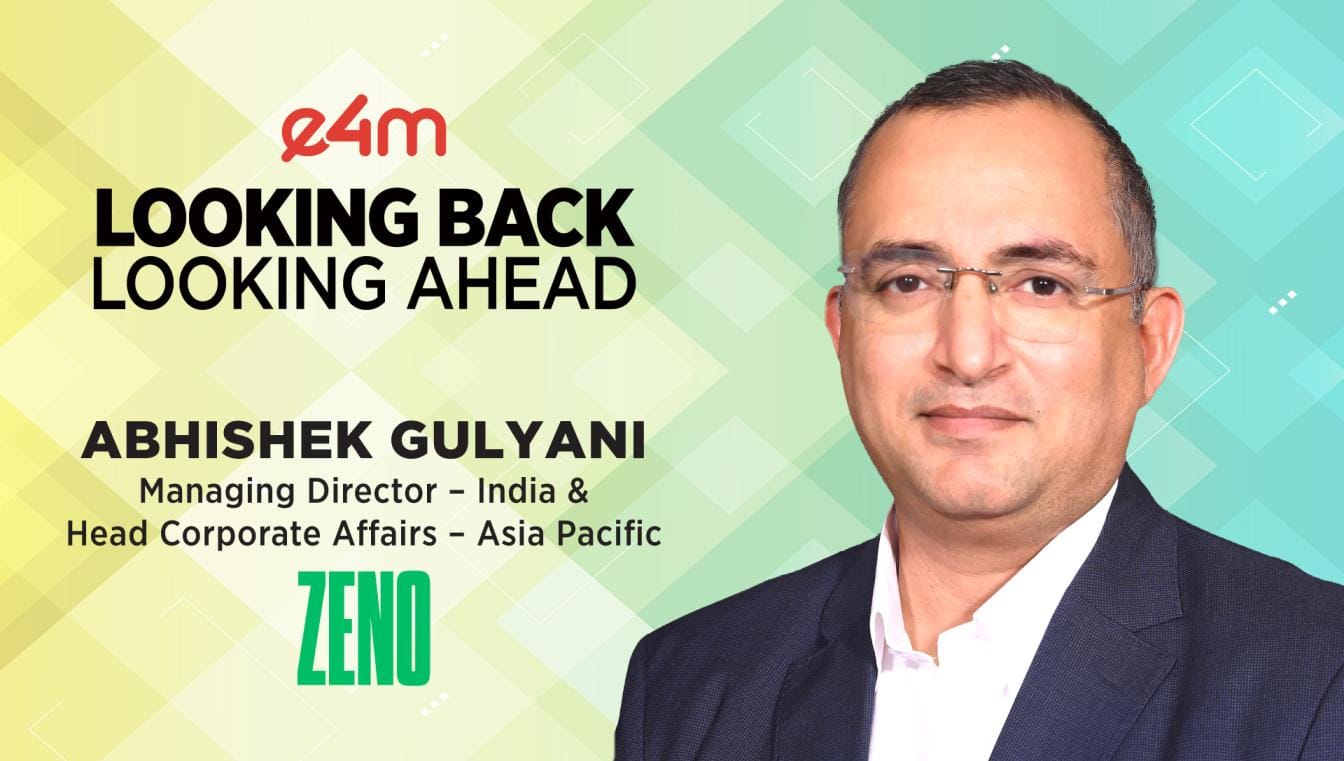

Public relations have long enjoyed regular obituaries.
Each has been premature.
What is receding is not the discipline itself, but an earlier operating model - one shaped by scale, repetition and media dominance. As the world moves deeper into the 2026 and beyond, PR is undergoing a structural adjustment. Execution is giving way to influence; volume to judgement; delivery to counsel. The industry is not contracting. It is being re‑purposed.
An exhausted model
For much of the past three decades, the global PR business was built for expansion. Success could be increased predictably: more clients, larger teams, greater media output. In an environment of limited channels and slower news cycles, this approach proved durable.
It has since lost much of its force.
Rising labour costs, margin pressure, and increasingly people‑intensive delivery models have weakened the economics. At the same time, media fragmentation and declining trust have diminished the persuasive value of coverage at scale. Clients, facing scrutiny themselves, are questioning activity‑based measures that offer little insight into influence or risk.
From activity to value
Some firms anticipated the shift earlier than others. Over recent years, they invested less in expanding footprint and more in strengthening capability: senior talent, analytical tools, digital fluency and creative craft.
The lesson now emerging is straightforward. Growth in modern communications is no longer additive. It is selective.
Value is created through sharper diagnosis, integrated thinking and the ability to frame reputational questions in commercial and societal terms. The firms gaining ground are those that help clients make decisions, not merely disseminate messages. PR, in this sense, is evolving from a delivery function into a form of applied judgement.
Zeno’s trajectory in India mirrors this change: 2025 marked a move from strengthening foundations to scaling impact, with focused investments in talent, creativity, digital and data‑led capabilities; as mandates diversified, we added specialised skills and colleagues to operate as a genuinely integrated communications practice.
This pivot towards higher value work has enabled us to record improved margin growth in 2025 alongside an increased pitch win rate, a sign that counsel‑led, outcome‑oriented programmes are displacing output counts.
A more exposed world
This transition reflects changes well beyond the communications industry. Across economies, organisations are operating in conditions of heightened visibility and reduced tolerance for inconsistency. Stakeholders—regulators, investors, employees and communities—have more information and fewer inhibitions.
Against this backdrop, reputation has ceased to be cosmetic. It affects market access, licence to operate and leadership credibility. Communications, once positioned downstream from strategy, is increasingly coupled to it.
The scope of PR assignments has expanded accordingly. Media relations remain necessary, but no longer sufficient. Advisory work around positioning, stakeholder confidence, risk and resilience is occupying a greater share of senior attention and budgets.
The 6 trends that will impact the Indian public relations industry in 2026 and beyond:
- The logic of earned influence
One consequence of this environment is a clearer hierarchy of influence. Attention cannot be purchased as easily as it once was; it must be justified.
This has pushed PR toward an earned‑first logic. Strategy precedes channels. Cultural context precedes message. The emphasis is less on dissemination than on coherence: narratives that withstand scrutiny and travel credibly across media, digital and institutional settings.
PR is becoming less concerned with distribution mechanics and more with the architecture of influence. Zeno reinforced an earned‑first, strategy‑led positioning in 2025—combining creativity, cultural intelligence and senior counsel to move beyond tactical execution and towards narratives designed to endure.
- Intelligence moves upstream
If this shift has a unifying feature, it is the growing role of intelligence. Data, analytics and insight are migrating from measurement to origination.
Communications firms are now use sentiment analysis, stakeholder mapping and scenario planning not as reporting tools, but as inputs into narrative design and leadership counsel. In an environment defined by volatility, foresight has become a competitive advantage.
Listening, once treated as a courtesy, is becoming a discipline. Zeno’s strengthening of data and analytics alongside earned and digital has enabled advisory rooted in stakeholder signals rather than post‑hoc activity counts, improving both relevance and risk anticipation.
- Creativity, under constraint
Creativity retains its place, though under firmer conditions. The surfeit of content has reduced tolerance for ideas that are clever but empty. For PR, originality must be anchored in relevance and consequence.
The most effective work now travels because it is useful, resonant or clarifying—not because it is loud. Creativity increasingly serves persuasion, not spectacle.
In practice, sector wise approach has forced teams to design ideas that earn participation in specialised communities, where credibility and clarity outperform reach, and where cultural and regulatory context determine whether messages stick.
- Counsel over choreography
Perhaps the most significant change is organisational. PR is moving closer to power.
Boards and executive committees, grappling with technology disruption, regulation and social expectation, are prioritising reputation alongside capital and talent. This has increased demand for advisers capable of interpreting ambiguity and offering balanced judgement.
In this role, PR resembles a professional service more than a media machine. Senior counsel, rather than orchestration, determines value. Zeno enters 2026 positioned as a partner to the C‑suite, equipped to navigate complexity, build trust and deliver earned influence at scale—an orientation that places advisory at the centre rather than the edge.
- Technology as force multiplier
Artificial intelligence is reinforcing these changes. Automation has improved efficiency across research, drafting and measurement, reducing dependence on incremental human effort.
Yet AI’s contribution remains instrumental rather than substitutive. The essence of PR—judgement, ethics, cultural interpretation—resists automation. Technology accelerates the work; it does not define it.
- The decisive variable
The constraint on this transition is not conceptual. It is human. The industry’s future depends on whether it can develop professionals fluent in strategy, data, technology, and ethics, rather than narrowing itself to execution specialists. That requires changes in education, training and incentives, and a willingness to invest for the long term.
Zeno’s hiring and upskilling across earned, digital and analytics points in this direction: capability is shifting from activity to judgement, from coordination to counsel.
- Not an ending
Public relations is not facing extinction. It is undergoing institutional recalibration. The discipline is becoming smaller in volume, broader in scope and heavier in consequence. Communication organisations that continue to treat it as a function of output will struggle. Those that practise it as modern counsel grounded in intelligence, creative persuasion, and leadership advisory will endure.
In turbulent times, organisations do not merely need to be heard.
They need to be understood, and believed.
Read more news about PR and Corporate Communication News, Internet Advertising, Marketing News, Digital Media News, People Movement News
For more updates, be socially connected with us onInstagram, LinkedIn, Twitter, Facebook YouTube & Google News