Noel Tata and the strategic restoration of the House of Tata
Noel Tata’s leadership of Tata Trusts signals a return to family-led stewardship while balancing legacy, professional management and future growth, writes Dr Annurag Batra
 by
by
Published: Aug 31, 2026 10:38 AM | 6 min read
 Follow Us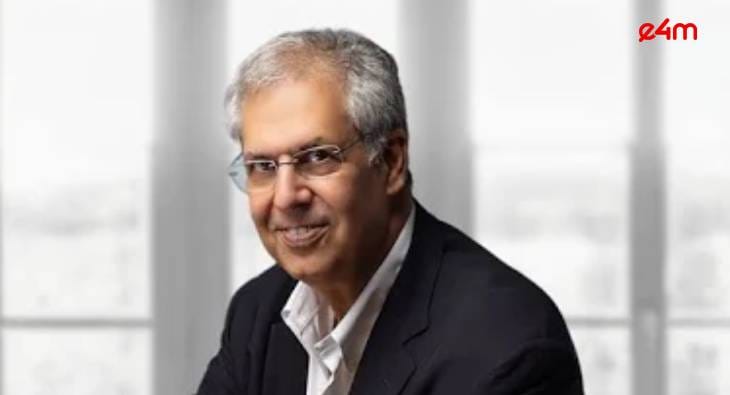

- The appointment of Noel Tata to lead the Tata Trusts marks a significant leadership transition, emphasizing a return to the family's foundational values following Ratan Tata's tenure, characterized by 'compassionate capitalism.'
- N. Chandrasekaran's leadership of Tata Sons has been noted for enhancing operational efficiency and market capitalisation, but concerns have arisen regarding a shift towards centralization and a potential dilution of the group's philanthropic roots.
- Noel Tata brings four decades of experience in retail and trading, having successfully led initiatives that strengthened the Tata brand, and is expected to restore balance between the Trusts and executive management while modernizing the group's portfolio.
- His strategic priorities include aligning the objectives of Tata Trusts and Tata Sons, expanding into high-growth sectors, and preparing the next generation of Tata leaders through hands-on involvement in the conglomerate's operations.
The article was originally published by BW Businessworld.
In the annals of Indian industry, a leadership transition within the House of Tata transcends mere corporate succession -- it represents a pivotal event for the Indian macroeconomic landscape. Following the demise of Ratan Tata, whose tenure was defined by the ethos of ‘compassionate capitalism’, the conglomerate reached a critical strategic juncture. The elevation of Noel Tata to the leadership of the Tata Trusts should not be viewed as a conventional succession, but rather as a profound institutional reset. It signifies a deliberate reclamation of the group's foundational identity, reinforcing the principle that while professional management is indispensable, there remains an essential role for a custodian who personifies the family's historical values.
To appreciate the magnitude of Noel Tata's appointment, one must analyse the complex operational environment he inherits and the subtle internal shifts that necessitated a return to a family-led stewardship at the group's charitable core.
The Era of Chandrasekaran: A Fair Assessment
Any historical assessment of the Tata Group's recent performance must acknowledge the contributions of N. Chandrasekaran. Assuming the Chairmanship of Tata Sons during a period of significant internal volatility, he executed his mandate with precision, instilling institutional order, operational efficiency, and a rigorous focus on fiscal performance.
Chandrasekaran's tenure reflected the capabilities of an elite executive. He rationalised an expansive portfolio, enhanced cross-functional synergies, and accelerated the group's digital transformation. Under his stewardship, market capitalisation experienced significant appreciation. The repatriation of Air India, the expansion of the defence vertical, and the strategic pivot toward electric mobility at Tata Motors stand as testaments to his executive acumen.
However, corporate cultures are nuanced ecosystems, and an exclusive focus on hyper-efficiency can occasionally incur intangible organisational costs.
In recent years, internal observers at Bombay House noted a shift toward centralised authority within Tata Sons, which inadvertently fostered organisational silos. There emerged a perception that executive management was beginning to eclipse the philanthropic foundations upon which the group was established, suggesting an effort by professional leadership to assert unilateral control over the conglomerate's identity.
While Chandrasekaran's methodology yielded impressive capital market results, long-term stakeholders perceived it as a departure from the group's traditional consensus-driven model. The House of Tata has historically operated on the principle that the Tata Trusts, the philanthropic heart of the enterprise, are the ultimate proprietors. When professional management operates as the final authority, there is a systemic risk of diluting the organisation's unique cultural DNA.
Noel Tata: The Proven Operator and the Rightful Heir
This context defines the significance of Noel Tata's appointment. It is erroneous to attribute his elevation solely to lineage. In contrast to those who assume high office without prior achievement, Noel Tata has spent four decades establishing a robust track record across the most demanding segments of the Indian retail and trading sectors.
He has been the discreet architect of several of the group's most substantial successes. At Trent, he transformed Westside into a dominant market participant and pioneered Zudio, a brand that has redefined the value-retail landscape in India. Furthermore, he scaled Tata International into a $3 billion global enterprise while maintaining consistent profitability at Voltas and Tata Investment Corp.
Noel Tata possesses a comprehensive understanding of the group's operational complexities, acquired through decades of leadership. More critically, he embodies the understated and humble leadership style that was the hallmark of Ratan Tata's tenure. His presence serves as a reminder that the family's values remain the definitive anchor of the enterprise.
In assuming leadership of the Trusts, Noel Tata provides institutional stability. His role is to ensure strategic alignment across the group, reinforcing the principle that Tata Sons serves as a vehicle for the mission of the Trusts, thereby preserving the group's fundamental purpose.
The Agenda Ahead: Priorities for the New Patriarch
As Noel Tata assumes his new responsibilities, his mandate involves protecting the group's heritage while ensuring its continued modernisation and global competitiveness. His strategic priorities are likely to focus on three critical pillars:
- Restoring the Equilibrium between Trusts and Sons
The primary objective is to synchronise the objectives of the Tata Trusts (the ownership) with those of Tata Sons (the executive management). Noel Tata must ensure that professional executives retain the autonomy necessary for growth, provided they operate within a framework that respects the group's philanthropic core. This necessitates a return to collaborative governance. - Future-Proofing the Portfolio
While Chandrasekaran established a robust technological foundation, Noel Tata's profound understanding of consumer markets represents a significant strategic asset. He will likely advocate for further expansion into high-growth sectors such as semiconductor manufacturing and renewable energy, while ensuring that legacy entities like Tata Steel and Tata Motors maintain their global leadership positions. - Grooming the Next Generation: A Blueprint for Continuity
His most enduring legacy may be the cultivation of the next generation of leadership. This process is already underway: his children, Leah, Maya, and Neville, are not merely holding titular positions but are deeply integrated into the group's operational businesses.
Leah Tata is refining her expertise within the hospitality sector at IHCL, contributing to the strategic expansion of the Gateway brand.
Maya Tata is actively engaged in the conglomerate's digital and retail future through her involvement with Tata Digital and Trent.
Neville Tata is managing Star Bazaar within the highly competitive grocery segment, gaining vital experience in one of the group's most challenging operational areas.
By integrating them into the philanthropic work of the Trusts, Noel Tata ensures they grasp the dual mandate of the group: achieving commercial excellence while fulfilling a broader social responsibility. This rigorous apprenticeship ensures that when they eventually assume leadership, they will do so as seasoned executives with a comprehensive understanding of the enterprise.
The Best of Tata is Ahead
A global enterprise is merely a financial construct if it lacks an animating spirit. The Tata Group has thrived for over 150 years precisely because it is founded upon enduring values rather than transient quarterly metrics.
Chandrasekaran has performed admirably in modernising the group and catalysing growth; his legacy will be defined by superior corporate management. However, as the conglomerate navigates the future, it requires more than executive leadership, it requires a guardian.
Noel Tata represents a synthesis of these requirements: a demonstrated record of commercial success combined with an authentic commitment to the Tata ethos. He understands that while markets demand velocity, a legacy requires patience, integrity, and institutional conviction. By assuming this role and reconnecting the business with its foundational principles, he is ensuring that the House of Tata's most significant achievements are yet to come.
Dr. Annurag Batra is the Chairman & Editor-in-Chief of the BW Businessworld Group and the Founder & Editor-in-Chief of the exchange4media Group
Read more news about Digital Media, Television Media, Out of Home Advertising, Print Media, Latest Advertising India
For more updates, be socially connected with us onInstagram, LinkedIn, Twitter, Facebook, YouTube & Google News