Anup Bagchi at HDFC: 6 priorities for the bank’s first outsider CEO
As Anup Bagchi prepares to take charge of HDFC Bank on Oct 27, restoring confidence, strengthening growth & profitability, improving customer experience, aligning talent will define his early agenda
 by
by
Published: Oct 2, 2026 12:44 PM | 5 min read
 Follow Us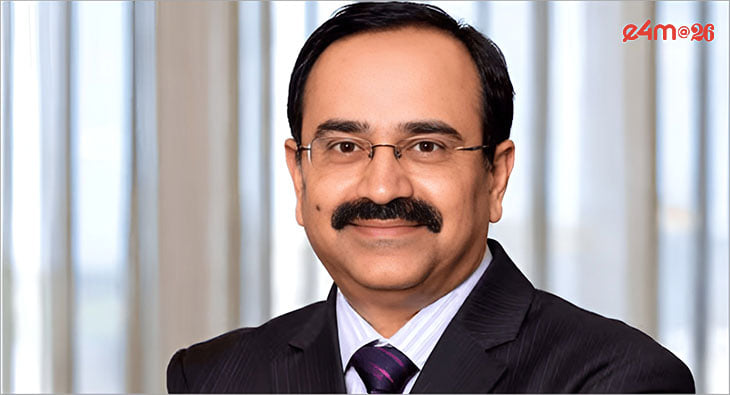

- HDFC Bank has appointed Anup Bagchi, a veteran from the ICICI Group, as its new Managing Director and CEO, marking the first time an outsider will lead the bank.
- The Reserve Bank of India approved Bagchi's appointment for a three-year term starting on 27 October 2026, with his role as Additional Director effective from 2 October, pending shareholder approval.
- Bagchi brings over 30 years of experience in various banking sectors and will face challenges related to growth, profitability, and restoring investor confidence following HDFC Bank's merger with HDFC Ltd.
- His immediate priorities will include strengthening investor and customer confidence, enhancing deposit growth, improving profitability, simplifying customer experiences, and aligning the organization under his leadership.
This article first appeared in BW Businessworld
The wait is over at HDFC Bank. After weeks of speculation over who would succeed Sashidhar Jagdishan, the country’s largest private-sector bank has chosen ICICI Group veteran Anup Bagchi as its next Managing Director and Chief Executive Officer.
The Reserve Bank of India approved Bagchi’s appointment on 1 October for a three-year term beginning 27 October 2026. HDFC Bank’s board has also appointed him Additional Director with effect from 2 October, subject to shareholder approval.
The appointment is significant for another reason: Bagchi will be the first outsider to occupy HDFC Bank’s corner office.
For an institution whose leadership has traditionally emerged from within, choosing a veteran shaped by the ICICI ecosystem represents an important break from precedent. It also comes at a time when HDFC Bank is navigating the challenges of operating at vastly greater scale following its merger with HDFC Ltd, while addressing questions around growth, profitability and investor confidence.
The ICICI Experience
Bagchi brings more than three decades of experience across banking and financial services. Associated with the ICICI Group since 1992, his career has spanned treasury, retail and wholesale banking, investment banking, capital markets, wealth management, insurance and digital financial services.
He served as Executive Director of ICICI Bank between 2017 and 2023, overseeing retail, business and rural banking and subsequently wholesale banking. He has also led ICICI Securities and is currently Managing Director and CEO of ICICI Prudential Life Insurance.
That breadth of experience could be valuable at HDFC Bank, where the challenge is no longer simply about scale. The task is to convert scale into stronger growth, profitability and customer outcomes.
Bagchi’s appointment also underlines the leadership depth that the ICICI ecosystem has produced over the years. Several executives associated with the group have gone on to lead major financial institutions. Bagchi now joins that list — but with the particularly demanding task of leading ICICI Bank’s biggest private-sector rival.
First, Understand The Institution
The temptation accompanying any external CEO appointment is to look immediately for sweeping changes. At HDFC Bank, however, understanding what already works may be equally important.
The bank retains a formidable franchise, an enormous customer base, a wide distribution network and one of Indian banking’s most recognisable brands. The merger with HDFC Ltd created an institution of unprecedented scale, but integrating two large organisations while maintaining growth, profitability and customer confidence was always going to be complex.
Bagchi therefore inherits an institution with considerable strengths as well as clear areas demanding attention.
Restoring Confidence
Among the priorities will be strengthening confidence among investors, customers and employees.
For a financial institution, trust is an operating asset. It cannot be strengthened through communication alone; it ultimately rests on consistent performance, governance, transparency and execution.
The leadership transition allows HDFC Bank to establish a clear direction for its next phase. Bagchi’s ability to communicate that direction internally and externally will matter, but the numbers that follow will matter considerably more.
Deposits And Growth
One of the central challenges will be the deposit franchise. Sustainable loan growth requires a strong funding base, making deposit mobilisation and the quality of the liability franchise crucial. HDFC Bank’s extensive branch network provides it with considerable reach. The opportunity will be to make that network more productive while combining physical distribution with stronger digital engagement.
The objective cannot merely be growth for the sake of size. For a bank already operating at HDFC Bank’s scale, the quality and profitability of growth become increasingly important.
Profitability Back In Focus
The market will eventually judge the leadership transition through performance. Margins, return ratios, operating efficiency, credit quality and sustainable growth will determine whether HDFC Bank can translate its scale into greater value. Bagchi’s experience across multiple financial-services businesses gives him a broader vantage point from which to examine that equation.
His task will not simply be to make HDFC Bank bigger. It will be to make an already enormous institution more productive and efficient.
Technology Must Improve Experience
Technology and customer experience constitute another important part of the agenda. For a bank serving customers at enormous scale, digital sophistication matters only when it makes banking simpler. Customers have increasingly little patience for fragmented journeys, complicated processes or slow service.
Artificial intelligence, data and automation can improve productivity and personalisation, but the ultimate test will be whether customers experience a simpler, faster and more reliable HDFC Bank.
Employees Will Matter
The other crucial constituency is inside the organisation. Leadership transitions inevitably create uncertainty and expectations. Bagchi will need to establish confidence within the senior leadership team, retain strong talent and provide clarity on where the institution is headed.
No organisation of HDFC Bank’s size can be transformed by one individual. The CEO’s role will be to create an environment in which thousands of employees understand the direction of the bank and can execute against it.
An Outsider, But Not An Outsider To Banking
Bagchi’s external perspective could prove particularly useful. He arrives without having been part of HDFC Bank’s recent decision-making, while possessing deep familiarity with Indian banking, regulation, customers and competitive dynamics.
That gives him the ability to ask questions that an internally developed leadership team might not. At the same time, HDFC Bank’s identity matters. The objective cannot be to import the ICICI playbook wholesale. Bagchi’s challenge will be to retain the strengths that made HDFC Bank one of India’s most successful banking franchises while identifying what must change for its next phase.
The immediate agenda can ultimately be distilled into five priorities: strengthening confidence, accelerating deposits, improving profitability, simplifying customer experience and aligning the organisation behind the new leadership.
Bagchi brings the experience. HDFC Bank brings the franchise and scale.
The succession question has now been answered. What happens after 27 October will determine whether this leadership change also becomes the beginning of HDFC Bank’s next growth chapter.
Read more news about Digital Media, Television Media, Out of Home Advertising, Print Media, Latest Advertising India
For more updates, be socially connected with us onInstagram, LinkedIn, Twitter, Facebook, YouTube & Google News
