RCB vs DC: The WPL final that concluded a season and unlocked a market
The advertiser mix moved beyond FMCG to fintech, automotive, AI-led startups, jewellery and consumer tech, as the WPL shifted from a marketing experiment to a mainstream sports investment
 by
by
Published: Feb 6, 2026 8:35 AM | 4 min read
 Follow Us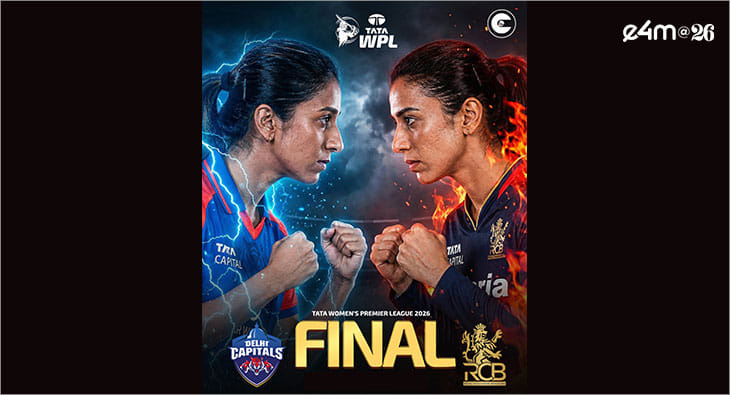

When the Women’s Premier League 2026 began, the spotlight was not only on cricket. It was also on marketing budgets, endorsement rosters and a growing list of brands seeking space in what is fast becoming one of India’s most valuable sports properties. By the time the final arrived in Vadodara, the story had written itself: a record chase, a title celebration, and a clear message to advertisers that women’s cricket has moved from promise to a proven platform.
Royal Challengers Bengaluru’s (RCB) chase of 204 against Delhi Capitals (DC) to lift their second title was the perfect ending to a season that had already become a milestone for brand investment.
View this post on Instagram
Read On: WPL 2026: Brands go beyond jerseys, focus on story-led spots
From the opening week, the WPL felt bigger. Media planners, brand managers and agency leaders spoke of the tournament in the same breath as established men’s properties. Ad spending surged, sponsorship categories expanded, and the number of participating brands continued to grow.
While the Board of Control for Cricket in India has officially confirmed central commercial partnerships worth ₹48 crore for the 2026-27 seasons, media reports suggest that total expenditure across league sponsorships, team deals and media partnerships has more than tripled since 2023. At that time, WPL-related sponsorship was estimated at around ₹40 crore. In 2026, that figure could exceed ₹130 crore, underlining the league’s expanding commercial footprint.
The advertiser mix expanded beyond traditional FMCG to include fintech, automotive, AI-led startups, jewellery and consumer tech brands. What was once regarded as a progressive marketing experiment began to function as a mainstream sports investment.
The Premier Partner lineup now features a mix of global and Indian heavyweights, including ChatGPT, Kingfisher Packaged Drinking Water, CEAT, Bisleri, Sintex and Herbalife. Dr. Fixit (Pidilite) has also joined as the umpires’ jersey sponsor.
Brands such as Amul, State Bank of India, BHIM UPI, Lakmé, Kalyan Jewellers, TVS Eurogrip, BKT, Hero VIDA, GMR and DHL are associated with the league in various capacities.
Read On: WPL 2026 sponsorship spends may hit Rs 130 cr: No longer a ‘test’ match for brands?
The Faces Brands Built Their Season Around
Two names consistently featured at the centre of brand decks: Smriti Mandhana and Jemimah Rodrigues.
Mandhana entered the tournament as one of the country’s most bankable athletes and left it as the leading run-scorer and title-winning captain. Rodrigues led DC into another final and remained one of the most visible personalities across campaigns.
View this post on Instagram
Brands increasingly shifted from logo placements to storytelling-driven partnerships. Campaigns positioned players as culture carriers, youth icons and digital storytellers, rather than merely athletes. For marketers, the WPL became a platform to convey ambition, identity and aspiration through authentic sporting narratives.
View this post on Instagram
Read On: Cricket a perfect opportunity to further brand equity & connect: Amit Syngle, Asian Paints
By the time the final approached, the athletes were already the faces of the season’s biggest campaigns.
The championship match brought together everything the season had been building towards. DC posted 203 for four, the highest total in a WPL final, and it looked like a winning score—until a record-breaking chase was led by Smriti Mandhana and Georgia Voll.
Mandhana’s 87 off 41 balls was both a captain’s innings and a brand moment. Voll’s 79 kept the chase alive. When Radha Yadav struck the winning boundary, the victory secured more than just a title, it completed a narrative that advertisers could not have scripted better.
A franchise that had invested ₹901 crore to enter the league and bought Mandhana for ₹3.4 crore had now lifted two trophies in three seasons. The sporting bet and the marketing bet were paying off in tandem.
For DC, it was a fourth consecutive final defeat. For RCB, it was another chapter in their championship story. For brands, it was confirmation that women’s cricket has become a reliable platform for investment, storytelling and cultural relevance. The match lasted 39.4 overs, but the impact of the season will endure far longer.
Read more news about Marketing News, Advertising News, PR and Corporate Communication News, Digital News, People Movement News
For more updates, be socially connected with us onInstagram, LinkedIn, Twitter, Facebook, YouTube & Google News
