How Traya’s Saloni Anand built a haircare brand outside the FMCG rulebook
Saloni Anand has been shaping how Traya speaks, what it refuses to promise, and the long-term relationship it chooses to build with users
 by
by
Published: Jan 23, 2026 9:27 AM | 7 min read
 Follow Us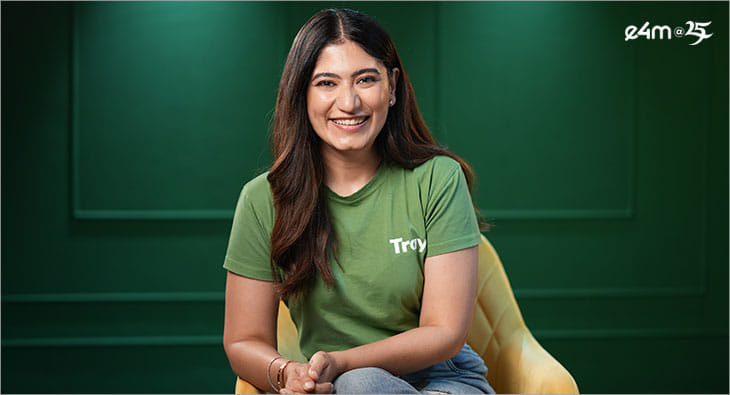

Before Traya found its place in India’s haircare landscape, it took shape inside a household navigating an unexpected health crisis. Its story didn’t begin with a market gap or a pitch deck. It began with a slow, unsettling personal reckoning.
Saloni Anand wasn’t thinking like a founder then. She was observing how hair loss was casually dismissed as a cosmetic inconvenience. Her husband and Co-founder, Altaf Saiyed, a biomedical chemist, was dealing with persistent hair loss that later escalated into hypothyroidism. While he approached the problem through research and scientific formulation, Anand found herself questioning the larger system around it.
The industry, she realised, wasn’t built to solve hair loss; it was built to sell products. That is where Anand’s’s role became foundational.
A B.Tech engineer and MBA graduate, Anand had spent her early career in brand marketing for SaaS products—experience that later shaped how she built Traya as a trust-first brand.
“Following the traditional FMCG approach of mass products, celebrity endorsements, and loud advertising didn’t feel right for us. Hair loss isn’t a problem you solve by simply making more noise,” she told e4m.
While Saiyed brought Traya’s scientific and research backbone, building formulations and validating outcomes, the unseen pillar behind the brand was Anand. With a background in brand-building and consumer understanding, she has, since day one, shaped how Traya speaks, what it refuses to promise, and the long-term relationship it chooses to build with its users. From positioning and marketing strategy to consumer education and trust-led growth, Anand has been the custodian of Traya’s voice.
According to the company, Traya closed FY2025 with a topline of ₹343 crore, registering a 44% year-on-year growth over FY2024. Building on this momentum, the brand expects its topline to reach between ₹550 crore and ₹600 crore in FY2026. Notably, the brand reported an active customer base of approximately 4.5 lakh users.
Going Against The Grain Of The FMCG Playbook
When Traya launched, India’s hair care market was already crowded with FMCG giants following a familiar formula: mass products, celebrity faces, discount-driven sales cycles, and top-of-the-funnel visibility. Hair loss was treated like a surface-level problem, something a shampoo, oil, or serum could fix in weeks. Anand refused to play that game.
She believed the category’s biggest problem wasn’t competition, it was credibility. Years of exaggerated claims and quick-fix promises had left consumers confused and distrustful. “Treating it like an impulse FMCG purchase only made the problem worse,” she added.
So, instead of launching with hero products and high-decibel advertising, the cofounder decided to launch the brand with conversations. “Hair fall doesn’t happen overnight. And neither does recovery,” she said.
Under her leadership, the brand has chosen education over promotion. For starters, according to Anand the brand has stayed away with false claims of visible results that take months, not weeks and invested heavily in explaining the stages of hair fall, the internal factors driving it
“This wasn’t the kind of messaging designed to maximise short-term conversions. It was designed to filter out the wrong customers and attract the right ones, those willing to commit to a long-term solution,” she said.
Even today, content remains Traya’s first and most important growth lever. Anand took particular care to break down misinformation and normalise honest timelines. Through Hope Stories, Traya documented real customer journeys showing hair regrowth as a process rather than a promise. The brand’s What The Health! podcast extended this approach, tackling hair loss, nutrition, stress, and lifestyle with doctors and experts, often challenging popular myths in the process.
Under Anand’s leadership, Traya has grown from a small, purpose-driven experiment into a category-defining brand with a team of over 800 professionals and a strong digital-first presence. What makes Anand’s role distinctive is the empathy with which she approaches a deeply emotional issue. She has led initiatives to educate consumers about the internal causes of hair loss, demystify unscientific myths, and bring dignity and clarity to a topic long surrounded by stigma.
By choosing credibility over convenience and education over exaggeration, Anand helped Traya carve out a distinct identity in a noisy market.
Why Celebrity Endorsements Came Later
For a brand operating in one of India’s most visibility-driven categories, Traya’s absence from celebrity-led advertising in its early years was not an oversight, it was a deliberate choice driven by Anand.
She believed that in a category like hair loss, borrowed credibility could do more harm than good. Watching actors with flawless hair endorse regrowth solutions only deepened consumer scepticism. For Anand, trust had to come from people who had actually lived the problem, not from faces that rented attention.
“Imagine someone with a great set of hair telling you to fix hair loss,” she said. “It immediately looks fake.”
Instead, she anchored Traya’s marketing around real users. The brand documented long, unfiltered treatment journeys—before-and-after stories that spanned months, not days. Over time, many of these customers became recognisable voices within the Traya community. When celebrity endorsement finally entered the picture, it was on Anand’s terms. By then, Traya had already built belief through outcomes. The role of a celebrity was no longer to create trust, but to amplify it.
Rajkummar Rao was chosen not for reach alone, but for alignment. His personality, grounded, relatable, and understated, mirrored the brand’s ethos. More importantly, he was a genuine Traya user, she mentioned. Even today, celebrity spending forms a small fraction of Traya’s overall marketing mix, with significantly more investment going into customer-led storytelling.
For Anand, celebrity association was never about visibility. It was about consistency. “If the face changes every year, the belief resets,” she explained. Staying with the same voice allowed Traya’s narrative to evolve, without losing trust along the way.
The Hardest Choices No One Sees
Many of Traya’s defining decisions weren’t the ones that made headlines, they were the ones that quietly slowed growth in the short term.
One of the toughest challenges Anand faced was resisting the pressure to optimise for speed. In a D2C ecosystem obsessed with month-on-month growth, Traya spent its first few years building infrastructure that consumers never saw—retention systems, medical verification layers, an app-led engagement engine, and processes to support long-term treatment adherence.
“There were moments when faster growth was easily within reach. Discounting could have spiked sales. Influencer-heavy campaigns could have inflated numbers. New celebrity faces could have refreshed visibility overnight. But each shortcut came with a trade-off we were not willing to make,” she said.
Another challenge was internal alignment. Building a brand that openly told customers not to buy unless they were ready for a five-month commitment required discipline across teams—from marketing and sales to customer support. Every message had to reinforce the same truth, even when it meant losing a conversion.
Even today, Anand added that there are decisions she’ll never fully know the outcome of.
Those constraints have become Traya’s biggest advantage. In a category crowded with noise, Anand built a brand that chose restraint. And in doing so, created something far rarer than scale.
Read more news about Marketing News, Advertising News, PR and Corporate Communication News, Digital News, People Movement News
For more updates, be socially connected with us onInstagram, LinkedIn, Twitter, Facebook, YouTube & Google News
