ASICS India maintains 50:50 digital-retail mix: Saurabh Sharma, Marketing Director
Saurabh Sharma, Director of Marketing at ASICS India, outlines how the company is expanding beyond metros, taking a measured approach to emerging channels like quick commerce, and more
 by
by
Published: Apr 1, 2026 8:43 AM | 5 min read
 Follow Us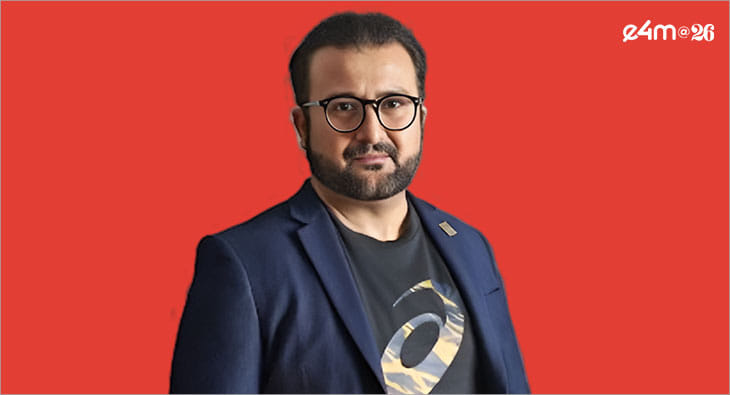

ASICS India is sharpening its focus on experience-led marketing, community building and a premium-led distribution strategy, even as the broader sportswear market increasingly leans towards convenience-driven channels.
In a conversation, Saurabh Sharma, Director of Marketing at ASICS India, outlined how the company is recalibrating its marketing investments, expanding beyond metropolitan centres and taking a considered view on emerging channels such as quick commerce.
Marketing mix evenly split between digital and retail
ASICS India’s marketing strategy has evolved from a digital-heavy approach during the pandemic to a more balanced allocation.
“After 2020, the major focus for brands, including us, was digital. It continues to remain important. However, recent data indicates that consumers are returning to brick-and-mortar stores,” Sharma said.
The company now allocates its marketing spends evenly between digital platforms and retail-led experiences. “Retail is a critical component for us, as it allows us to showcase the full strength of the brand. We are therefore maintaining a 50-50 split between digital and retail-led investments,” he added.
With over 130 stores and further expansion planned, physical retail remains central not only for transactions but also for delivering the brand’s overall experience.
Focus on activations over traditional media
The company has reduced its reliance on traditional media such as television and outdoor, choosing instead to invest in on-ground activations.
It maintains a strong presence at running events such as the Tata Mumbai Marathon, TCS World 10K Bengaluru and the New Delhi Marathon.
“We focus extensively on consumer activations. These on-ground initiatives are then integrated with our digital platforms,” Sharma said.
These events allow the brand to showcase its products in real-world conditions while gathering feedback from runners, which in turn informs future decisions.
The company is also introducing newer formats such as the ASICS Ekiden India 2026 as part of its broader efforts to engage the running community.
Running communities expand beyond metros
ASICS is seeing increasing participation from tier 2 and tier 3 cities, both in terms of consumers and running communities.
“The demand is increasingly coming from tier 2 markets as well. Tier 2 and tier 3 cities are becoming important contributors to our business,” Sharma said.
Data from the company’s direct-to-consumer channels indicated a growing share of consumers from these markets, prompting expansion plans.
“We observed that a significant number of consumers from tier 2 and tier 3 cities are purchasing our products. This has encouraged us to expand our retail presence in these markets,” he said.
Marathon participation trends further support this shift. “The sales spike that we see from tier 2 and tier 3 is immense. This gives us confidence to expand further because running as a category is clearly growing,” Sharma added.
The company currently operates 13 running clubs, with plans to expand further. These communities are also contributing to word-of-mouth growth.
“They become advocates for the brand, which is driving strong numbers for us,” he noted.
Quick commerce remains outside the strategy
Despite the growth of quick commerce platforms, ASICS does not see a fit for its products within that channel.
“We are not participating in quick commerce at present,” Sharma said.
He explained that the nature of the product requires a more involved purchase journey. “When you are selling products at this price point, it is important for consumers to experience them physically before making a purchase,” he said.
According to Sharma, aspects such as fit, comfort and performance make physical interaction essential. “Customers need to feel the product, wear it and understand the comfort before buying. This is not something that quick commerce can offer.”
Marketplaces continue to serve consumers who are already familiar with the brand, but the company remains focused on channels that allow for a more complete product experience.
Product-led selling to justify premium pricing
For ASICS, premium pricing is closely tied to product experience and consumer education at the point of sale. Sharma said the brand does not follow a uniform selling approach for all consumers.
Instead, customers are taken through a Foot ID assessment, which includes treadmill analysis and a physical report on their gait cycle. Based on this, they are guided towards specific categories of shoes suited to their running style.
“We do not offer shoes like that to every consumer who is coming in. We make them run on a treadmill, conduct a Foot ID assessment and provide a physical report on their gait cycle,” Sharma said.
He added that this process helps address common issues such as shin, knee and thigh pain. “Once the consumer understands their gait cycle, we guide them to the appropriate range and allow them to try the product. That is how they experience the comfort before making a purchase.”
Building a structured running ecosystem
ASICS is also working to develop a broader running ecosystem in India, where participation levels remain lower than global benchmarks.
Consumers are introduced to running clubs and training pathways at the point of purchase, enabling progression from beginner levels to longer distances such as half and full marathons.
“We are trying to create a complete ecosystem for runners. Anyone who comes to our store is introduced to running clubs and training pathways,” Sharma said.
Summing up the company’s direction, he added, “The plan is to capture the market and become the number one brand in the country.”
With a balanced marketing mix, growing traction in smaller cities and a continued emphasis on experience-led engagement, the company is positioning itself for sustained growth in India’s evolving sportswear market.
Read more news about Marketing News, Advertising News, PR and Corporate Communication News, Digital News, People Movement News
For more updates, be socially connected with us onInstagram, LinkedIn, Twitter, Facebook, YouTube & Google News
