As creator supply grows, are agencies still fighting for exclusive talent?
As India’s creator pool crosses 4 million, agencies are exploring exclusive rosters, long-term contracts, creator-agnostic models and technology-led marketplaces to secure talent
 by
by
Published: Sep 23, 2026 8:39 AM | 8 min read
 Follow Us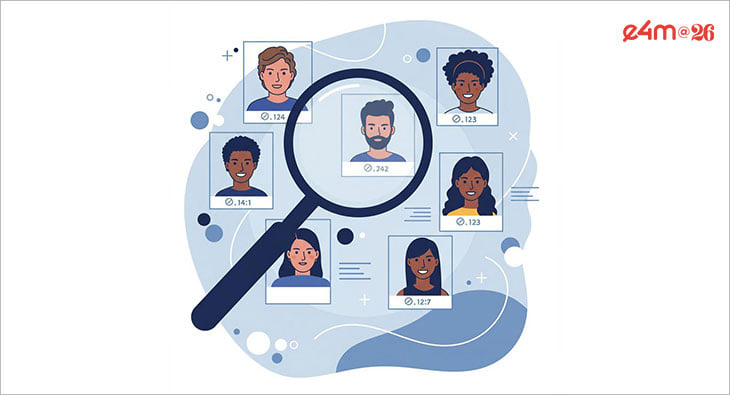

- The influencer marketing landscape is evolving as agencies face an abundance of creators in the 100K-to-500K follower range, shifting focus from access to building meaningful, long-term relationships with creators.
- India's influencer marketing industry is projected to grow to ₹3,375 crore by 2026, with three out of four brands already incorporating influencer marketing into their strategies, highlighting the increasing importance of creators in media and marketing plans.
- Agencies are moving away from exclusive creator management models, emphasizing the need for relevant partnerships and long-term relationships, while technology is changing the economics of creator discovery and access.
- The industry is witnessing a tension between traditional talent agency models that rely on exclusivity and emerging marketplace models that prioritize flexibility and creator-agnostic approaches, suggesting a future with multiple operational frameworks coexisting.
The creator economy may have a supply problem in the making, but it is not necessarily the one agencies expected. As influencer marketing budgets expand and more creators enter the 100K-to-500K follower bracket, agencies are finding themselves with more talent to choose from. The question is increasingly shifting from who can I access? to who can I build a meaningful, repeat relationship with?
That is also changing the economics of creator representation. While talent agencies continue to see value in exclusive rosters, influencer marketing agencies are increasingly questioning whether locking in creators makes commercial sense when brands have more choice than ever.
India's influencer marketing industry is projected to reach ₹3,375 crore by 2026, growing at an 18% CAGR, according to EY. The report also found that influencer marketing was already part of three in four brand strategies, underlining how the creator pool is becoming an increasingly important part of media and marketing plans.
Read On: What's more valuable: An influencer's reach or a brand's own creator?
The scale of the creator universe is equally significant. Qoruz currently lists more than 1.55 million Indian influencers on its platform, while its India influencer-marketing offering cites 1.5 million verified creators. For agencies, that abundance is changing the value proposition of a roster.
From owning access to finding the right fit
Vikas Chawla, Co-founder of Social Beat and Influencer.in, part of Cheil, says the company has deliberately stayed away from exclusive creator management. "We don't manage any exclusive creators. We in fact pride ourselves on being brand first and creator agnostic. We find the right creator for the brand and the brief, now powered with AI," he said.
For Chawla, the growing number of creators means that supply itself is unlikely to remain the biggest constraint. There is now a sizeable pool of creators in the 100K-to-500K range who are not tied exclusively to a single agency.
"Supply is large. Lots of creators now in the 100K to 500K range who are not exclusive, so we only see this market growing," he added.
This does not mean relationships have become less important. If anything, agencies are placing greater emphasis on the quality and longevity of those relationships, even when they do not come with a formal exclusivity clause.
Sandeep Saini, Vice President, Growth, Team Pumpkin, said the commercial value of proven creators has risen as influencer budgets have grown, particularly for creators who combine engagement, credibility and the ability to deliver outcomes.
But follower count alone is no longer enough. "Brands are increasingly looking beyond follower count towards relevance, audience quality and performance," Saini said.
Read On: In the creator era, how do celebrities continue to shine?
That distinction matters because the creator market is no longer simply a race to secure the biggest names. With more creators entering the market, agencies can potentially build campaigns around niche relevance, regional audiences, category expertise and performance rather than relying solely on celebrity-scale reach.
The economics of exclusivity
Exclusivity, however, continues to have a clear commercial logic for talent agencies.
Gautam Madhavan, Founder of Xley.AI, drew a distinction between the traditional agency model and the emerging marketplace model. In the traditional setup, agencies spend time discovering creators, reaching out to them, negotiating and maintaining relationships. A marketplace, on the other hand, can turn creator discovery and access into a more scalable transaction.
"The manual approach is the traditional model currently used by agencies, which involves reaching out to creators on Instagram or email, having calls, and maintaining the relationship manually," Madhavan said.
Xley.AI, he says, has mapped approximately eight million Indian creators and around 200 million creators globally across 124 countries.
The larger the creator universe becomes, the more technology can potentially change the economics of discovery. If brands and agencies can identify relevant creators through platforms, the competitive advantage of simply knowing a creator's phone number becomes less significant.
But Madhavan argues that talent agencies still have a distinct role when they actually represent creators. "Talent agencies will win for sure, but their winning is only limited to the number of creators they have exclusively," he said.
For a talent agency, the commercial incentive is straightforward. Agencies typically earn a percentage of the creator's earnings, meaning the creator's commercial growth directly contributes to the agency's revenue.
"In this format, the more the creator earns, the more the agency earns," Madhavan added.
Read On: e4m D2C Summit: Why brands are looking beyond reach to turn creators into revenue drivers
The tension, therefore, is between two very different business models. A talent agency can have a direct financial incentive to secure and grow exclusive talent, while a brand or influencer marketing agency may have greater flexibility by remaining creator-agnostic.
Long-term relationships without locking creators in
Team Pumpkin's approach sits somewhere between the two.
Rather than treating every campaign as a one-off transaction, Saini says the agency prefers to build relationships that can extend across brands and categories, provided the creator remains relevant.
"We prefer building long-term relationships with creators rather than treating influencer marketing as a one-off transaction. The same creator can work with us across different brands and categories, depending on relevance and fit," he said.
That model can also create operational efficiencies. Agencies already familiar with a creator's content quality, professionalism and delivery standards can reduce the friction involved in repeatedly onboarding new talent.
"Over time, it creates greater efficiency and consistency for both brands and creators," Saini said.
This may explain why the industry is seeing more conversations around retainers, preferred access and long-term partnerships without necessarily moving towards blanket exclusivity.
Saini said that while agencies are discussing longer-term arrangements, "blanket exclusivity may not always make sense."
Read On: When 3,000 followers cost more than 3 million: A creator outreach lesson
When creator lists become a competitive asset
Yet, as agencies build increasingly deep creator relationships, questions around access and ownership are also becoming more sensitive.
A recent LinkedIn post by Prafulla K., Founder and CEO of Jeevmedia, brought this tension into focus. Prafulla alleged that SocialTAG's team had sought creator lists from his organisation and subsequently approached creators directly, despite the creators being exclusively represented by Jeevmedia. He also alleged that an invoice of nearly ₹3 lakh had remained outstanding for more than a month and raised concerns about coordination between teams.
Prafulla's argument was built around an industry expectation that when creator lists are shared with a partner agency, the information remains within that business relationship.
The episode highlights a larger issue as creator databases become increasingly valuable: where does legitimate creator discovery end and relationship ownership begin?
For agencies, the distinction is becoming particularly important because creator data is no longer simply a contact sheet. It can include audience information, campaign history, rates, category fit, performance data and the nature of an agency's relationship with a creator.
At the same time, Chawla's position reflects another side of the market. If the creator pool continues to expand rapidly, agencies may have less incentive to compete purely on who has exclusive access to talent.
"We have 1.3 million creators on the platform and scaling every quarter with more verified creators in India," he said.
Read On: The creator effect: How influence is rewriting corporate communications
The next competition may be for demand
The irony is that India's creator economy could eventually have more creators competing for brand opportunities than agencies have difficulty finding creators.
Chawla revealed this is where the market is heading. "Very few agencies are focussing on exclusivity as it's not an easy business," he says. "And with more creators emerging, supply is not the challenge, demand will be."
That changes the nature of competition.
If creator discovery becomes easier through technology and platforms, agencies may need to differentiate through strategy, measurement, brand relationships, category expertise and their ability to repeatedly match creators with the right briefs.
Madhavan sees the marketplace model moving in that direction, where creator collaborations could increasingly be bought with the convenience of other digital advertising inventory.
For talent agencies, however, exclusivity can still provide a more defensible commercial position, particularly when the agency has invested in developing a creator's career and has a direct financial stake in increasing their earnings.
The industry, therefore, is unlikely to settle on one model. Instead, three systems are beginning to coexist: exclusive talent representation, long-term but non-exclusive creator relationships, and increasingly technology-led creator marketplaces.
As India's influencer marketing business scales, the battle may no longer be over who has the biggest creator roster. It may be over who can turn an increasingly abundant creator supply into predictable business for brands, sustainable earnings for creators and repeat revenue for agencies.
Read more news about Influence Zone, Marketing, PR and Corporate Communication, Internet Advertising, People Movement
For more updates, be socially connected with us onInstagram, LinkedIn, Twitter, Facebook, YouTube & Google News