In the creator era, how do celebrities continue to shine?
As audiences fragment across platforms, experts weigh in on why iconic celebrities remain valuable
 by
by
Published: Sep 9, 2026 9:16 AM | 7 min read
 Follow Us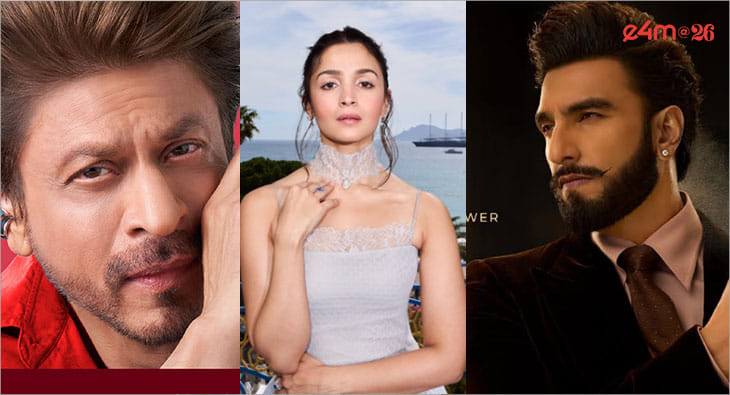

- The advertising landscape is shifting as brands weigh the benefits of celebrity endorsements against the reach and engagement offered by numerous creators, with some brands still favoring celebrities for their ability to provide scale and cultural relevance.
- Celebrities like Shah Rukh Khan continue to be sought after for high-profile campaigns, demonstrating their capacity to unify fragmented audiences and enhance brand recognition across various platforms.
- While influencer marketing has introduced new dynamics, it has not diminished the value of iconic celebrities; instead, it has raised expectations for what celebrities must deliver beyond mere impressions.
- The effectiveness of celebrity endorsements is increasingly scrutinized, with brands needing to ensure that celebrity associations add distinctive value and cultural significance rather than relying solely on fame.
For a while now, the question in advertising circles has been: do brands really need celebrities when creators can do so much of the same job? A celebrity can command a hefty endorsement fee, while the same budget can be spread across hundreds of creators, each bringing their own audience, voice and context. That has been the argument.
Read: Influencer marketing is everywhere. But how much are brands really spending? - Exchange4media
Yet there is a catch. The same fragmentation that has made creators more valuable has also made attention harder to concentrate. And when brands need to create that kind of concentrated attention, from global names to Indian marketers, they are still turning to marquee icons.
Shah Rukh Khan is a case in point. The Bollywood actor currently features across campaigns for Google Gemini, Visa and Vodafone Idea, while his Foxtale association became a talking point on its own.
Read: Why influencer marketing remains a challenge despite rising brand investments - Exchange4media
It is hardly an India-only phenomenon. Global brands continue to lean on celebrities when they want scale, recognition and cultural weight. Lancôme and Maybelline have signed Indian celebrities, while Deepika Padukone, Priyanka Chopra Jonas and Alia Bhatt continue to feature in global luxury and beauty portfolios.
The point is not that celebrities have suddenly become more effective than creators. It is that the value equation is changing. For Ratheesh MS, Vice President, Starcom, the answer lies in what a celebrity can do beyond delivering impressions. “A celebrity brings scale, instant recognition and cultural salience to a brand. Creators offer targeted engagement and relevance, while celebrities can provide a shared cultural reference point helping strengthen mental availability, distinctive memory and long-term brand salience.”
Read more on: Unilever scales influencer network from 10,000 to 300,000 - Exchange4media
That is particularly relevant in a market where consumers are no longer consuming advertising in one shared environment. One person may discover a brand through Instagram, another through YouTube, another through a WhatsApp conversation and another through a television commercial. The audience may be large, but the experience is increasingly fragmented.
A recognisable celebrity can cut across some of those divisions because the person is already known outside the specific platform on which the campaign appears.
Star power is doing a different job now?
That does not mean every celebrity has suddenly become more valuable. The premium begins to make more sense when the person carries recognition that extends beyond a platform, a niche or even a particular campaign.
“A powerful celebrity does something different. They can transfer status, aspiration, familiarity and cultural relevance to the brand. They can make a brand feel bigger, more premium or more significant,” said Anita Nayyar, transformation and growth leader.
The distinction is visible across categories. Deepika Padukone, for instance, continues to straddle mass and premium brand associations, from beauty and consumer brands to global luxury houses. Her association with brands such as Louis Vuitton and Cartier is not primarily about squeezing out the cheapest possible impression; the celebrity's identity itself becomes part of the brand's positioning.
Similarly, Ranveer Singh's continued presence across premium and mass categories shows that celebrity value is not necessarily tied to one platform or one audience segment. In 2025, Singh ranked among the most visible celebrities in advertising, while his portfolio extended across categories and included both individual and couple-led campaigns with Deepika Padukone.
More recently, Ajmal Dubai brought Singh on board for a campaign that was rolled out across more than 575 PVR screens, using his persona as part of the brand's positioning around individuality and expression.
The point is not that brands have stopped caring about reach. It is that reach is increasingly becoming only one part of what a marquee celebrity is expected to deliver. “Influencer marketing has raised the bar, but not diminished the role of celebrities. As attention fragments, genuine cultural icons can become even more valuable for their ability to drive broad recognition and salience,” Ratheesh added.
Vi's recent brand identity campaign with Shah Rukh Khan is a useful example of the distinction. The campaign positioned Khan as the face of the refreshed brand as Vi looked to communicate a broader shift in how it wanted to be perceived. The same logic can be seen in Visa's appointment of Khan as its India brand ambassador and in Google's use of him for Gemini. Foxtale's association with the actor is another, more complicated example: the campaign generated attention partly because audiences questioned the fit between a mass cultural icon and a relatively new-age skincare brand.
And that caveat matters.
Why fragmentation favours iconic celebrities
The industry view is increasingly pointing in the same direction: the rise of creators has not necessarily weakened the case for celebrities. In fact, fragmentation may be making genuine icons more valuable.
Syed Amjad Ali, Brand Consultant and Former President, Mullen Lowe Lintas Group, says, “The rise of creators and influencers has certainly changed the endorsement landscape. They offer brands authenticity and the ability to engage with targeted audiences better than celebrities. Despite this, celebrity endorsements remain relevant. Actually, on the contrary, the value of an iconic celebrity must have increased given highly fragmented platforms and the attention spans.”
Amol Mohandas, Founder & Principal Advisor, Weave Through, makes a similar point: “Influencer marketing has raised the bar for celebrity endorsements because brands now have credible voices within specific communities, often at a lower cost and with greater contextual relevance, At the same time, fragmentation can increase the value of genuine cultural icons. When attention is dispersed across thousands of creators, platforms and communities, someone with very high recognition can become an attention shortcut, bringing a fragmented audience into the same conversation.”
Nayyar takes the argument a step further, saying, “Influencer marketing may have made iconic celebrities more valuable, not less. As content becomes increasingly fragmented and everyone becomes a creator, genuine cultural icons become scarcer.”
The celebrity premium still has to earn itself
The fragmentation of attention may increase the value of genuine icons, but it also makes the mismatch more visible. When audiences have multiple platforms on which to debate, remix and critique a campaign, a celebrity association cannot simply rely on fame. The celebrity has to add something meaningful to the brand.
“The celebrity premium only makes sense when the individual adds something distinctive to the brand. If the association is interchangeable or lacks relevance, the economics become much harder to justify,” said Mohandas.
In other words, the celebrity can become the story, but that is not necessarily a win for the brand.
“This is why celebrity effectiveness should not be measured simply through CPM, impressions or engagement. The question is: What does this person give the brand that 100 creators cannot? If the answer is merely reach, creators may be the smarter investment. If the objective is to make a brand famous, elevate its stature, change perception or create a memorable cultural association, a true celebrity can still be extraordinarily powerful,” said Nayyar.
That is where the creator economy has arguably raised the bar for celebrities. Creators have made audiences more accustomed to context, personality and perceived authenticity. A celebrity cannot merely turn up, deliver a line and expect cultural relevance to follow.
That may be the bigger shift underway in celebrity advertising. The market is not necessarily returning to the old model where one famous face did everything. Instead, marketers appear to be assigning different jobs to different kinds of influence.
“The strongest approach is often celebrity-led, creator-amplified using the celebrity to build broad attention and the creator ecosystem to make the brand more relevant, credible and actionable across communities,” Ratheesh added.
So the comparison is no longer simply about whether a celebrity can deliver the same number of impressions as hundreds of creators. That is often the wrong comparison.
The more useful distinction is what the celebrity is being asked to build that a distributed creator network cannot easily build on its own in today's time.
Is it fame, stature, memory, cultural recognition or a single shared brand association.
If that is the job, fragmentation does not necessarily make the celebrity obsolete. It may be precisely what makes the right celebrity harder, and potentially more valuable, to replace!
Read more news about Marketing News, Advertising News, PR and Corporate Communication News, Digital News, People Movement News
For more updates, be socially connected with us onInstagram, LinkedIn, Twitter, Facebook, YouTube & Google News