What Piyush Pandey would tell advertising today
Guest Column: Ganapathy Viswanathan, Independent Communication Consultant & Author, recounts Piyush Pandey’s philosophies as we mark a year of his passing
 by
Published: Oct 24, 2026 9:32 AM | 6 min read
 Follow Us
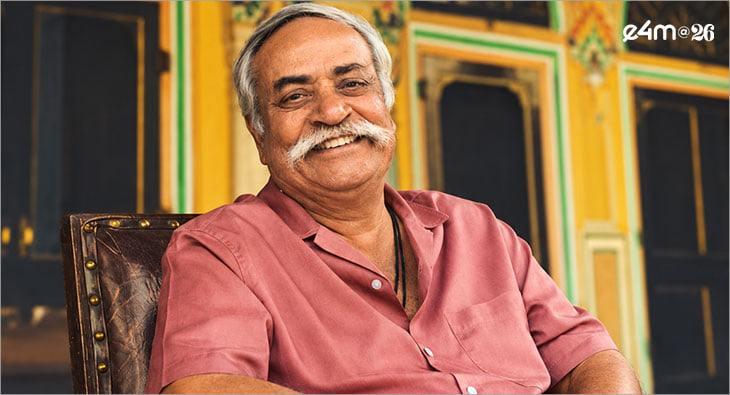

- Piyush Pandey, a significant figure in Indian advertising, passed away a year ago, leaving a lasting impact on Ogilvy and the industry as a whole, emphasizing the importance of human creativity over technology in advertising.
- His career spanned various roles from client servicing to creative leadership, marked by consistent and relatable work that built brands rather than chasing fleeting trends or awards.
- Pandey valued observation and human insight, believing that great advertising stems from understanding people rather than relying solely on data and algorithms, and he would likely embrace AI as a tool without allowing it to replace human thinking.
- He advocated for simplicity and meaningfulness in advertising, encouraging young creatives to focus on great ideas and brand truths, a philosophy that remains relevant amid the industry's evolving landscape.
A year has passed since Piyush Pandey left us. Time flies, but the contribution he made to Ogilvy and Indian advertising remains impossible to forget. At a time when advertising is being reshaped by Artificial Intelligence, influencers, short-form video, performance marketing, data and algorithms, it is interesting to ask: What would Piyush Pandey tell advertising today?
Perhaps his first message would be simple: technology will change the tools of advertising, but it should never change the way we think.
From Account Management to Creative Leadership
Piyush's journey was unusual and remarkable. He started in client servicing before moving to creative and eventually took the creative baton at Ogilvy, carrying it through a long and hugely productive marathon. His contribution was not built around one great campaign or one period of success. It was the consistency of his creative output and his ability to keep producing work that connected with people and built brands.
That consistency is worth remembering in an industry that is increasingly driven by immediacy. Today, a campaign can become a talking point in the morning and disappear from public attention by evening. Piyush's career reminds us that great advertising is not about constantly chasing the next big thing. It is about creating ideas that can stay relevant and build a brand over time.
Awards Matter, But the Brand Matters More
Piyush believed in awards. He understood that recognition energises creative teams, gives people confidence and encourages agencies to raise the bar. But awards were never supposed to become the primary objective. The first responsibility was always to the brand.
His philosophy was essentially that if you could create outstanding work while solving a genuine brand problem, then winning an award was a bonus. The work should first work for the client and the consumer. If it could also win recognition, motivate the team and enhance the reputation of the agency, even better.
That is an important lesson today when the temptation to create work that wins attention, likes and awards can sometimes become stronger than the need to create work that actually builds a brand.
The Extraordinary Power of Observation
One of Piyush's greatest strengths was his power of observation. He could look at ordinary situations and discover simple human insights that others might overlook. He understood that a great advertising idea did not necessarily need a complicated strategy or an elaborate explanation. Sometimes the most powerful idea was sitting right in front of us.
His ability to transform a simple observation into memorable communication was one of his greatest creative gifts. Humour was another important part of his creative language. He knew when humour could make an idea sharper, more memorable and more human.
Today, advertisers have access to an extraordinary amount of consumer data. We know what people search for, watch, buy, share and click. But data can tell us what people do. It does not always tell us what they feel. That still requires observation, empathy and human understanding.
Would Piyush Embrace AI?
I believe he would.
Piyush was never afraid of change. He would probably have explored AI with curiosity and understood how it could help creatives generate possibilities, analyse information, develop executions and work faster. He would have recognised its potential as another tool in the creative toolbox.
But would he allow AI to replace human thinking? Probably not.
His belief was clear: machines cannot think independently in the way human beings do; they can act with the help of human thinking. That distinction becomes even more relevant today. AI can generate hundreds of ideas, but the real creative challenge is knowing which one has a human truth behind it.
A machine can produce an answer. A creative person has to ask whether the answer means anything.
Don't Let Algorithms Replace Instinct
Advertising is increasingly becoming algorithm-driven. Campaigns are planned around data, targeting is more precise and performance can be measured almost instantly. All of this has made advertising more accountable.
But Piyush would probably remind us that consumers are not numbers on a dashboard. They are people with emotions, contradictions, aspirations, insecurities and humour.
The danger is that in trying to understand the consumer through data, we may forget to understand the human being behind the data.
He would probably tell young creatives to use every available source of information but never stop observing people. Talk to them. Listen to them. Watch how they behave. Understand what makes them laugh, what irritates them, what they aspire to and what they fear.
That is where the unexpected insight often comes from.
In the Age of Short Attention
The rise of short-form video has changed the way advertising is consumed. Brands now have seconds, sometimes even less, to make an impression. But Piyush would probably not have seen brevity as the enemy of creativity.
He understood the power of simplicity. A short message can be powerful if the idea is strong enough. The real challenge is not whether an advertisement is six seconds or sixty seconds. It is whether there is an idea worth remembering.
Short-form advertising does not demand smaller thinking. It demands sharper thinking.
What Would He Tell Young Creatives?
Perhaps he would say: don't chase awards; chase great ideas. Don't try to make advertising look clever; make it meaningful. Don't confuse complexity with creativity. Don't allow technology to do your thinking for you.
Most importantly, understand the brand.
For Piyush, creativity was never separate from the brand. The best work emerged when a strong creative idea met a genuine brand truth. That principle remains relevant whether the communication appears on television, Instagram, YouTube, a mobile screen or an AI-generated platform.
Why He Will Continue to Be Missed
Piyush Pandey will be missed not simply because he created some of India's most memorable advertising. He will be missed because he represented a particular way of thinking about creativity.
He showed that great advertising could be simple without being simplistic, humorous without being frivolous and emotional without becoming sentimental. He demonstrated that ordinary human observations could become extraordinary brand ideas.
One year later, the advertising industry has moved further into a world of AI, algorithms, creators and platforms. The tools have changed dramatically. But the fundamental challenge remains the same: find an idea that connects one human being with another.
If Piyush were here today, perhaps he would look at all these new technologies, smile and say: Use every tool available. But don't forget to think.
That is perhaps the greatest part of his legacy—and the reason he will continue to be missed.
Disclaimer: The views expressed here are solely those of the author and do not in any way represent the views of exchange4media.com.
Read more news about Internet Advertising India, Marketing News, PR and Corporate Communication News, Digital Media News, Television Media News
For more updates, be socially connected with us onInstagram, LinkedIn, Twitter, Facebook YouTube & Google News