India’s ₹29 lakh crore communication crisis — and why boardrooms still ignore it
Jitendra Jha, MD of 3M Media Works Pvt Ltd, highlights workplace disengagement as a major cost for corporate India and calls for internal communication to be treated as a strategic business function
 by
by
Published: May 20, 2026 10:49 AM | 3 min read
 Follow Us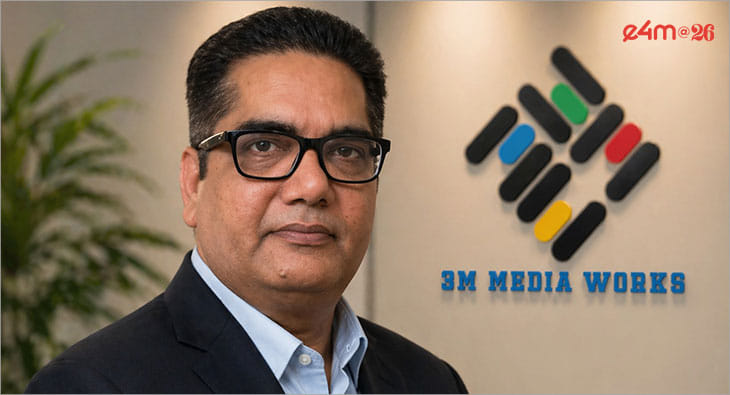

- Workplace disengagement is costing corporate India approximately $351 billion annually, translating to about ₹29 lakh crore in lost productivity, with employee engagement levels dropping to a four-year low of 21%.
- Internal communication remains under-prioritized in many organizations, often viewed as a downstream HR function rather than a strategic business imperative, leading to a one-way communication flow from leadership to employees.
- Factors such as language, regional culture, and managerial capability complicate effective communication, resulting in employees feeling informed but not heard, which contributes to rising disengagement.
- Despite increased budgets for employee engagement post-pandemic, investments have largely focused on platforms and perks rather than enhancing day-to-day communication quality, highlighting the need for organizations to treat internal communication as a leadership capability to foster alignment and high-performance cultures.
Workplace disengagement is quietly emerging as one of the most expensive business risks for corporate India. Recent global workplace studies estimate that disengagement costs India nearly $351 billion annually – or about ₹29 lakh crore in lost productivity. But despite the scale of the problem, one critical function continues to remain under-prioritised across organisations is internal communication.
India’s largest companies have mastered investor messaging, external branding and media visibility. But inside many organisations, communication with employees still operates as a downstream HR activity rather than a strategic business function. The result is visible in the data. India’s employee engagement levels have dropped to 21%, a four-year low. South Asia also recorded the sharpest regional decline in engagement globally, while Workplace disengagement is slowly creeping up as one of India’s costliest business risks.
This is not simply an HR challenge. It is an operational and leadership challenge.
In most Indian organisations, communication still follows a one-way hierarchy. Leadership messages travel downward efficiently through emails, town halls, and presentations, but frontline insights rarely travel upward with the same speed or importance. Employees are informed, but not necessarily heard. Over time, communication becomes transactional instead of trust-driven.
The Indian context makes this even more complex. A message crafted for a Mumbai headquarters may not resonate in a manufacturing unit in Tamil Nadu or a sales network in Rajasthan. Language, regional culture, digital access, and managerial capability all influence how communication is received. Yet most organisations still treat internal communication as a standardised broadcast exercise.
While nearly half of Indian employees are actively seeking or monitoring new job opportunities. Manager engagement — the single biggest driver of team morale and alignment — has seen one of the steepest declines globally.
Research consistently shows that managers shape the everyday employee experience far more than leadership speeches or intranet campaigns. When managers themselves are disengaged, organisational alignment weakens rapidly across teams.
Ironically, many Indian companies have increased employee engagement budgets after the pandemic. But much of that investment has gone into platforms, perks, and activities rather than improving the quality of day-to-day communication between leaders, managers, and employees. More communication channels do not automatically create better communication.
The companies getting this right treat internal communication as a leadership capability, not a support function. HCL Technologies’ “Employees First” philosophy demonstrated how transparency and employee trust can directly strengthen business performance. Tata Group’s ability to maintain cohesion across diverse businesses also reflects deliberate communication at scale.
The lesson is becoming difficult to ignore: organisations cannot build high-performance cultures if employees feel disconnected from decisions, direction, and purpose.
Corporate India is investing aggressively in growth, technology, and expansion. But without stronger internal communication, even the best strategies struggle to sustain alignment at scale.
The ₹29 lakh crore question is no longer whether internal communication matters. The real question is which organisations will recognise its business value before disengagement becomes irreversible.
Data references: Gallup State of the Global Workplace 2025 & 2026; Sociabble India Engagement Report 2025; Axios HQ Annual Report 2025; WTW Global Workforce Study; Business Standard workplace analysis, April 2026.
Read more news about Industry Briefing, Internet Advertising, Marketing, PR & Corporate Communication, Television Media
For more updates, be socially connected with us onInstagram, LinkedIn, Twitter, Facebook YouTube & Google News