Speed, empathy, clarity: The communication playbook for an uncertain world
Shailesh Goyal, Founder, Simulations Public Affairs Management Services Pvt. Ltd. shares a new crisis playbook and communicator’s mandate in a world struggling to find its footing
 by
by
Published: Apr 10, 2026 3:38 PM | 5 min read
 Follow Us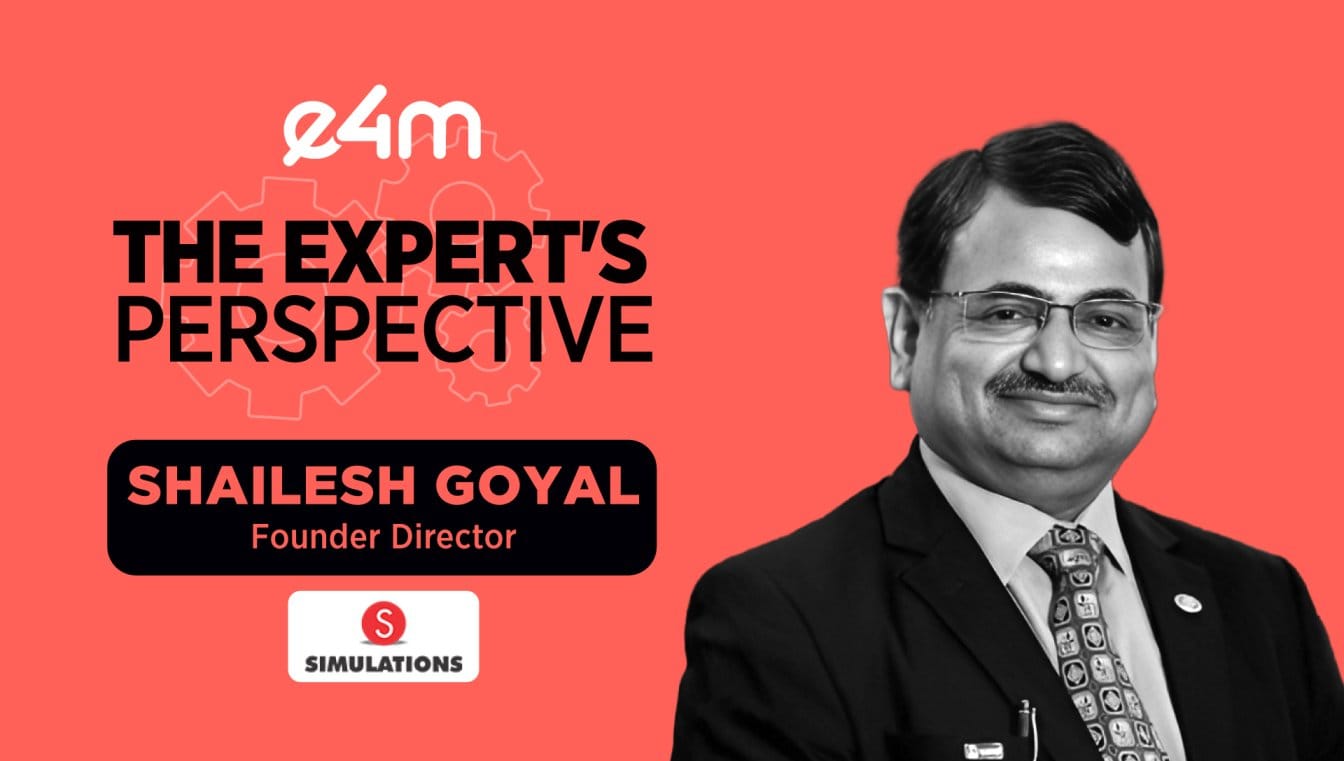

The world in 2026 is living through a level of geopolitical instability that has reshaped the very foundations of reputation management. Conflicts in the Middle East have intensified beyond regional boundaries. Tensions across Europe and Africa continue to shift unpredictably. Supply chains once considered robust are collapsing under pressure, markets are volatile, and societies are absorbing the emotional weight of an uncertain future.
For communication leaders, this is not a backdrop—it is the operating reality. Organisations today are judged not only by how they act, but by how quickly, clearly, and compassionately they communicate in times of disruption. In this environment, reputation is not a long-term asset—it is a real-time performance.
The New Grammar of Crisis Communication
A fundamental shift has taken place in how crises unfold and how stakeholders interpret institutional behaviour. Traditional, carefully sequenced communication playbooks are now obsolete. In a world defined by polycrisis—where political, economic, environmental, and technological risks collide—organisations cannot afford slow, bureaucratic messaging.
Stakeholders want coherence in incoherent times. They want leadership to articulate intent, not simply offer updates. And they want organisations to demonstrate—not simply promise—that they are in control of their operations and mindful of their communities.
The speed of response matters immensely, but speed without clarity fuels confusion. A delayed response, however “strategic,” often reads as indifference or unpreparedness. Silence is no longer neutral; it is interpreted as avoidance.
Lessons from Recent Global Responses
- The GCC’s Strategy of Demonstration
Recent months have shown how governments in the Gulf Cooperation Council responded decisively when conflict escalated around them. Instead of relying solely on statements, they used visible demonstrations of continuity—operational airports, steady supply chains, leadership presence in public spaces.
These were not symbolic acts. They were deliberate communication tools designed to project stability and reassure citizens. This shift—from instructing people to “remain calm” to showing why they can remain calm—is a powerful lesson for organisations everywhere.
- Kenya’s Dual Crisis: Clarity Over Crisis Theatre
When Nairobi faced devastating floods and a simultaneous fuel shortage in March 2026, misinformation on social media overtook official updates. The organisations that maintained trust were those that acknowledged what they knew, admitted what they didn’t, and avoided speculation. They didn’t hide behind cautious phrasing or overconfident reassurances; they offered clarity without theatrics.
These examples reinforce a core truth: in a world where algorithms amplify fear faster than facts, credibility becomes an organisation’s most valuable—and fragile—asset.
The Expectations Paradox
Consumers today expect transparency, empathy, and accuracy from brands. At the same time, they punish misjudged statements or premature commentary. This is the paradox communication leaders must navigate.
Not every situation demands a public statement. Not every organisation needs to comment on geopolitical developments. The communications mandate is not to rush into the noise but to assess:
- Do stakeholders expect clarity from us right now?
- Are our operations, people, or customers directly impacted?
- Can we speak with certainty, or will we unintentionally fuel speculation?
In uncertain times, responsible restraint is as important as swift communication.
A Communication Framework for Turbulent Times
Based on current global events and evolving stakeholder expectations, communication leaders should anchor their strategy around six core principles:
- Anticipate Before Communicating
Conduct scenario planning well before external triggers demand it. Map operational risks, narrative risks, geopolitical overlaps, and stakeholder expectations. In a world where crises cascade, anticipation is the only defence against surprise.
- Lead with Humanity
Cold, corporate messaging erodes trust. In conflict-driven uncertainty, employees, customers, and partners want reassurance rooted in genuine empathy. Acknowledge fears. Recognise emotional realities. Prioritise people over protocol.
- Demonstrate Stability
Show operational continuity rather than merely stating it. Tangible proof—stable services, unaffected supply lines, prepared teams—strengthens credibility far more than polished positioning. In these times, demonstrating readiness is stronger than declaring it.
- Combat Misinformation Quickly and Calmly
Rumours thrive in ambiguity. Establish your organisation’s official channels as the single source of truth. Address misinformation early—before it becomes the dominant narrative.
- Unify Messaging Across the Organisation
Fragmented communication is interpreted as organisational confusion. Ensure alignment between leadership, internal teams, customer-facing units, and external spokespeople. Consistency isn’t optional—it’s reputational insurance.
- Measure, Adapt, and Document
Monitor sentiment continuously and evolve messaging as situations shift. Crises are fluid; static communication strategies fail. Documentation also supports transparency and institutional learning.
Beyond Business as Usual: Corporate Responsibility in Wartime Uncertainty
Amid the instability, some companies have quietly chosen to support communities—keeping essential prices stable, offering logistical assistance, or using their platforms to amplify verified information. These gestures matter. They remind society that organisations are not just economic engines but social actors with moral influence.
In many cases, such authentic actions become more powerful than any communication strategy. In fact, the most effective reputation protection often emerges when organisations place impact above image.
What Communication Leaders Must Become
The demands on communication professionals have expanded dramatically. Today’s communicators must evolve into:
- Geopolitical interpreters
- Data-literate analysts
- Behavioural science observers
- Ethical decision-makers
- Scenario planners
- Crisis operators, not just crisis writers
Communication is no longer an administrative function—it is a core resilience capability.
Rising to the Moment
The turbulence of 2026 tests institutions and individuals alike. Organisations are being challenged to show who they really are—and communication leaders are at the centre of this test.
Our responsibility now is to bring clarity where there is confusion, steadiness where there is fear, and purpose where there is uncertainty. This is a moment that demands courage as much as competence.
Reputation will not be protected by avoiding the realities of global conflict, nor by reacting impulsively to them. It will be protected by communication that is:
Fast without being careless.
Compassionate without being sentimental.
Clear without being simplistic.
Strategic without being opportunistic.
This is the new playbook. This is the communicator’s mandate in a world struggling to find its footing.
And this is our moment to lead.
Read more news about PR and Corporate Communication News, Internet Advertising, Marketing News, Digital Media News, People Movement News
For more updates, be socially connected with us onInstagram, LinkedIn, Twitter, Facebook YouTube & Google News