Diwali’s Sugar Dilemma: Can healthy mithai find a place at India’s festive table?
Guest Column: Ganapathy Viswanathan, Independent Communication Consultant & Author, examines whether healthier sweet alternatives can find a place alongside traditional mithai in Diwali gifting
 by
Published: Oct 29, 2026 8:17 AM | 6 min read
 Follow Us
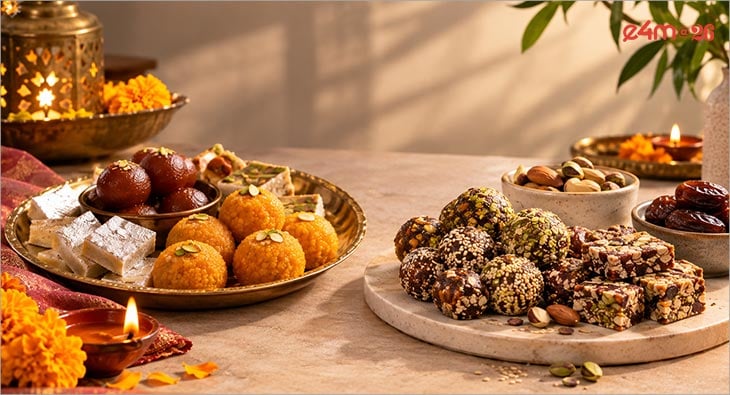

- Diwali traditionally sees a surge in mithai sales, with families and corporates exchanging sweets, but younger consumers are increasingly seeking healthier alternatives due to heightened awareness of fitness and sugar consumption.
- While traditional mithai remains popular due to emotional connections and family traditions, there is a growing market for dry-fruit sweets and reduced-sugar options, appealing to health-conscious consumers and offering variety in gifting.
- Corporates may start exploring premium gifting options, such as dry-fruit hampers, as they consider the preferences of recipients, although the demand for healthier options may not be solely health-driven.
- The mithai industry faces challenges in product development, pricing, and clear communication about health claims, with opportunities to accommodate both traditional and alternative sweets without compromising on taste or consumer trust.
Diwali is a time when mithai sales go up, and sweet shops are busy meeting the demand. From kaju katli and motichoor laddoos to barfi and other traditional sweets, there is something for everyone. Families exchange boxes, friends visit each other, and corporates send sweets to clients, employees and business associates. This has been the practice for years, and it is difficult to imagine Diwali without mithai.
But there is a change taking place in the market. A section of consumers, particularly the younger generation, is becoming more conscious of what they eat. Fitness, food habits and sugar consumption are receiving greater attention. Many people want to enjoy their favourite foods but are also looking at ways to reduce their sugar intake. This raises an interesting question for the mithai industry: can healthier alternatives find a place in a market where sweetness has always been central to the celebration?
Traditional Mithai Will Continue to Rule
It would be unrealistic to believe that sugar-free or low-sugar sweets will replace traditional mithai. There is a strong emotional connection with familiar sweets, and consumers are unlikely to give them up just because healthier alternatives are available. Taste, family traditions and the joy of sharing sweets will continue to influence buying decisions.
However, the market is large enough to accommodate different preferences. A consumer may buy the usual box of laddoos for the family but choose dry-fruit sweets for a friend who prefers something different. Another may look for a reduced-sugar option because of personal food preferences. The point is not that traditional mithai is losing its place, but that consumers may want more choices.
For marketers, this is worth examining. Instead of treating health-conscious consumers as a small group that can be ignored, brands could look at what they are asking for and whether these preferences are translating into actual purchases.
Dry-Fruit Sweets Are Finding Their Place
Dry-fruit sweets are an interesting part of this development. Almonds, cashews, pistachios and dates have been used in Indian sweets for years. What is changing is the way these products are being presented to consumers. They are increasingly seen as premium offerings and are finding a place in festive gift boxes.
There is a natural appeal to sweets made with nuts and dates. They look attractive, can be packaged well and offer an alternative to the usual assortment of mithai. For a younger consumer looking for something different, a dry-fruit roll or a date-and-nut sweet may be an appealing choice. They can also work well in corporate hampers where companies want to offer something beyond the standard box of sweets.
But there is a distinction that needs to be understood. Natural sweetness does not mean the absence of sugar. Dates contain naturally occurring sugars, and sweets made with dates can still have a considerable sugar content. The same applies to products using honey or jaggery. A sweet made without refined sugar is not necessarily sugar-free or low in total sugar.
Brands therefore need to be careful about how they position these products. Dry-fruit sweets may appeal because of their ingredients, taste and presentation, but consumers should not be led to believe that every such product is automatically a healthier choice.
Will Corporates Change Their Diwali Gifting Habits?
Corporate gifting could provide an interesting opportunity for this category. Every year, companies order sweets for employees, customers, distributors and business associates. For many organisations, this is a routine part of Diwali celebrations. But corporate buyers also have to consider the preferences of the people receiving these gifts.
As conversations around wellness become more common, some companies may be willing to explore alternatives to the traditional mithai box. Dry fruits, nuts, premium assortments and products with reduced sugar could become part of a wider selection. A hamper that offers variety may appeal to companies looking for something different without moving away from the festive spirit.
There is, however, a question worth asking. Are corporates specifically demanding sugar-free sweets, or are they choosing dry-fruit hampers because these looks premium and are considered suitable gifts? The reasons matter. A company buying an expensive dry-fruit box may be responding to the need for a premium gift rather than making a conscious health-related decision.
Brands need to understand this difference. If the demand is coming from corporate gifting, customised hampers and a choice of products could be a way forward. If consumers are specifically looking for reduced-sugar sweets, the product itself will have to meet that expectation.
The Marketing Challenge: Taste and Trust
For any new sweet to succeed, taste remains important. Consumers may be willing to experiment once, but repeat purchases depend on whether the product meets their expectations. Replacing sugar can affect the taste, texture and shelf life of mithai, making product development a challenge for manufacturers.
Pricing is another consideration. If alternative sweets cost considerably more than conventional mithai, consumers will want to know what justifies the difference. This is particularly relevant when companies are buying in large quantities and working within fixed gifting budgets.
There is also a responsibility on brands to communicate clearly. Sugar-free, low-sugar, no-added-sugar and naturally sweetened are different claims. Packaging and advertising should explain what the product contains rather than rely on the impression created by words such as natural or healthy. This is especially important for consumers who need to monitor their sugar intake.
A Market That Can Accommodate Both
The opportunity for mithai makers is not to convince every consumer to abandon traditional sweets. That is unlikely to happen. The opportunity is to recognise that buying preferences are changing for some sections of the market and to offer products that meet those needs.
Dry-fruit sweets may attract buyers looking for premium gifting options, while genuinely reduced-sugar products may appeal to those who want to manage their sugar consumption. Mixed boxes could allow consumers to enjoy traditional favourites alongside alternatives. Each proposition would need to be marketed on its own merits.
Diwali will continue to be a festival of sweets. But as younger consumers and some corporate buyers explore different options, brands have a reason to look beyond the conventional mithai box. The challenge is to offer variety without making exaggerated claims about health.
For the industry, this could be an opportunity to widen the market rather than replace what already works. Traditional sweets will remain part of the celebration, but the next Diwali gift box may offer consumers a little more choice than it did in the past.
Read more news about Festive Season, Marketing, PR and Corporate Communication, Internet Advertising, People Movement
For more updates, be socially connected with us onInstagram, LinkedIn, Twitter, Facebook, YouTube & Google News
