To celebrate or not to celebrate International Chocolate Day
Indians never really liked chocolate, but always loved what it meant. Chocolate in India was never a food. It was a currency
 by
by
Published: Sep 13, 2026 1:00 PM | 6 min read
 Follow Us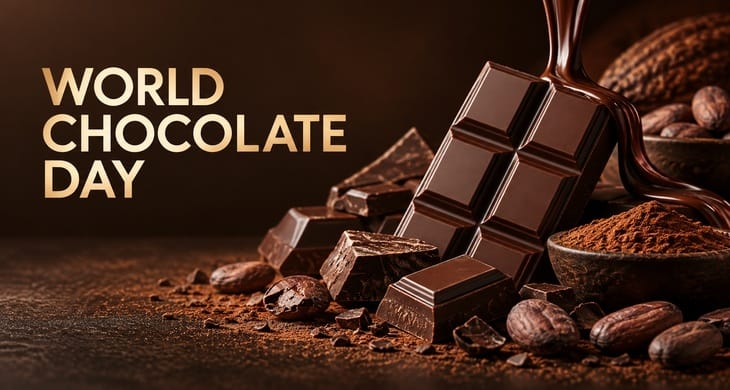

- International Chocolate Day highlights the unique cultural significance of chocolate in India, where it is often associated with gifting and sharing rather than personal consumption.
- Indian childhood experiences with chocolate include social status tied to the type of chocolate distributed during birthdays and using chocolate as a reward or apology.
- Despite low per capita chocolate consumption compared to countries like Switzerland, India has a robust market for gifting chocolate, especially during festivals like Diwali and Rakhi.
- Emerging Indian brands are beginning to produce bean-to-bar chocolate from local cacao, challenging the dominance of foreign chocolate narratives and emphasizing the importance of sharing and personal connections over luxury.
Today is International Chocolate Day. Officially that day when every chocolate lover pretends chocolate is just chocolate.
In India, it never was.
In India, chocolate is not something you eat. It is something you give, you hide, you distribute, you get caught for.
No Indian child ever said "Mummy, I want to savour the notes of single-origin Ecuadorian cacao."
An Indian child has always said, "Mummy, he got 2, I got 1."
That is Indian chocolate economics.
MY FIRST CHOCOLATE WAS NOT FOOD. IT WAS ‘FOREIGN RETURN’.
If you grew up in the 70s and 80s in Punjab, where I come from, or for that matter anywhere in Bharat, your first chocolate was not bought. It was brought.
Someone's uncle came from "foreign" – which meant Mumbai or Dubai, same thing – and brought a box. Not Cadbury. Toblerone. The triangle one. Or a flat, silver-wrapped thing that said "Swiss".
That chocolate was not eaten. It was displayed.
It sat in the fridge for 4 months. Not in freezer, in the fridge, on the top shelf next to the pickle, where everyone could see but no one could touch without permission. It became hard, whitish, a little like chalk. Still precious.
Mother would cut it with a knife, like cutting gold biscuits. One small piece each. 1 cm x 1 cm. And you were told, "Don't chew, let it melt."
We let it melt for 45 minutes because chewing foreign chocolate quickly was disrespect.
That is the first rule of Indian chocolate: The more foreign, the slower you eat.
THE FIVE LIVES OF A CADBURY IN INDIA
If chocolate had a LinkedIn profile in India, its experience would be:
- The Birthday Chocolate: The original influencer marketing. When it was your birthday, you had to distribute chocolates to the whole class. Not toffees. Chocolates. The kid who gave Dairy Milk Shots was middle class. The kid who gave full Dairy Milk was upper middle class. The kid who gave 5 Star was honest middle class and everyone liked him more because you could chew longer. Your entire social status at age 9 was decided by what you distributed in 10 minutes.
If you distributed Gems, you were forgiven for being good at maths.
- The Stolen Chocolate: In every house, there was a secret chocolate stash. In the steel almirah, behind the Horlicks bottle. You were not supposed to know. You however knew exactly. You took one when no one was watching. And you pressed the remaining chocolates together so mother would not notice the gap. This was our first lesson in accounting fraud and inventory management. All future CAs of India were trained here.
- The Bribe Chocolate: "If you finish your homework, you get a chocolate." No Indian child finished homework for knowledge. We finished for that small, rectangular bribe. And mothers knew – if you gave chocolate before homework, homework never happened. So chocolate was always after. It was India's first performance-linked incentive.
- The Apology Chocolate: Indian fathers never say sorry. They bring home a Dairy Milk Silk. That's it. No card. No speech. Just keep it on the table and go to wash your hands. The Silk means – "I shouted in the morning, I know. Eat this and forgive." Silk is not chocolate. It is an apology that melts.
- The Romantic Chocolate: No Indian boy ever said "I love you" with flowers. Flowers wilt in heat and her mother would ask who gave it. He said it with a Rs 40 Dairy Milk that said "Made for sharing" but meant "Don't share, only you eat". And the girl kept the wrapper in her textbook for 3 years. Wrapper, not chocolate. Because wrapper doesn't melt.
WHY WE STILL DON'T REALLY LIKE DARK CHOCOLATE
International Chocolate Day celebrates 70%, 85%, single-origin, bitter chocolate.
But India hates bitter chocolate. We tried. We failed.
Because our Indian palate was trained on mithai. Mithai is sweet, milky, generous. Chocolate that is bitter feels like punishment. "I paid money to feel bitter? I get that free from relatives."
That is why Dairy Milk - which is 80% sugar, 20% nostalgia – is still 65% of the Indian chocolate market. Not because we don't have taste. Because Dairy Milk tastes like childhood, not like chocolate.
Amul Dark tried to educate us. We respected it, but we didn't love it. Like an English teacher. Simple.
5 Star, which is literally caramel and nougat covered with chocolate that is not even chocolate – we love it. Because it is chewy, it takes time, it can be shared, it can be pulled. It is chocolate that behaves like mithai.
THE REAL BUSINESS OF CHOCOLATE IN INDIA IS NOT CHOCOLATE
Look at the numbers and you will laugh.
India eats 140 grams of chocolate per person per year. Switzerland eats 9 kg. We are not even in the global game.
But India gifts chocolate worth Rs 5,000 crore during Diwali and Rakhi. We don't eat it, we move it. From one house to another house, where it sits for 6 months and then moves again next Diwali.
Chocolate in India is not consumption. It is circulation. Like currency notes.
And that is why every chocolate company that came to India with "taste the luxury" failed. The ones that won – Cadbury, KitKat – won with "kuch meetha ho jaye", or "have a break". They didn't sell chocolate. They sold permission to pause, savour and enjoy.
THE SOCIETAL FAILING OF CHOCOLATE
Here is the dark side of the light chocolate.
We give chocolate to kids to shut them up. "Chocolate khao, chup raho." We have replaced listening with sugar. We give chocolate as reward for everything – good marks, good dance, good behaviour – so children learn sweetness is earned, not given. Then we wonder why as adults they binge when sad.
And the biggest failing – we gave up our own chocolate. Yes, let me explain.
India grew cacao in Kerala, in Andhra, for 50 years. We had our own beans. But we never made Indian chocolate a story. We made Swiss chocolate a story.
Only now, in 2024-26, brands like Manam, Soklet, Bon Fiction, Mason and more are making bean-to-bar chocolate from Indian cacao and winning world awards. A chocolate from Godavari district beating the Swiss. Who would have thought? Because finally we realised – chocolate doesn't have to be foreign to be precious. It just has to be slow, shared, and slightly melted in your pocket before you give it to someone.
LET US CELEBRATE
So today, on International Chocolate Day, don't buy the expensive imported bar and take a photo of its tasting notes.
Do the Indian thing.
Buy a Rs 50 Dairy Milk. Break it into 4 pieces. Give 3 pieces to 3 people you work with who are younger than you. Eat the last piece yourself, without your phone.
And watch how that Rs 50 creates Rs 5,000 worth of memory.
Because in the end, chocolate was never about cocoa percentage.
It was about – "I thought of you while you were not here. And I kept this, even though I wanted to eat it."
If today you give someone 1 chocolate from your pack, that is love.
Peeled, shared, and a little melted.
Go hide a chocolate in your fridge. Let someone find it tomorrow.
That surprise is worth more than all the Swiss in Switzerland.
Happy Chocolate Day.
Dr. Sandeep Goyal is mad about chocolates – rich, smooth, sweet, and meltingly divine!
Read more news about Internet Advertising India, Marketing News, PR and Corporate Communication News, Digital Media News, Television Media News
For more updates, be socially connected with us onInstagram, LinkedIn, Twitter, Facebook YouTube & Google News