From fine print to selling point: How ingredients are changing the brand game
The shift is visible across categories, with consumers looking beyond brand names, and storytelling now focused on familiar, purposeful ingredients
 by
by
Published: Aug 18, 2026 8:54 AM | 8 min read
 Follow Us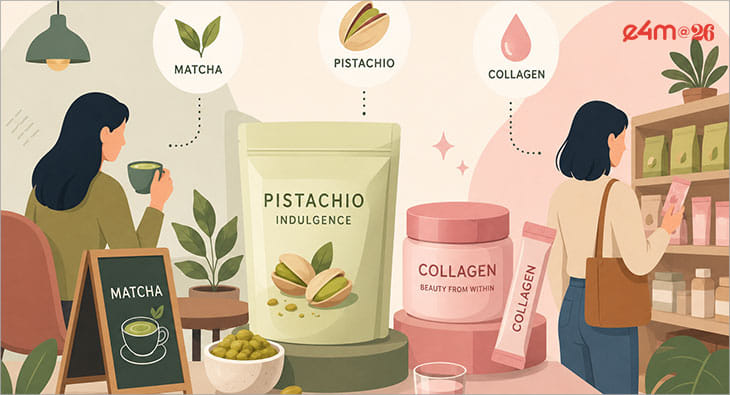

- The rise of ingredient branding has shifted consumer focus from traditional product marketing to highlighting specific ingredients, which are now seen as key drivers of interest and purchase decisions in food, beverage, beauty, and wellness sectors.
- Ingredients like matcha and pistachio have transitioned from supporting roles to central elements in branding, with companies leveraging their cultural significance and consumer appeal to differentiate products in crowded markets.
- Brands are increasingly investing in ingredient transparency and education, recognizing that consumers are more ingredient-aware and seek to understand the benefits and sourcing of what they consume.
- While ingredient-led marketing presents opportunities for differentiation and consumer engagement, brands must ensure quality and functionality to maintain consumer loyalty, as not all ingredient trends will sustain long-term appeal.
Remember when ingredients were the fine print?
Today, they are often the reason consumers stop scrolling, walk into a café or pick a product off the shelf. Matcha has become a lifestyle cue, pistachio a shorthand for indulgence, and collagen a beauty proposition in its own right. Ingredients that once played supporting roles in a product are increasingly taking top billing in brand conversations.
Across food, beverage, beauty and wellness, brands are tapping into this shift by turning culturally relevant and highly searchable ingredients into marketing hooks. The ingredient is no longer simply what goes into the product. Increasingly, it is what gets consumers interested in the product in the first place.
This marks the rise of ingredient branding, where an individual ingredient can become the hero of a product, campaign and, in some cases, an entire consumer-facing brand.
Matcha is perhaps one of the clearest examples. Once largely associated with traditional Japanese tea, it has become a lifestyle proposition, finding its way into cafés, desserts, beverages and dedicated consumer brands.
As exchange4media reported earlier, BREE Matcha, co-founded by actor Sanya Malhotra, entered the Indian market positioning matcha not merely as a beverage but as a lifestyle and mindful ritual.
Pistachio is following a similar trajectory. Once largely associated with Indian mithais and desserts, it has become a recognisable signal of indulgence and premiumisation across chocolates, ice creams, beverages, bakery and even beauty.
An earlier exchange4media report on the pistachio trend found that brands including Magnum, Third Wave Coffee, Fabelle and Mad Over Donuts were using the ingredient as a hero proposition rather than simply a flavour addition. Magnum, for instance, introduced Magnum Pistachio in 2025 with a campaign featuring Kareena Kapoor Khan, explicitly positioning pistachio as a luxury and globally trending ingredient.
The distinction is important. Traditional ingredient marketing asks consumers to value a product because it contains a particular component. The newer play is more consumer-facing: the ingredient itself carries cultural meaning, aspiration or utility, and brands build their proposition around that existing equity.
Akshali Shah, Executive Director, Parag Milk Foods said, “Consumers today are far more ingredient aware. They want to know what goes into a product, what benefit it offers and increasingly, where the ingredient comes from. This shift is visible across categories, with consumers looking beyond brand names to understand the ingredients and nutritional credentials of what they consume.”
She added that innovation has long been central to Parag Milk Foods’ portfolio, spanning new flavours and formats in Avvatar, including bars and RTDs, high-protein paneer and yogurt offerings under Pride of Cows, and newer products such as Chikki under Gowardhan. The focus, she said, is on making familiar categories relevant to evolving consumer preferences.
This is also reshaping how innovation is communicated, with ingredients increasingly driving discovery, while quality, taste, nutrition and the overall product proposition remain key. The aim is to ensure ingredients offer genuine consumer value rather than serve merely as marketing hooks.
For marketers, ingredients offer a relatively simple way to communicate differentiation in increasingly crowded categories.
A new product can struggle to establish why it is different from dozens of competing SKUs. But attaching it to an ingredient that already has cultural momentum gives brands an existing conversation to enter.
Social platforms have made ingredients more searchable, shareable and culturally relevant, while wellness trends are pushing consumers to look beyond brand names to ingredients, functionality and efficacy.
“Matcha”, for example, immediately brings associations of wellness, ritual, Japanese culture and visual aesthetics. “Pistachio” can signal indulgence, premiumisation and global food culture. “Collagen” carries associations with beauty, youthfulness and wellness.
That gives brands multiple communication territories without having to build the entire narrative from scratch.
Social media further amplifies this effect. Ingredients that are visually distinctive or easy to demonstrate lend themselves naturally to short-form content. Matcha's preparation ritual, pistachio's colour and texture, or the crunch and visual appeal of chilli crisp can become content formats in themselves.
Chilli crisp, for instance, has moved from a relatively niche condiment to a widely discussed pantry trend, with brands experimenting with it as a flavour across categories. A 2025 Mintel-referenced report cited by FoodBev Media said social media discussions around chilli crisp had risen 125% over the preceding year.
Ingredients become the entry point
The shift is particularly visible in beauty, where ingredients such as collagen and ginseng are increasingly becoming consumer-facing propositions. Brands including Wellbeing Nutrition and HK Vitals have built campaigns around collagen, positioning the ingredient as a reason to enter the category rather than simply a component of the formulation.
Arhaan Khan, CEO, Maliao Cosmetics, said consumers today are more ingredient-aware and look beyond product claims to understand what goes into their skincare and makeup. He added that this is pushing Maliao to focus on familiar, purposeful ingredients that address specific beauty concerns and deliver visible results.
“It also impacts how we communicate, with a greater focus on ingredient education, transparency and efficacy. Our product development is increasingly driven by consumer curiosity, changing skin care trends and the desire for simple, effective beauty solutions,” he said.
What is driving this shift?
Smita Khanna Kithania, COO, Newton Consulting Group, explained that brands are investing in both ingredients and storytelling, but the bigger shift is towards educating consumers on why an ingredient matters. She cited Korean ginseng and matcha as examples of ingredients evolving from traditional components into recognisable beauty, wellness and lifestyle cues. The growing functional foods category also reflects consumers’ willingness to pay for added health and lifestyle benefits.
However, she stressed that storytelling cannot make up for poor sourcing or an undifferentiated product, especially when consumers can research ingredients instantly. The winning model, she said, is “substance first, story second”, with credible sourcing, formulation and quality supported by storytelling that makes an ingredient understandable, desirable and culturally relevant.
Kithania said, “Consumers increasingly discover products through a single ingredient rather than a brand name. Someone may search for ‘best matcha’, ‘collagen for skin’, etc before deciding which brand to buy. The ingredient becomes the entry point into the category.”
Citing examples, she noted that Indian food brand The Whole Truth has built much of its proposition around ingredient transparency, making the ingredient list itself part of its marketing. In beauty, The Ordinary similarly made ingredients such as niacinamide and hyaluronic acid central to product discovery, with consumers often searching for the ingredient before the brand.
She attributed the shift to greater consumer curiosity and confidence, driven by wellness culture, creator-led education and highly visual social platforms. For marketers, she said, this signals a move from asking “What brand is this?” to “What is inside this, and why should I care?” making the ingredient a potential search term, conversation starter and, eventually, the brand itself.
From marketing hook to R&D priority
Khan noted that the rise of ingredient-led beauty is pushing brands to rethink R&D, sourcing and marketing. At Maliao Cosmetics, ingredient selection is increasingly guided by efficacy, consumer demand and product relevance, requiring stronger research and sourcing. Marketing, meanwhile, is shifting from product claims to educating consumers on ingredients and their benefits, making transparency, innovation and trust more strategic priorities.
Shah added that when an ingredient becomes central to the consumer proposition, it demands greater investment across R&D, sourcing, quality and marketing. At Parag Milk Foods, ingredients are evaluated on taste, nutrition, functionality, quality and scalability before being incorporated into products. As consumers become more conscious of provenance, consistent sourcing and quality standards are also becoming critical to delivering on the brand promise.
“Marketing is evolving as well. Ingredient led products give brands an opportunity to educate consumers and build stronger stories around new flavours, formulations and benefits. This requires more relevant content, sampling and consumer experiences,” she noted.
Shah further highlighted that Parag Milk Foods views ingredient-led innovation as more than a passing trend, with its focus extending to new ingredients, flavours, formats and evolving consumer needs. While an ingredient may drive discovery, she said, quality, taste and the overall product experience are what drive repeat.
The shift is also changing how brands approach innovation. Instead of asking only, “What product can we launch?”, marketers are increasingly asking which ingredients have cultural momentum and what products can be built around them.
That has led to limited-edition launches, new ranges and even standalone ingredient-focused brands, with matcha being a strong example. Dedicated players such as Nami Matcha and BREE Matcha have built consumer propositions around the ingredient itself.
Research also suggests commercial potential, with ingredient branding shown to influence perceived quality, purchase intent and willingness to pay.
But every ingredient cannot become a brand
But not every ingredient trend is built to last. Pistachio, for instance, has spread across categories so quickly that its premium appeal could eventually start to wear off. As more brands jump on the same ingredient, putting it on the pack is unlikely to be enough.
The real challenge is to give the ingredient a reason to matter. That could come through sourcing, formulation, functionality or a stronger brand story. An ingredient may get consumers to notice a product, but taste, quality and the overall experience will determine whether they come back.
For marketers, the opportunity lies in turning an ingredient that is trending today into a proposition consumers will care about tomorrow.
Read more news about Marketing News, Advertising News, PR and Corporate Communication News, Digital News, People Movement News
For more updates, be socially connected with us onInstagram, LinkedIn, Twitter, Facebook, YouTube & Google News
